

6 Ways to Track Sleep with Smart Devices for a Better Understanding of Your Body | Safe and Sound
Poor sleep does not only leave you feeling tired the next day. It can also affect concentration, work performance, mood, recovery after physical activity, and even cardiovascular health over the long term. That is why sleep tracking with smart devices is becoming increasingly widespread. Instead of relying only on subjective feelings, technology allows users to see specific data showing how their bodies rest each night.
Why Should You Track Sleep with Smart Devices?
In the past, sleep quality assessments were usually carried out only in medical facilities or sleep laboratories using a range of specialized equipment. Today, advances in sleep-tracking technology have made this process much simpler.
Smart devices can continuously collect data while users sleep without disrupting their daily routines. Instead of knowing only how many hours they slept, users can gain deeper insight into:
- Actual sleep duration
- Deep sleep duration
- Number of nighttime awakenings
- The body's level of recovery
- Heart rate during sleep
- Changes in sleep patterns over time
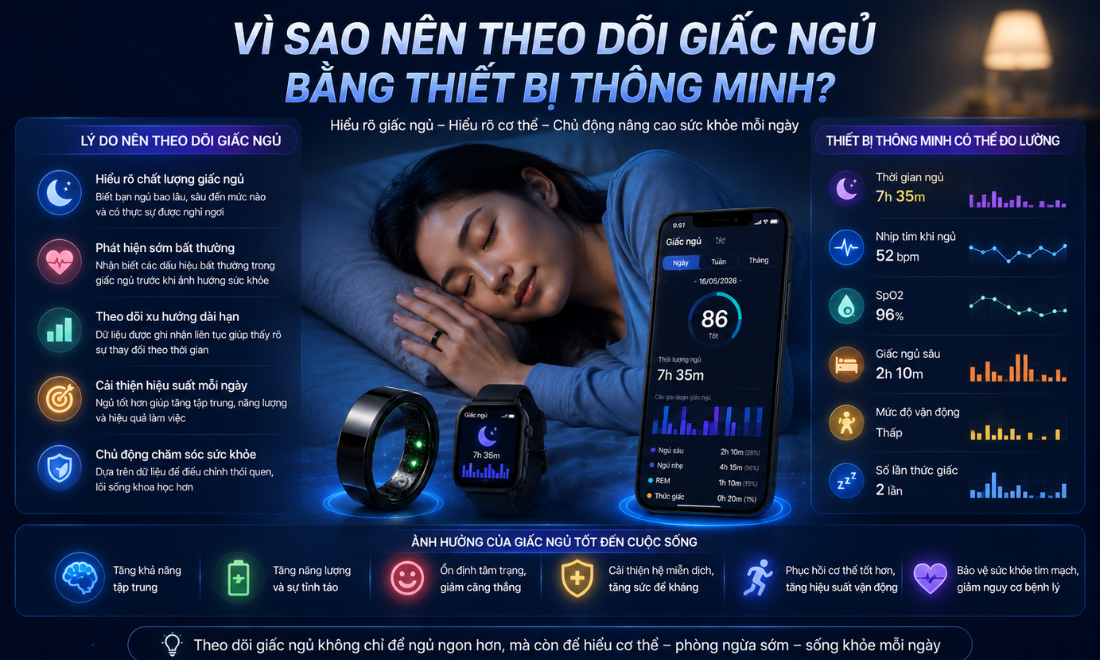
When these data are recorded continuously, users can more easily identify unusual changes before they noticeably affect their health and daily lives.
>> Read more: What Is Health Tracking? 6 Important Benefits in Modern Life
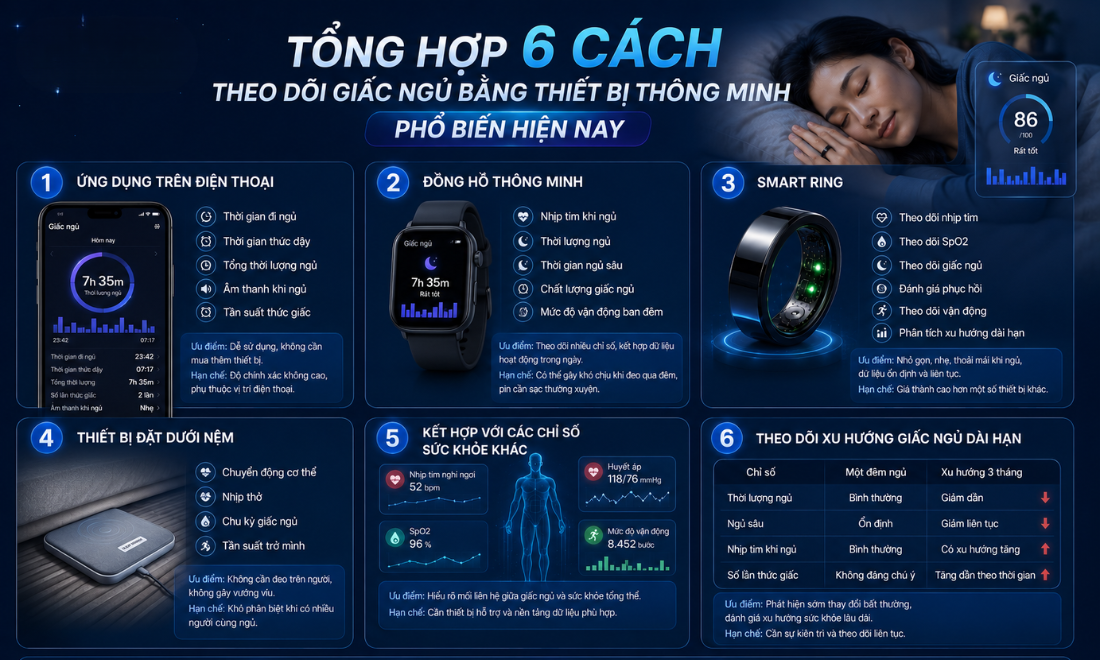
A Summary of 6 Popular Ways to Track Sleep with Smart Devices
The development of healthcare technology has made sleep tracking far simpler than it used to be. Instead of undergoing in-depth tests at a medical facility, users can now easily record sleep data at home through many different types of smart devices.
Each solution has its own advantages in terms of accuracy, data-collection capability, convenience, and investment cost. Depending on their needs, users can choose from health applications on smartphones, smartwatches, smart rings, or dedicated devices designed specifically for sleep tracking.
Below are six popular ways to track sleep using smart devices, helping you better understand the quality of your rest and your body's recovery status each day.
Method 1: Tracking Sleep with a Smartphone Application
This is the simplest and most accessible option for most users today. With only a smartphone, users can begin tracking their sleep without investing in any additional device.
Many health applications are now designed to record and analyze sleep data using motion sensors, microphones, or AI algorithms. Popular platforms such as Apple Health, Samsung Health, Google Fit, and dedicated sleep applications provide basic reports that help users better understand their sleep habits.
Commonly recorded data include:
- Bedtime
- Wake-up time
- Total sleep duration
- Sounds during sleep
- Frequency of awakenings
- Daily and weekly sleep patterns
The greatest advantage of this method is convenience. Users can begin tracking immediately without purchasing a dedicated sleep-tracking device. However, its limitations are also relatively clear.
Because a smartphone does not maintain direct contact with the body, most data are inferred from movement or surrounding sounds. As a result, accuracy is often considerably lower than that of smart wearable devices.
In addition, data quality may be significantly affected if users place the phone far from the bed, forget to bring it into the bedroom, close the application during the night, or share their sleeping space with another person. Smartphone applications are therefore suitable for people who are beginning to explore sleep-tracking technology, but they may not meet the needs of in-depth, long-term monitoring.
Method 2: Tracking Sleep with a Smartwatch
The emergence of smartwatches has made sleep tracking far more common in recent years. Rather than relying only on movement or sound, a smartwatch remains in direct contact with the body and can continuously record biological data throughout the resting period.
Thanks to sensors integrated into the wrist-worn device, a smartwatch can monitor more indicators than a standard smartphone application. Commonly analyzed data include:
- Heart rate during sleep
- Sleep duration
- Deep sleep duration
- Light sleep duration
- Sleep quality
- Frequency of awakenings
- Nighttime movement levels
One of the greatest strengths of a smartwatch is its ability to connect sleep data with other activities throughout the day. This allows users to better understand the relationship between their daily lifestyle and the quality of their nighttime rest.
However, smartwatches still have several limitations. The first is comfort. Many people find it uncomfortable to wear a watch throughout seven to eight hours of sleep each night. The weight of the device, the strap, or the size of the watch face can sometimes interfere with a natural sleeping experience.
In addition, smartwatch batteries commonly last only one to three days. This means many users remove the device to charge it in the evening, unintentionally interrupting the collection of sleep data.
This is also why an increasing number of people are looking for more compact solutions that can still provide continuous health monitoring.
>> Read more: 5 Important Health Indicators a Smart Ring Can Track Every Day
Method 3: Tracking Sleep with a Smart Ring
Among today's sleep-tracking technologies, sleep-tracking smart rings are regarded as one of the most prominent trends of 2026. While smartwatches offer versatility, smart rings are developed with a stronger focus on continuous health-data collection.
The device is compact, lightweight, and creates almost no sense of obstruction during use. After wearing it for some time, many people even forget that they have a piece of technology on their finger.
This is a major advantage for sleep tracking. Unlike smartwatches, which may press against the wrist or feel uncomfortable during sleep, smart rings provide a much more natural experience.
In addition to comfort, wearing the device on a finger offers an advantage for collecting biological data. The fingers contain a dense network of capillaries and stable blood flow, allowing sensors to record changes in the body throughout the resting period more easily.
Commonly tracked data include:
- Heart-rate tracking
- SpO2 tracking
- Sleep tracking
- Activity tracking
- Recovery assessment
- Stress-level analysis
- Long-term health-data management
Notably, many modern smart-health platforms do more than display data. They can also analyze changes in sleep trends over time. For people interested in proactive healthcare, smart rings are becoming one of the most frequently chosen sleep-tracking devices today.
Method 4: Using an Under-Mattress Sleep-Tracking Device
In addition to wearable devices, some sleep-tracking technologies use sensors placed under the mattress or pillow. These devices may record:
- Body movement
- Breathing rate
- Sleep cycles
- Frequency of turning during sleep
The advantage is that users do not need to wear any device on the body. However, this method generally provides broader and less individualized data than wearable devices. In addition, when more than one person uses the same bed, distinguishing each individual's data becomes more difficult.
Method 5: Combining Sleep Tracking with Other Health Indicators
One of the most common mistakes in sleep tracking is focusing only on the number of hours slept or the quality of each individual night. In reality, sleep is one part of the body's overall operating system.
The quality of rest is closely connected with many other indicators, including:
- Resting heart rate
- SpO2
- Blood pressure
- Activity level
- Recovery capacity
- Stress level
For example, if sleep quality continuously declines over several days while resting heart rate rises and activity levels fall, this may indicate that the body is under strain or has not received adequate rest.
Conversely, when sleep improves, users often notice greater alertness, better concentration, higher work performance, and faster recovery after physical activity.
This is why modern healthcare-technology platforms are gradually shifting away from monitoring individual indicators separately and toward building a comprehensive picture of each user's health.
Method 6: Tracking Long-Term Sleep Trends Instead of Focusing on Individual Nights
This is the most important step, but it is also the one many people overlook when they begin tracking sleep. One poor night of sleep does not necessarily reflect a health problem. Similarly, one excellent night is not enough to conclude that the body is in an ideal state.
The real value lies in long-term data. When indicators are recorded continuously over several weeks or months, users begin to see trends that are difficult to recognize through ordinary feelings alone.
|
Indicator |
One Night of Sleep |
Three-Month Trend |
|
Sleep duration |
Normal |
Gradually decreasing |
|
Deep sleep |
Stable |
Continuously decreasing |
|
Heart rate during sleep |
Normal |
Trending upward |
|
Number of awakenings |
Not noticeable |
Gradually increasing over time |
These small changes are precisely what help each person understand more clearly how their body is functioning.
Sleep Tracking Is Not Only About Sleeping Better
Many people begin using sleep-tracking devices with the goal of improving their rest. However, after using them for some time, they realize that the greatest value does not lie simply in knowing how many hours they have slept.
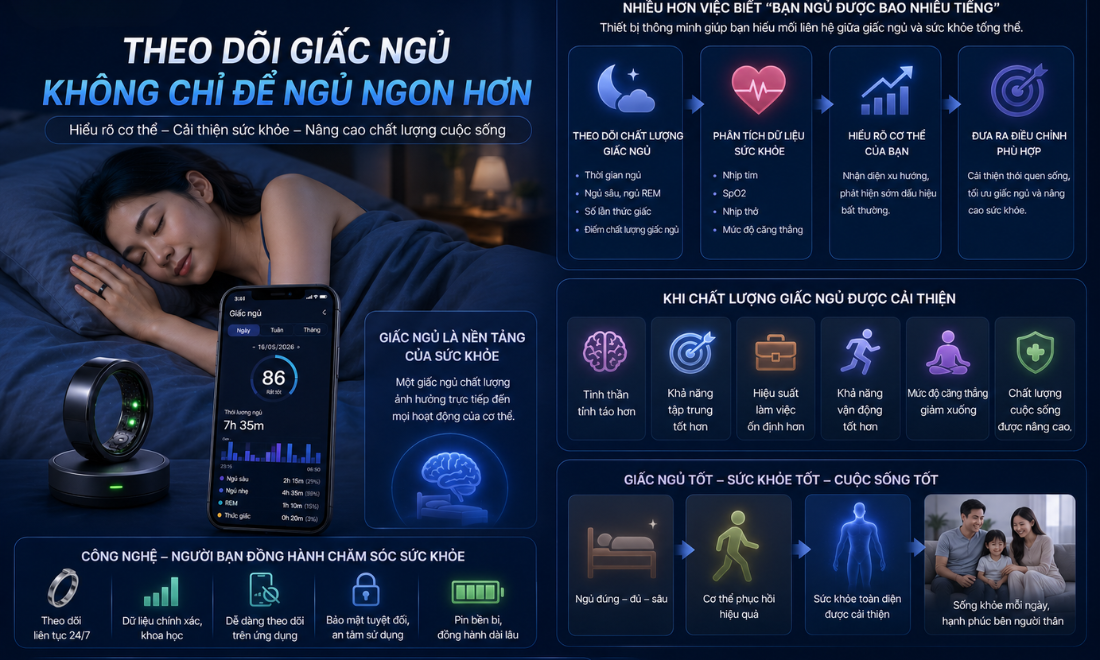
More importantly, it helps users understand the relationship between sleep and overall health. When sleep quality improves, users often notice:
- Greater mental alertness
- Better concentration
- More stable work performance
- Improved physical performance
- Lower stress levels
- A noticeable improvement in quality of life
This is also why sleep-tracking technology is becoming an important part of the current trend toward proactive healthcare.
Conclusion
Tracking sleep with smart devices is no longer a trend reserved for technology enthusiasts. It is gradually becoming a tool that helps people understand their bodies more clearly and build a healthier lifestyle each day. From smartphone applications and smartwatches to sleep-tracking smart rings, each solution offers distinct advantages suited to different user needs.
If your goal is long-term health monitoring, continuous data collection, and more proactive sleep management, next-generation sleep-tracking devices such as smart rings are opening up a modern and convenient approach that aligns with personal healthcare trends in 2026.
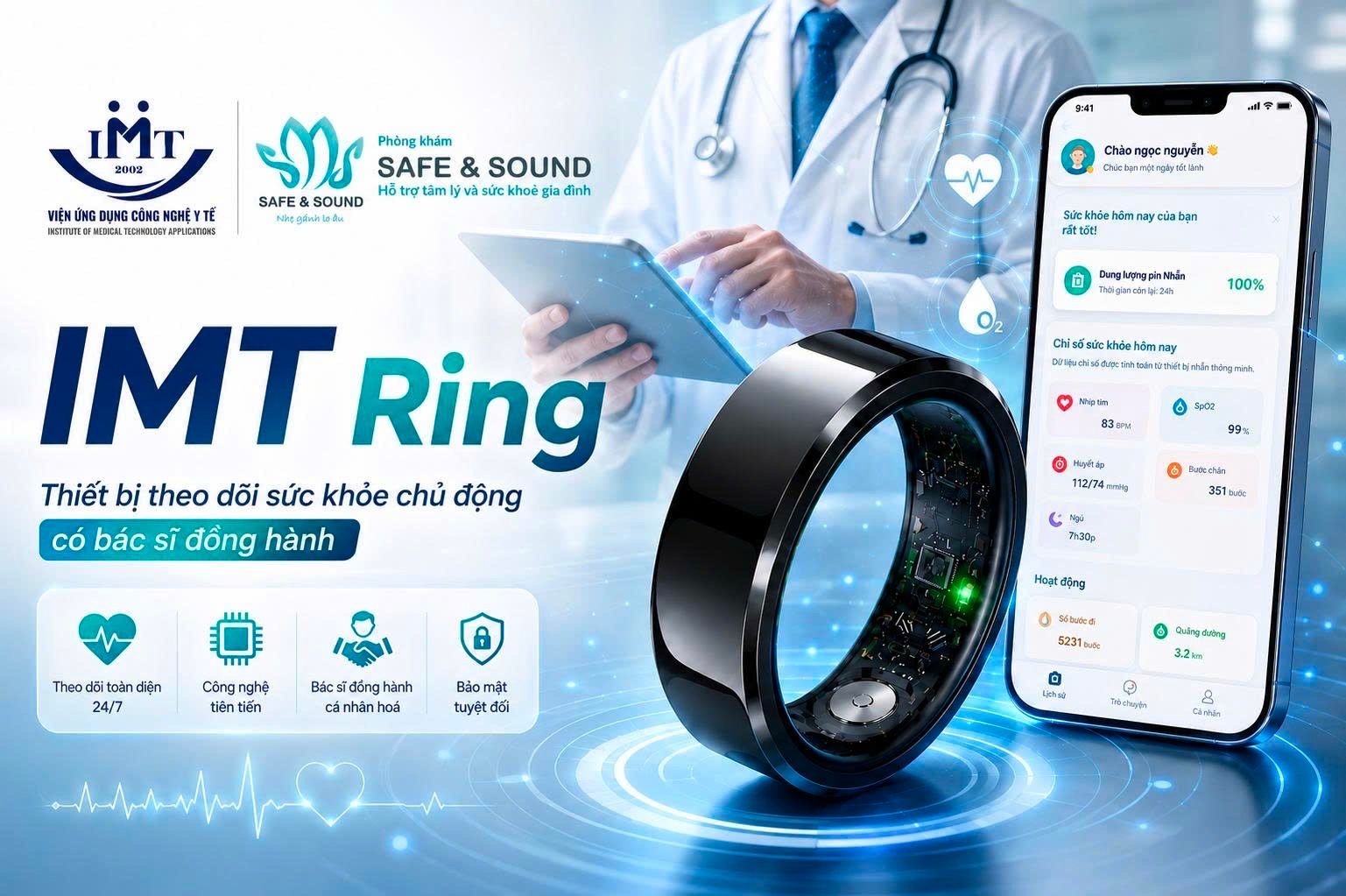
Developed around the concept of a “proactive health-monitoring device supported by doctors,” IMT Ring not only supports the tracking of indicators such as heart rate, SpO2, blood pressure, and sleep, but also aims to build a comprehensive healthcare ecosystem. Through an AI-integrated technology platform and access to professional experts, users can more easily monitor, manage, and better understand their health status every day.
If you are looking for a solution that makes proactive health monitoring simpler and more convenient in modern life, IMT Ring may be a worthwhile option for beginning your healthcare journey through the smallest daily changes.
