

Top 5 Important Health Indicators You Can Monitor Daily at Home | Safe and Sound
Not everyone has the opportunity to undergo regular health checks at a hospital. However, this does not mean we have to wait until the body shows abnormal signs before beginning to pay attention to our health. Thanks to advances in technology and modern health-monitoring devices, many important indicators can now be monitored easily at home. From heart rate, blood pressure, and SpO2 to sleep quality, these data help each person understand their body better and develop a proactive health-monitoring routine in daily life. So, which important health indicators should you pay attention to? Let us explore them in the article below.
Why Should You Monitor Health Indicators Daily?
Many people only begin paying attention to their health when the body shows unusual signs such as prolonged fatigue, shortness of breath, insomnia, or elevated blood pressure. In reality, however, many changes in the body develop quietly over a long period before becoming noticeable symptoms.
That is why proactive health monitoring is increasingly encouraged in modern life. Monitoring health indicators is not intended for self-diagnosis; rather, it helps users:
- Better understand their physical condition.
- Identify unusual changes early.
- Make more appropriate lifestyle adjustments.
- Monitor the effectiveness of exercise and rest.
- Build long-term health-care habits.
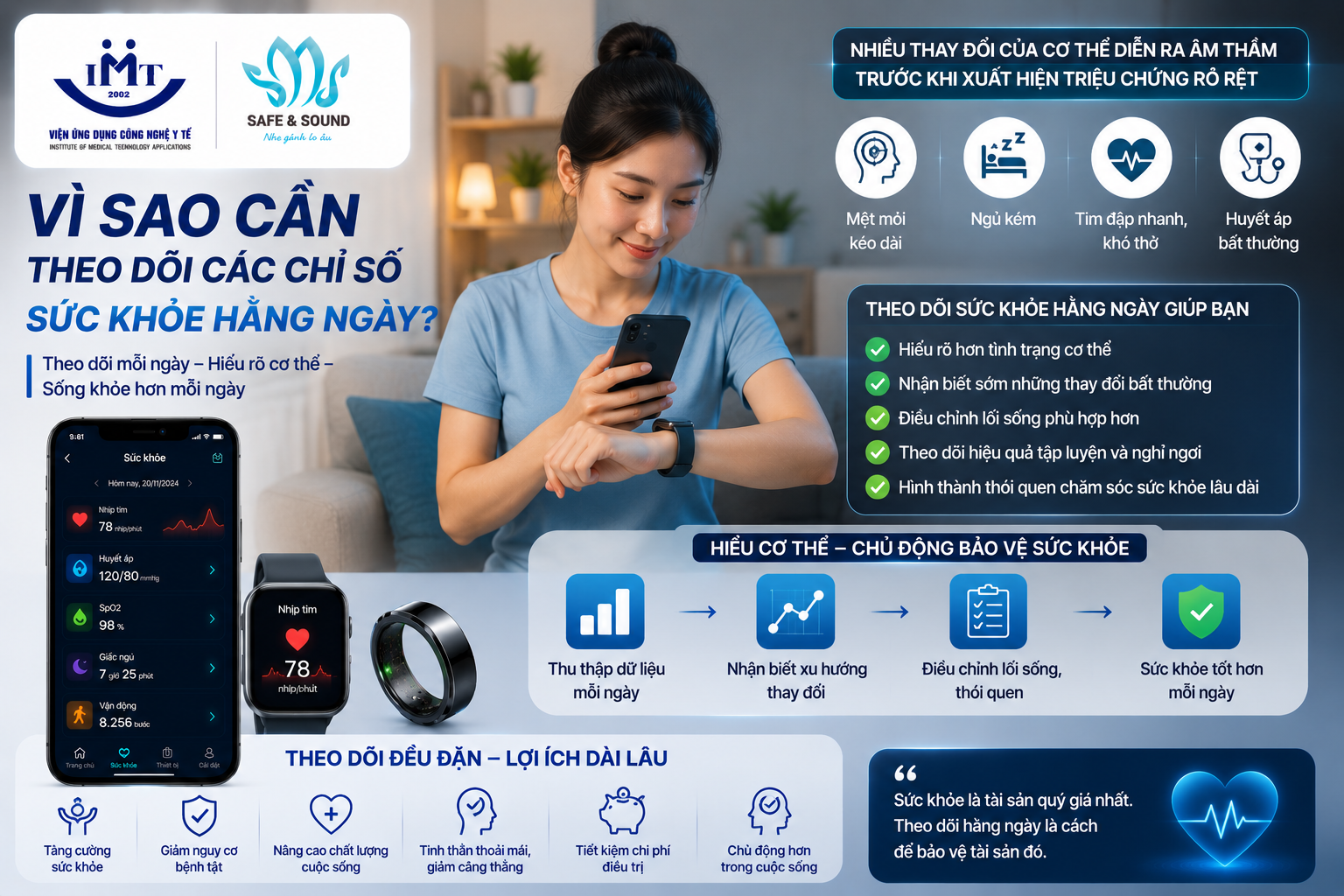
In particular, when data are recorded continuously by day, week, or month, users can observe trends in how their body changes instead of relying only on subjective feelings.
>> Read more: 6 Steps for Daily Health Monitoring to Proactively Detect Abnormal Signs
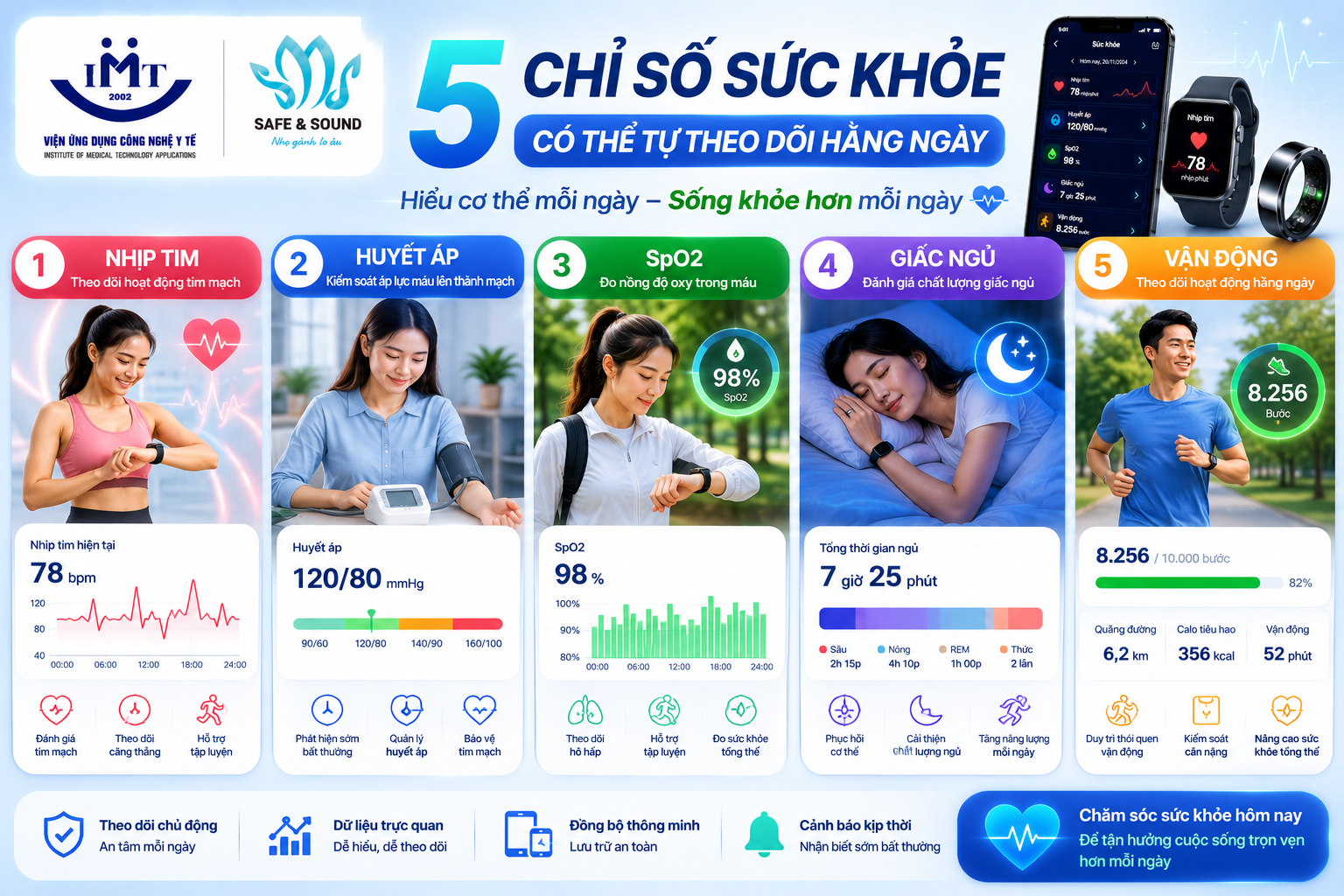
5 Health Indicators You Can Monitor Daily
Not all medical indicators can be monitored at home. However, thanks to advances in modern health-monitoring devices, users can now access many important data about their bodies with just a few simple steps.
Importantly, these indicators are not only for people who already have health concerns. Even healthy individuals can benefit from regular monitoring to understand their bodies better, identify unusual changes early, and develop a more scientific lifestyle.
Below are five important health indicators that many experts recommend monitoring in daily life.
Heart Rate
Heart rate is one of the basic indicators that reflects cardiovascular activity and the body’s condition at a given time.
Normally, heart rate changes continuously depending on physical activity, emotions, stress, and the quality of rest. For example, heart rate during sleep is usually lower than during work or exercise.
This is why monitoring heart rate does more than show how many times the heart beats per minute; it also helps users understand how the body responds to different activities in daily life. Factors that may affect heart rate include:
- Physical activity.
- Psychological stress.
- Sleep quality.
- Diet.
- Overall health status.
In particular, when data are recorded continuously over many days or weeks, users may notice unusual changes that random measurements would be unlikely to detect.
Blood Pressure
Blood pressure indicates the force of blood against the artery walls as the heart pumps blood throughout the body. It is considered one of the most important health indicators because it is directly related to circulation and cardiovascular health.
It is important to note that high or low blood pressure does not always cause obvious symptoms. Many people only discover a problem during a routine health examination or after the body has already developed noticeable signs.
For this reason, regular blood pressure monitoring is increasingly recommended as part of proactive health management. Groups that should pay closer attention to blood pressure include:
- People over 40 years old.
- People with a sedentary lifestyle.
- People who frequently experience stress.
- People with a history of cardiovascular disease.
- People who are overweight or obese.
Blood pressure monitoring is not intended for self-diagnosis. Its purpose is to help users understand their health status better so they can make appropriate adjustments.
SpO2 (Blood Oxygen Saturation)
SpO2 is an indicator of the percentage of oxygen carried in the blood to the body’s organs. In the past, SpO2 measurement was mainly performed in hospitals or medical facilities. Today, however, many personal health-monitoring devices include the ability to record this indicator.
Although SpO2 is only one of many different health data points, it remains useful for giving users a broader overview of their physical condition. Benefits of monitoring SpO2 include:
- Supporting respiratory health monitoring.
- Monitoring the body’s response to physical activity.
- Observing recovery after exercise.
- Monitoring overall health over the long term.
An increasing number of people now view SpO2 as part of their personal health-data system alongside heart rate, blood pressure, and sleep.
Sleep Quality
While heart rate and blood pressure reflect how the body functions while awake, sleep provides information about its ability to recover during rest.
Many people assume that sleeping for seven to eight hours automatically means they have had a good night’s sleep. In reality, sleep quality is more important than sleep duration alone. A person may sleep for enough hours and still feel tired if their sleep is frequently interrupted or lacks sufficient deep sleep.
With modern monitoring devices, users can now track:
- Total sleep duration.
- Deep sleep.
- Light sleep.
- Number of awakenings.
- Heart rate during sleep.
- Overall sleep score.
Daily sleep monitoring helps users better understand why they may frequently feel tired, low in energy, or unable to concentrate even after allowing enough time for rest.
Daily Activity Level
In addition to biological indicators, daily activity level is another important health indicator that many people currently overlook.
The development of technology has led many people to spend most of the day doing desk work or using computers and phones. This has increased the risk of developing a sedentary lifestyle.
Through health-monitoring devices, users can record:
- Number of steps per day.
- Distance travelled.
- Calories burned.
- Active time.
- Level of physical activity.
Monitoring activity levels is not intended to create pressure to exercise more every day. Instead, it helps users determine whether their bodies are moving enough to maintain a healthy lifestyle. This is also one of the simplest forms of data with significant value for building long-term health-care habits.
Which Devices Can Monitor These Health Indicators?
In the past, monitoring health indicators was usually associated with hospitals or medical facilities. Today, technology has made this process much simpler and more convenient.
With only a smartphone or a smart wearable device, users can access many important data about their bodies, such as heart rate, sleep, activity levels, and SpO2. This has helped drive the growing trend of proactive health monitoring in modern life.
Depending on their needs, users can choose different devices to monitor daily health indicators.
|
Device |
Indicators That Can Be Monitored |
|
Smartwatch |
Heart rate, sleep, activity |
|
Smart Ring |
Heart rate, SpO2, sleep |
|
Electronic blood pressure monitor |
Blood pressure |
|
Pulse oximeter |
Blood oxygen saturation |
|
Health application |
Data aggregation and management |
Each device has its own advantages and is suitable for different purposes.
For example, an electronic blood pressure monitor or pulse oximeter is often suitable for people who want to monitor one specific indicator at a particular moment. These are familiar tools in many households, especially those with middle-aged and older adults.
Health applications on smartphones, meanwhile, function as data-management centres. Users can store, monitor, and compare health indicators by day, week, or month to observe changes in the body over time.
However, the most notable current trend is the development of smart wearable devices. Unlike traditional measuring devices that only provide data at a specific moment, smartwatches and smart rings can continuously monitor health throughout the day.
Some key benefits of smart wearable devices include:
- 24/7 health-data monitoring.
- Recording changes in the body over time.
- Automatic data synchronisation with a smartphone.
- Supporting the development of proactive health-care habits.
- Convenience in daily use.
>> Further reading: Should You Use a Smart Ring? 6 Reasons to Buy One for Health Monitoring
How Can You Effectively Monitor Health Indicators at Home?
Proactive health monitoring is no longer as complicated as it once was. Thanks to technological advances, users can now access many tools for monitoring health indicators conveniently and easily at home.
However, for these data to provide real value, what matters is not only taking measurements but also how the information is monitored and how the habit is maintained over time. Principles that can make home health monitoring more effective include:
- Monitor regularly instead of measuring at random.
- Record data over a long period to observe trends.
- Combine multiple indicators instead of focusing on a single parameter.
- Compare data with daily lifestyle habits.
- Proactively consult a professional when unusual changes are noticed.
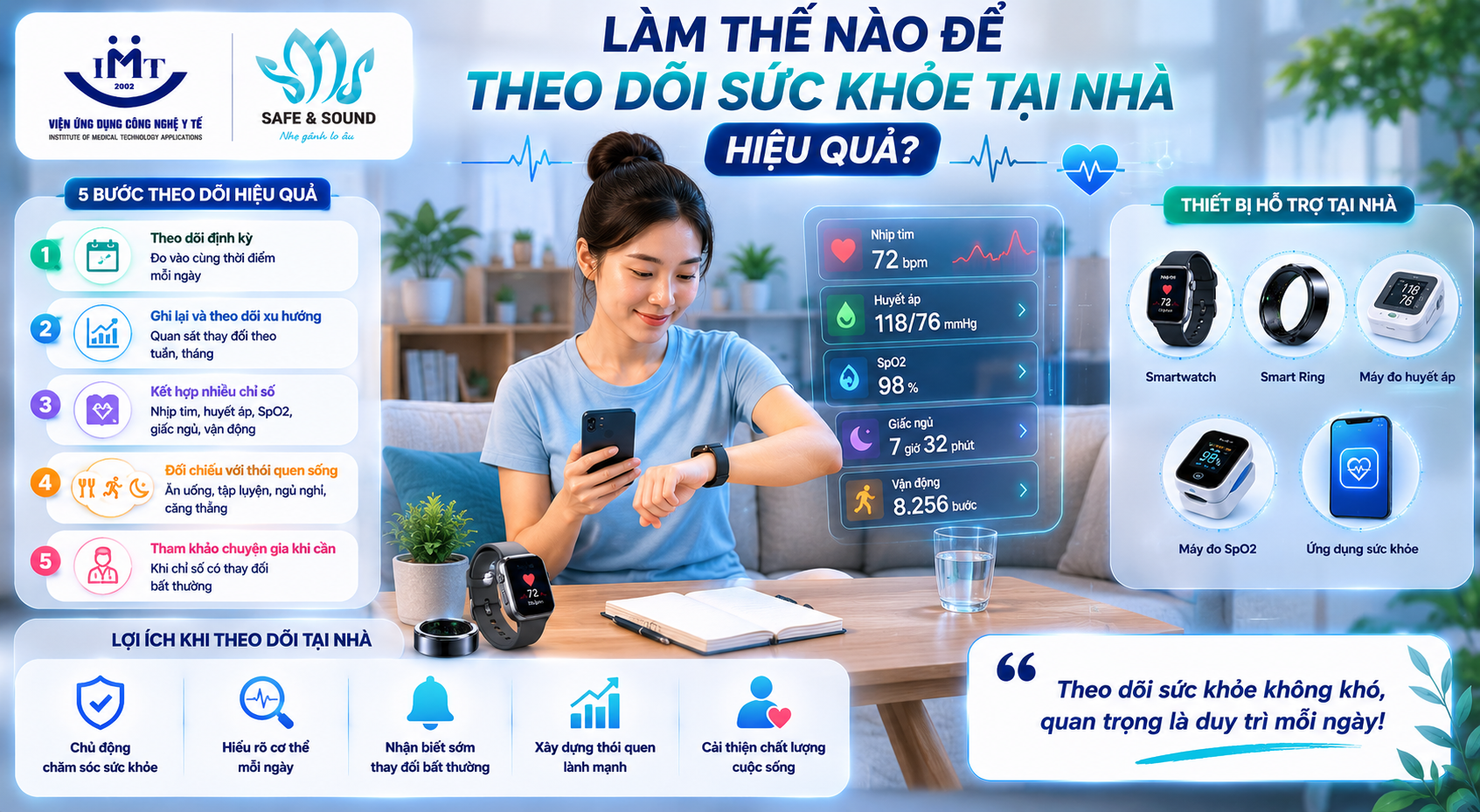
Users can currently choose from many different tools to monitor health at home:
|
Device |
Indicators That Can Be Monitored |
|
Electronic blood pressure monitor |
Blood pressure |
|
Pulse oximeter |
Blood oxygen saturation |
|
Smartwatch |
Heart rate, activity, sleep |
|
Smart Ring |
Heart rate, SpO2, sleep |
|
Health application |
Data aggregation and management |
Among these options, smart wearable devices are increasingly popular because they can monitor data continuously throughout the day. Instead of recording only one indicator at a particular moment, users can observe how their bodies change by day, week, and month.
It is important to remember that health-monitoring devices are not intended to replace medical examinations. Their greatest value lies in helping users understand their bodies better and build proactive health-care habits in daily life.
When combined with a healthy lifestyle and regular health check-ups, monitoring health indicators at home can become a useful tool for managing health more effectively over the long term.
Conclusion
Heart rate, blood pressure, SpO2, sleep, and activity level are important health indicators that anyone can monitor at home. Recording these data regularly not only helps people understand their bodies better but also contributes to the development of proactive health-monitoring habits in modern life.
When combined with a scientific lifestyle and appropriate health-care habits, these seemingly simple indicators can become useful tools that help each person proactively protect their health every day.
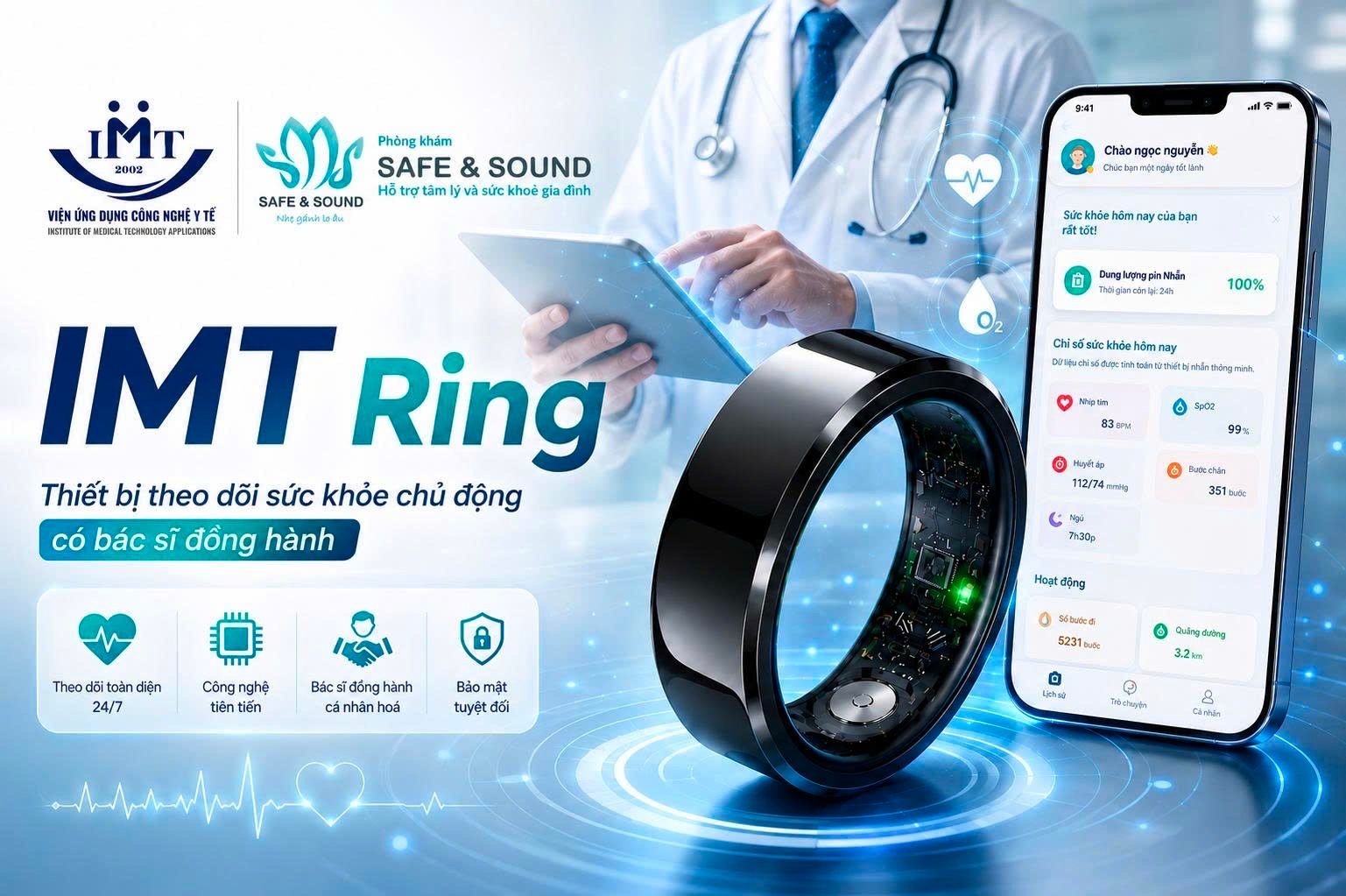
Developed with the vision of “a proactive health-monitoring device with physician support,” IMT Ring not only supports the monitoring of indicators such as heart rate, SpO2, blood pressure, and sleep, but also aims to build a comprehensive health-care ecosystem. Through an AI-integrated technology platform and the ability to connect with specialists, users can easily monitor, manage, and better understand their health status each day.
If you are looking for a simple and convenient solution for more proactive health monitoring in modern life, IMT Ring may be a worthwhile option for beginning your health-care journey through the smallest daily changes.
