

Understanding SpO2: What Is It? 5 Things Many People Only Realize After They Start Monitoring This Indicator | Safe and Sound
In recent years, SpO2 has become one of the health indicators attracting more attention than ever. However, not everyone truly understands what SpO2 is, what this indicator reflects, and why an increasing number of health-monitoring devices now include the ability to measure SpO2 at home. In reality, SpO2 is not merely a number displayed on a screen. It can also help users better understand their respiratory status, recovery capacity, and overall physical health. Let us explore what SpO2 is and five important things about it that many people only realize after they begin monitoring it regularly.
What Is SpO2?
SpO2 (Peripheral Capillary Oxygen Saturation) is an indicator showing the proportion of oxygen carried in the blood compared with the maximum oxygen-carrying capacity of hemoglobin. Put simply, SpO2 indicates how effectively the body is receiving and distributing oxygen.
Oxygen plays an essential role in every vital bodily function. The brain, cardiovascular system, and muscles all require oxygen to function normally. Therefore, monitoring SpO2 gives users another perspective on their overall health instead of relying only on subjective feelings.
Today, SpO2 can be measured using:
- A dedicated pulse oximeter.
- A smartwatch with an SpO2 sensor.
- A smart ring that supports health monitoring.
- Certain home medical devices.
Thanks to advances in technology, measuring SpO2 at home has become much easier than it was in the past.
>> Further reading: 5 Important Health Indicators a Smart Ring Can Monitor Every Day
What SpO2 Level Is Considered Normal?
This is one of the most frequently searched questions about SpO2. In practice, SpO2 may vary depending on age, health status, and environmental conditions. However, most healthy people tend to maintain relatively stable SpO2 levels.
|
SpO2 Level |
Reference Meaning |
|
95%–100% |
A common range in healthy people |
|
90%–94% |
Further monitoring and a health assessment may be needed |
|
Below 90% |
Medical advice should be considered |
|
Below 85% |
This may be a condition requiring particular attention |
An important point to remember is that health should not be assessed based on a single measurement. Instead, monitoring SpO2 over several days or weeks can help users identify changes in the body more accurately.
5 Things Many People Only Realize After They Start Monitoring SpO2
Regularly monitoring SpO2 does more than reveal a single health indicator. In practice, many people begin to notice interesting changes in their bodies after developing this habit.
SpO2 Is Not Only Related to Breathing
When people hear about SpO2, they often immediately think of the lungs or respiratory problems. However, this indicator also reflects the body’s ability to transport oxygen throughout the entire body. This means SpO2 may be related to:
- Daily energy levels.
- Physical activity capacity.
- The body’s recovery process.
- Exercise performance.
- Quality of rest.
This is also why many people begin paying attention to SpO2 even when they are completely healthy.
A Single Measurement Does Not Show the Whole Picture
A fairly common mistake is becoming either overly worried or overly reassured by a single measurement. In reality, SpO2 may vary slightly because of:
- The time of measurement.
- Whether the body is resting or active.
- Sleep quality.
- Environmental conditions.
- How the device is used.
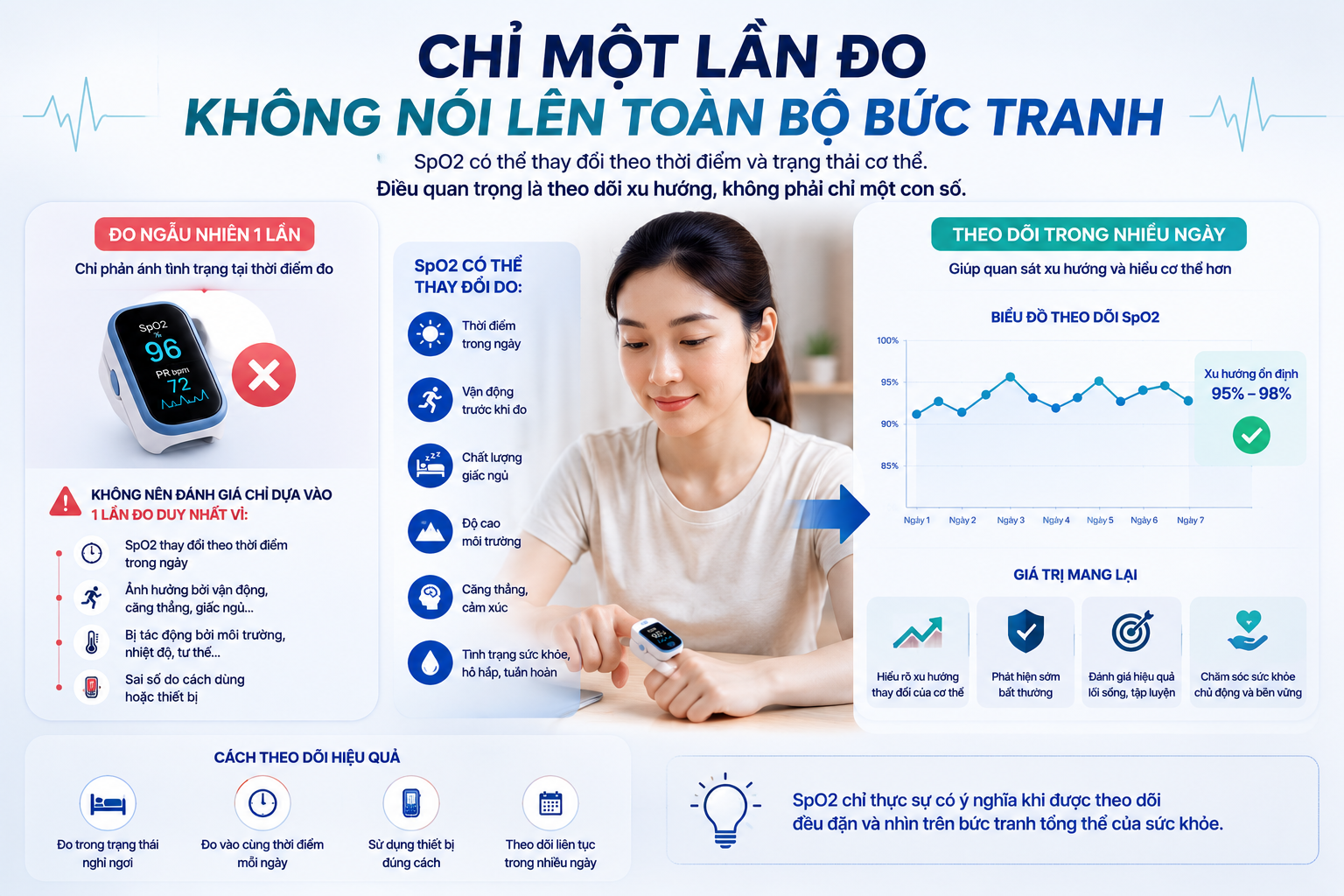
What is more valuable is monitoring data over a longer period. For this reason, modern health-monitoring devices often focus on recording data continuously rather than providing only one isolated result.
Sleep Can Affect SpO2
Many people only begin to notice the connection between SpO2 and sleep after using health-monitoring devices. During sleep, the body continues to exchange oxygen continuously. Some modern devices can record:
- SpO2 during sleep.
- Heart rate during sleep.
- Duration of deep sleep.
- Number of awakenings.
This gives users a more comprehensive view of how the body recovers at night. It is also one reason devices such as smart rings are increasingly used for proactive health monitoring.
SpO2 May Be Useful for People Who Exercise Regularly
For people who exercise frequently, the body’s ability to receive oxygen plays an important role. Many physically active people monitor SpO2 to:
- Better understand how the body responds to exercise.
- Monitor recovery capacity.
- Observe changes in health indicators over time.
- Combine the information with heart-rate and sleep data.
This can make exercise more scientific rather than relying only on subjective feelings.
Monitoring SpO2 Helps Build a Habit of Proactive Health Care
The greatest value of monitoring SpO2 may not lie in the number displayed on the screen. More importantly, it encourages users to pay attention to their health more regularly. When people begin monitoring indicators such as:
- SpO2.
- Heart rate.
- Sleep.
- Blood pressure.
- Physical activity levels.
Many gradually begin changing their lifestyles in a more positive direction. This is also one of the health-care trends increasingly chosen by users today.
How Can SpO2 Be Measured at Home?
In the past, measuring SpO2 was usually associated with hospitals or medical facilities. Today, however, users can monitor this indicator at home with the support of modern technology.
The development of personal health-monitoring devices has made access to health data easier than ever. With only a few simple steps, users can record their SpO2 and monitor how their bodies change over time.
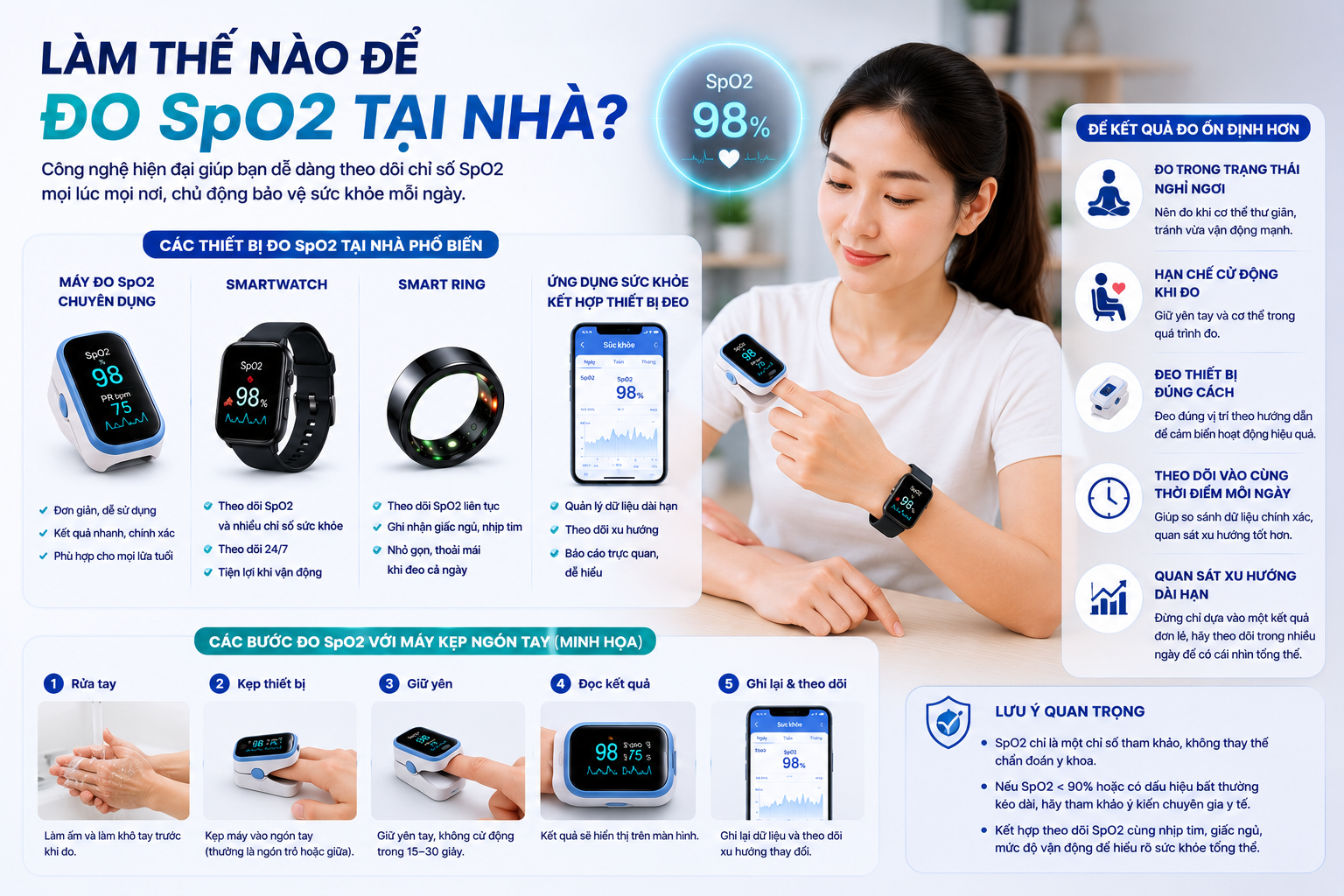
Several options are currently available for measuring SpO2 at home, depending on individual needs.
|
Device |
Advantages |
|
Dedicated pulse oximeter |
Simple and easy to use |
|
Smartwatch |
Monitors multiple health indicators |
|
Smart ring |
Compact and suitable for continuous monitoring |
|
Health app connected to a wearable device |
Supports long-term data management |
Dedicated Pulse Oximeter
This is the most familiar device for measuring SpO2 at home. Users simply clip the device onto a fingertip for a few seconds to receive a reading. Its advantages include:
- Easy to use.
- Provides results quickly.
- Suitable for many age groups.
- Relatively affordable.
However, the device only provides data at the moment of measurement and cannot monitor continuously throughout the day.
Smartwatch
Modern smartwatches are no longer used only for receiving notifications or tracking activity. Many models are equipped with sensors that support SpO2 measurement together with other indicators such as:
- Heart rate.
- Sleep quality.
- Step count.
- Physical activity level.
This gives users a more comprehensive view of their health instead of focusing on only one individual indicator.
Smart Ring
In recent years, smart rings have become a new trend in proactive health monitoring. Unlike traditional measuring devices, smart rings are designed to be worn continuously throughout the day. Some notable benefits include:
- Continuous SpO2 monitoring.
- Long-term health data recording.
- Combined monitoring of heart rate and sleep.
- A compact design that causes minimal inconvenience.
- Convenience for everyday use.
For people who want to monitor their health over the long term, the continuous data-recording capability of a smart ring often provides more value than taking random measurements only a few times each week.
How Can Measurement Results Be Made More Stable?
In addition to choosing a suitable device, the way the measurement is taken also affects the monitoring result. To obtain data with greater reference value, users should:
- Measure while at rest.
- Avoid strenuous activity before measuring.
- Wear or position the device correctly according to the instructions.
- Monitor at the same time of day when comparing data.
- Observe changes over several days rather than relying on one result.
The most important point is to view SpO2 as long-term monitoring data rather than an isolated, immediate number.
>> Read more: What Is a Smart Ring? 7 Health-Monitoring Features Worth Paying Attention To
When Should You Pay More Attention to SpO2?
Although anyone can monitor SpO2, certain groups tend to pay more attention to this indicator because it is directly related to their everyday health-management needs.
Monitoring SpO2 is not only for people who already have health problems. An increasing number of healthy individuals also choose to record this indicator as part of their personal health-care routine.
People Who Want to Monitor Their Health Proactively
This user group has grown rapidly in recent years. Instead of checking their health only when unusual signs appear, they want to understand their physical condition through data recorded every day. For this group, SpO2 is often monitored together with:
- Heart rate.
- Blood pressure.
- Sleep quality.
- Physical activity levels.
- People Who Exercise Regularly
During physical activity, oxygen delivery plays a very important role in the body’s performance. Many people who exercise monitor SpO2 to:
- Understand how the body responds to exercise.
- Monitor the recovery process.
- Combine the information with heart-rate data to assess training effectiveness.
This is one reason smart wearable devices are attracting increasing interest from the fitness community.
People Concerned About Sleep Quality
Few people realize that SpO2 and sleep can be closely connected. Some health-monitoring devices can now record several types of nighttime data at the same time, including SpO2, heart rate, deep sleep, light sleep, and other indicators. This gives users a more comprehensive view of the body’s rest and recovery process.
Middle-Aged and Older Adults
As people age, paying attention to important health indicators becomes increasingly necessary. Many middle-aged adults now begin using personal health-monitoring devices to:
- Monitor heart rate.
- Monitor blood pressure.
- Monitor SpO2.
- Monitor sleep.
This helps them take a more proactive role in managing their health every day.
Users of Personal Health-Monitoring Devices
The popularity of smartwatches and smart rings has made SpO2 a familiar indicator for many technology users. Instead of visiting a medical facility for every check, users can now access their health data conveniently on their phones.
However, it is important to remember that SpO2 is only one part of the overall health picture. Monitoring this indicator becomes more meaningful when it is combined with other data, such as heart rate, sleep, blood pressure, and daily lifestyle habits. This comprehensive approach is the foundation of the proactive health-monitoring trend that is becoming increasingly popular today.
Conclusion
SpO2 is an indicator reflecting the proportion of oxygen in the blood and is receiving increasing attention thanks to the growing popularity of modern health-monitoring devices. In addition to supporting respiratory health monitoring, SpO2 can help users better understand their physical condition, sleep quality, and recovery capacity in everyday life.
Regularly monitoring SpO2 is not intended for self-diagnosis. Instead, it can become part of a proactive health-care routine that helps people understand their bodies more clearly and build healthier lifestyles over the long term.
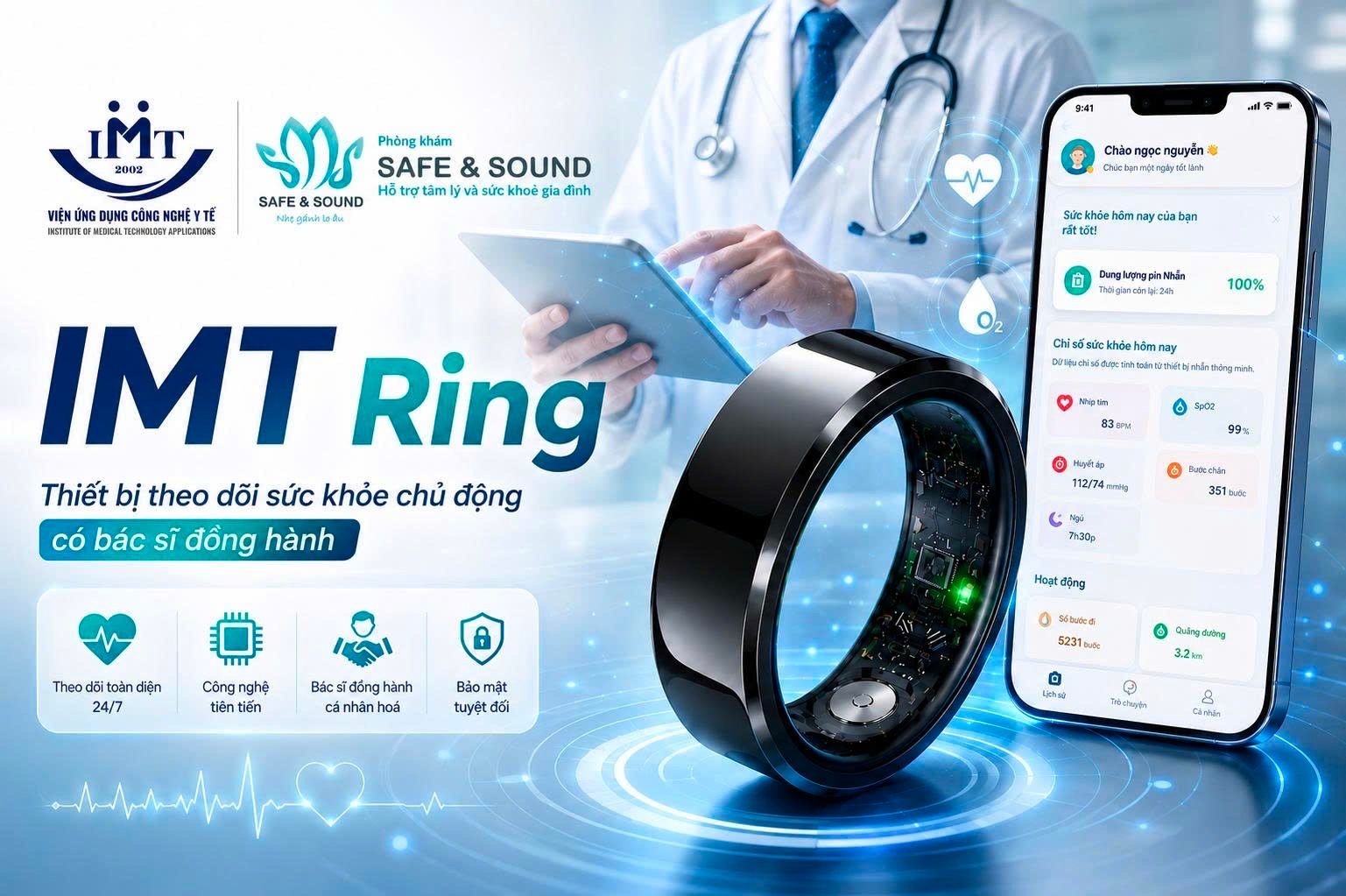
Developed with the vision of being “a proactive health-monitoring device supported by medical professionals,” IMT Ring not only supports the monitoring of indicators such as heart rate, SpO2, blood pressure, and sleep, but also aims to build a comprehensive health-care ecosystem. Through an AI-integrated technology platform and the ability to connect with specialists, users can monitor, manage, and better understand their health every day.
If you are looking for a solution that makes proactive health monitoring simpler and more convenient in modern life, IMT Ring may be a worthwhile option for beginning your health-care journey through the smallest daily changes.
