

What Is a Smart Ring? 7 Health-Tracking Features Worth Considering
We might spend hours checking messages, tracking tasks, or counting steps during a workout, but we don't know our resting heart rate, the quality of our sleep last night, or whether our SpO2 levels are stable. That's also why smart wearable devices have become increasingly popular in recent years. Besides the familiar smartwatches, a new trend that is receiving more attention is the smart ring – a compact device that can help track many important health metrics in daily life. So what exactly are smart rings , how do they work, and why are more and more people choosing smart rings as a proactive health tracking tool?
What are smart rings?
Hearing the term "smart ring," many people think of it simply as a fashionable tech accessory. However, in reality, the greatest value of this product lies in its health monitoring capabilities. A smart ring is a wearable device designed in the shape of a ring worn on the finger. Inside this compact ring is a system of sensors that collect and analyze data related to the user's body.
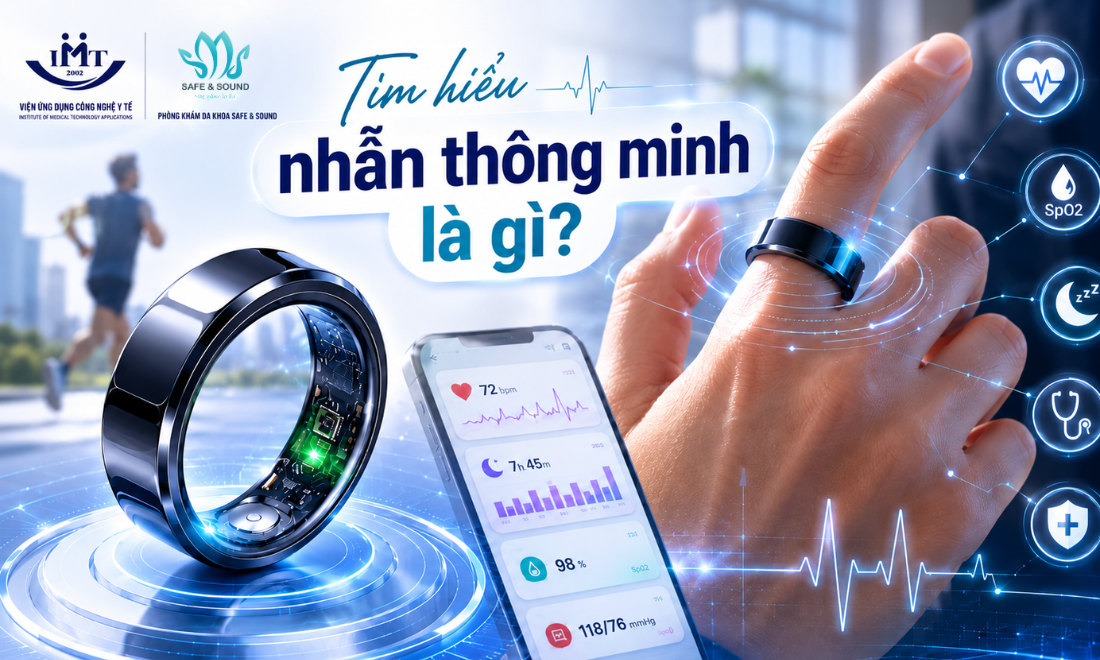
Unlike smartwatches, smart rings typically focus more on health tracking. Sensors integrated into these health-tracking smart rings can record various metrics such as heart rate, SpO2, blood pressure, activity level, and sleep quality. This data is then synchronized with a smartphone app, allowing users to easily track their progress daily, weekly, or monthly.
The unique feature of smart rings lies in their wearing location. Fingers are an area with many capillaries and small blood vessels, making it easier for sensors to collect biological signals. This is also why many experts believe smart rings have great potential in the field of personal health monitoring.
This very characteristic is why more and more people are choosing solutions like the IMT Ring – a proactive health tracking device with a doctor's guidance, making it easier and more consistent to monitor health metrics every day.
>> See also: What's the Difference Between Smart Rings and Smartwatches? 5 Points That Make Health-Concerned People Hesitate
7 noteworthy health tracking features on smart rings.
What surprises many people is that such a compact ring can integrate so much health tracking technology. Of course, each product will have different features. However, most current smart health tracking rings focus on the following capabilities.
Continuous heart rate monitoring
Heart rate is considered one of the indicators that quite clearly reflects the body's activity level. It's normal for heart rate to increase during exercise. However, if your heart rate is consistently too high or too low, even at rest, it could be a sign that your body is experiencing some kind of problem.
The advantage of smart rings isn't just about showing the current heart rate. More importantly, it's about the ability to continuously record data over time. Instead of a single number, users can see trends changing over days or weeks. This makes it easier to identify unusual differences that were previously difficult to detect.
Monitor SpO2 levels.
While heart rate is a well-known indicator, SpO2 is often overlooked. In fact, many people only hear about this indicator during the pandemic. However, SpO2 is an important data point reflecting the level of oxygen saturation in the blood.
A healthy person typically has an SpO2 level that fluctuates within a stable range of 95-100%. When this level fluctuates abnormally over a long period, it could be a cause for concern. Regularly monitoring SpO2 helps individuals better understand their health status, rather than only checking it when discomfort arises.
Monitor blood pressure
High blood pressure is one of the reasons why many dangerous diseases progress silently over a long period. It's worth noting that many people only measure their blood pressure during medical checkups or when they experience clear symptoms.
Meanwhile, regular blood pressure monitoring can help users better understand how their bodies change over time. For middle-aged or elderly people, this is often one of the most important features when choosing a smart ring.
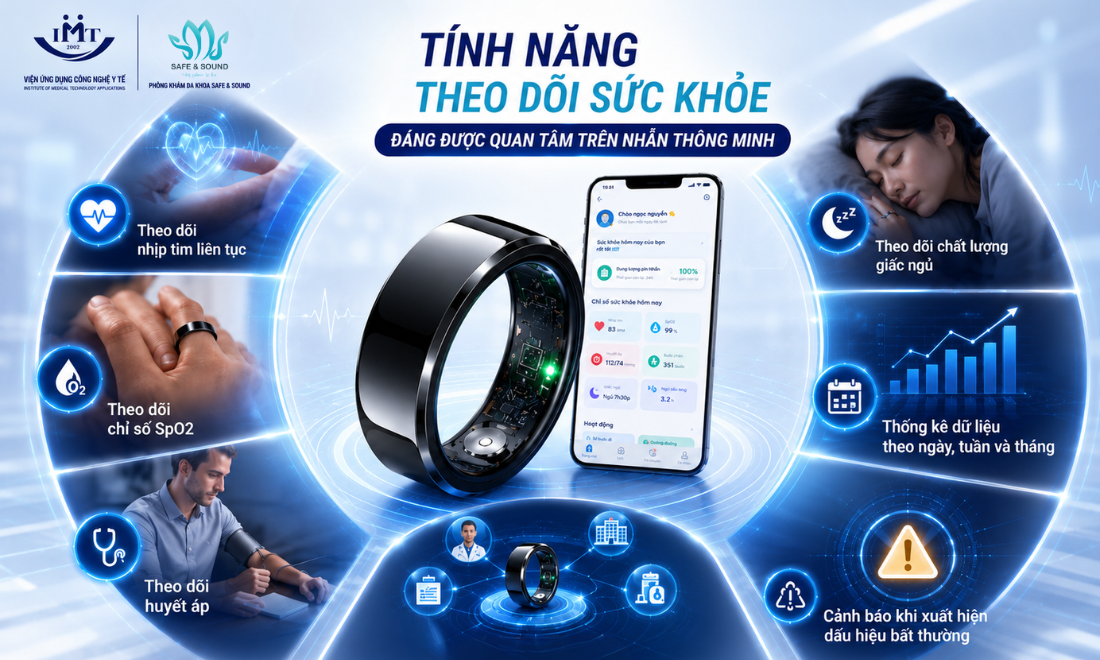 Monitor sleep quality
This is perhaps the feature that has changed many people's minds the most after using it for a while. Previously, we often judged sleep based on how we felt. Sleeping 8 hours meant getting enough sleep. Waking up feeling tired meant we didn't sleep well.
However, the reality is much more complex. Some people get enough sleep but have a very low rate of deep sleep. Others wake up multiple times during the night without realizing it. When they start tracking their sleep data, many people understand why they always feel low on energy despite getting enough sleep.
Statistical analysis by day, week, and month.
One of the strongest points of modern smart wearable devices is their data storage capacity. Looking only at daily metrics makes it difficult for users to see the whole picture.
But when data is analyzed weekly or monthly, health trends begin to become clearer. You can identify when you sleep best, when your heart rate tends to be higher, or when your body is less efficient. This is invaluable information for adjusting your lifestyle.
Warning when unusual signs appear
One of the limitations of self-monitoring health is that we often don't know when an indicator is considered abnormal. That's why many health technology platforms now integrate alert features.
Instead of requiring users to constantly check their data, the system will proactively notify them when it detects significant changes. This makes health monitoring much simpler and more effective.
Connecting the healthcare ecosystem
This is also the key difference between next-generation health tracking devices and those that simply record data. Today's users don't just need to know their metrics; they want to understand what that data means and what to do next.
That's also the direction IMT Ring is pursuing. Beyond simply monitoring heart rate, SpO2, blood pressure, or sleep, IMT Ring is being developed as a proactive health monitoring ecosystem. Health data is centralized on a single platform, combined with AI technology and doctor-guided support to help users better understand their health status.
This is what sets the device apart, making it more than just a smart ring; it becomes a tool to support daily healthcare.
>> See also: 5 Important Health Indicators a Smart Ring Can Track Every Day
What makes smart rings the new trend in the health field?
About five years ago, when people thought about health tracking devices, most immediately thought of smartwatches. Smartwatches almost dominated the wearable device market with a range of features from making and receiving calls and notifications to measuring heart rate and tracking activity.
But the longer users use them, the more interesting a problem they realize. They like the health data smartwatches provide, but not everyone likes wearing a watch all day. Many people take their watches off when they go to sleep because they find them cumbersome. Some don't want to wear a watch during meetings or in the workplace. Others simply want a device that focuses on health rather than dozens of other features.
That's where smart rings come in. A smart ring barely changes a user's daily routine. It's lightweight, compact, and almost imperceptible as wearing an electronic device. This allows for more continuous health monitoring.
In reality, health data is only valuable when collected consistently and over a long period. A heart rate reading taken only once a day doesn't tell you much. But when a device can record data continuously throughout the day, weeks, or months, users begin to see trends in their bodies.

Who are smart health-tracking rings suitable for?
Many people often assume that smart rings are only suitable for tech enthusiasts or those who need in-depth health monitoring. However, in reality, this device can be suitable for many different user groups, especially in the context of the increasing demand for proactive health care.
Depending on age, lifestyle, and goals, each person will find different benefits from a health-tracking smart ring.
|
Target group |
Benefits of using a smart ring |
|
Office staff |
Monitor heart rate, sleep, and overall health in a high-pressure, sedentary work environment. |
|
People who frequently stay up late |
Monitor sleep quality, duration of deep sleep, and habits that affect the body's ability to recover. |
|
People who care about their personal health. |
Easily track your daily health metrics to develop proactive health habits. |
|
Middle-aged and elderly people |
It helps monitor indicators such as blood pressure, heart rate, SpO2, and detect early signs of abnormalities. |
|
People who practice sports |
Monitor recovery rate, heart rate, and sleep quality to optimize exercise performance. |
|
People who travel frequently for business |
Monitor your health continuously, even with changes in living environment and daily routine. |
|
People who want to take care of their family's health. |
Easily manage your own and your loved ones' health data within a single technology ecosystem. |
Most importantly, smart rings aren't just suitable for people with health problems. On the contrary, this device is especially useful for those who want to proactively monitor their bodies while they are still healthy.
In many cases, early detection of abnormal changes in the body is more valuable than only monitoring health when clear symptoms appear. This is also why smart wearable devices like the IMT Ring are gradually becoming a companion in the daily health care journey of many modern users.
Conclude
Health is a long journey, and bodily changes don't usually happen in a single day. Most health problems begin with subtle signs such as decreased sleep quality, irregular heartbeats, or fluctuating health indicators that are difficult to recognize through our own senses.
Therefore, more and more people are choosing to proactively monitor their health instead of waiting until symptoms appear before starting to pay attention. And in that trend, smart rings are becoming a notable solution thanks to their ability to track many important health indicators in a compact design, convenient for daily use.
However, the value of a health tracking device lies not only in collecting data. More importantly, it helps users understand what that data reflects about their bodies and proactively make appropriate adjustments.
Developed with the vision of a "proactive health monitoring device with a doctor's support," the IMT Ring not only supports monitoring metrics such as heart rate, SpO2, blood pressure, and sleep, but also aims to build a comprehensive healthcare ecosystem. Through its integrated AI technology platform and expert connectivity, users can easily monitor, manage, and better understand their health status every day.
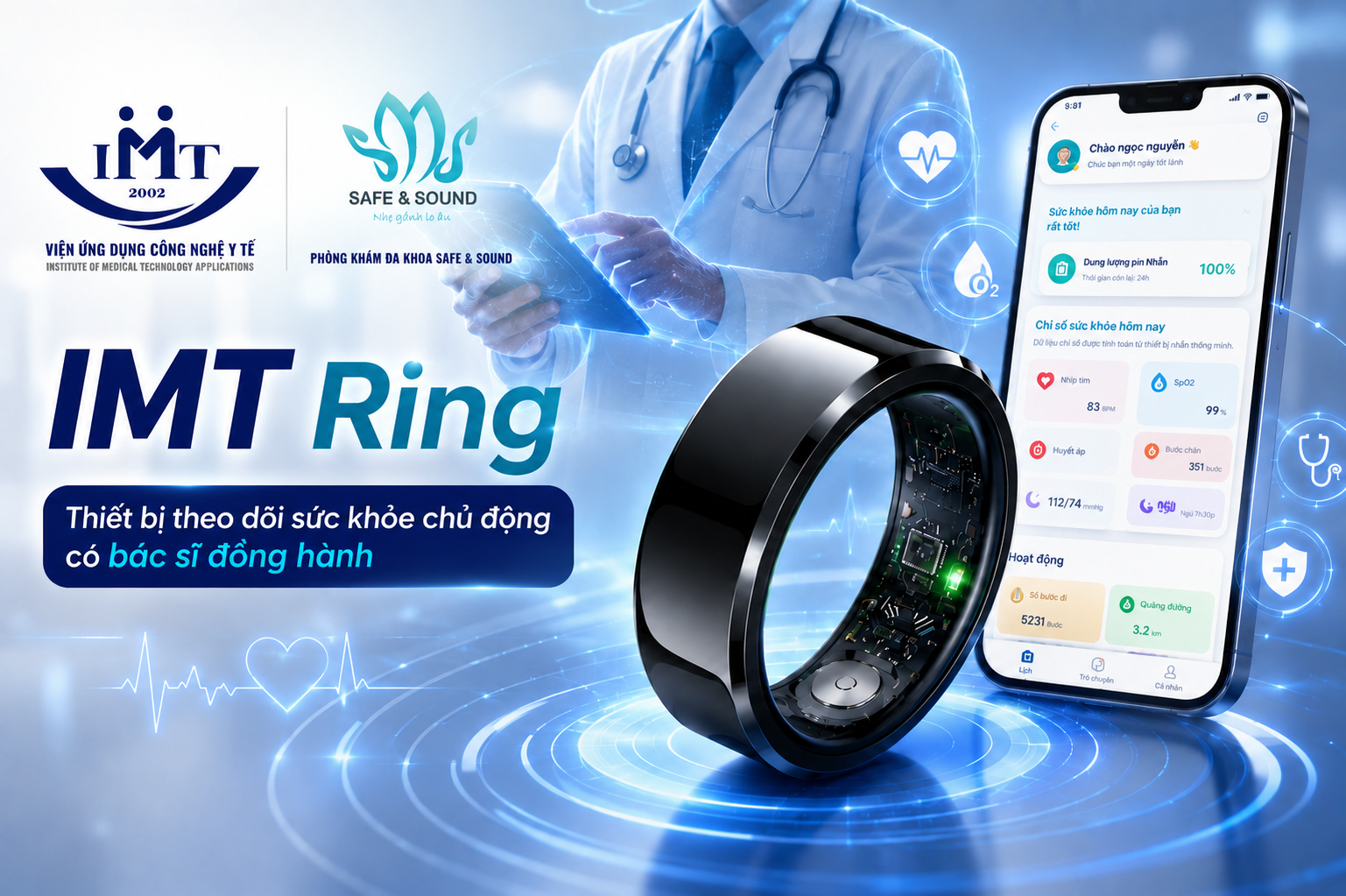
If you're looking for a solution that helps you proactively monitor your health in a simpler and more convenient way in modern life, the IMT Ring could be a worthwhile option to start your health care journey with even the smallest changes every day.
