
Work-Related Depression: When You Are Still Performing Well but Have Lost Connection with Yourself Inside | Safe and Sound
Some people still go to work regularly, attend meetings on time, meet deadlines, and appear completely normal in front of their colleagues. Yet inside, they gradually run out of energy, struggle to concentrate, find it difficult to feel joy, and no longer feel connected to their work or life as they once did. Work-related depression often does not appear as an obvious breakdown. Instead, it develops quietly after a prolonged period of stress and insufficient recovery. This article helps you understand why work pressure can deeply affect mental health, how to distinguish ordinary stress from signs of depression, and which symptoms are easily overlooked in people who are still trying to appear fine.
Why Can People with Work-Related Depression Still Appear Completely Fine?
Not everyone with depression shows obvious sadness, cries frequently, or becomes unable to work. Many people continue to maintain a stable outward appearance, especially when they have a strong sense of responsibility, are used to handling everything on their own, and do not want others to see that they are struggling.
In the workplace, trying to appear fine can sometimes become an automatic response. They still attend meetings, reply to emails, and try to maintain their performance, but everything begins to require more effort than before. Familiar tasks feel burdensome, ordinary conversations become exhausting, and professional achievements no longer bring much emotion or satisfaction.
Work-related depression does not result only from workload. It can also arise from feeling trapped by expectations, having too little opportunity to recover, and gradually losing connection with oneself. Therefore, the important question is not simply whether you can still work, but how much effort you are forcing yourself to expend in order to maintain that normal outward appearance.
>> Read more: Can Extreme Stress Lead to Depression? A Psychological Expert’s Perspective
How Is Ordinary Stress Different from Work-Related Depression?
Ordinary stress and work-related depression may both involve fatigue, tension, or reduced concentration. However, the key differences lie in how long the symptoms last, the ability to recover, and the extent to which they affect daily life.
|
Aspect |
Ordinary Stress |
Work-Related Depression |
|
Nature |
A temporary response to pressure. |
A prolonged condition that deeply affects mental well-being. |
|
Duration |
Eases when the pressure passes. |
Persists even when work becomes less stressful. |
|
Rest |
Rest usually supports recovery. |
Rest does not lead to clear improvement. |
|
Emotions |
Tension, anxiety, and pressure. |
Sadness, emptiness, and loss of motivation. |
|
Enjoyment |
Interest in enjoyable activities remains. |
Interest in work, hobbies, and relationships gradually fades. |
|
Impact |
Mainly related to the current work situation. |
Spreads to sleep, eating, relationships, and overall quality of life. |
How the Mind Is Gradually Worn Down When Work Exceeds a Person’s Capacity
One difficult day at work is not enough to cause depression. What is more concerning is a prolonged and repeated state of stress without genuine opportunities for recovery. When work continuously exceeds a person’s capacity to cope, the mind may be worn down in a very quiet and gradual way.
When the Body Remains on Alert but Is Never Allowed to Recover
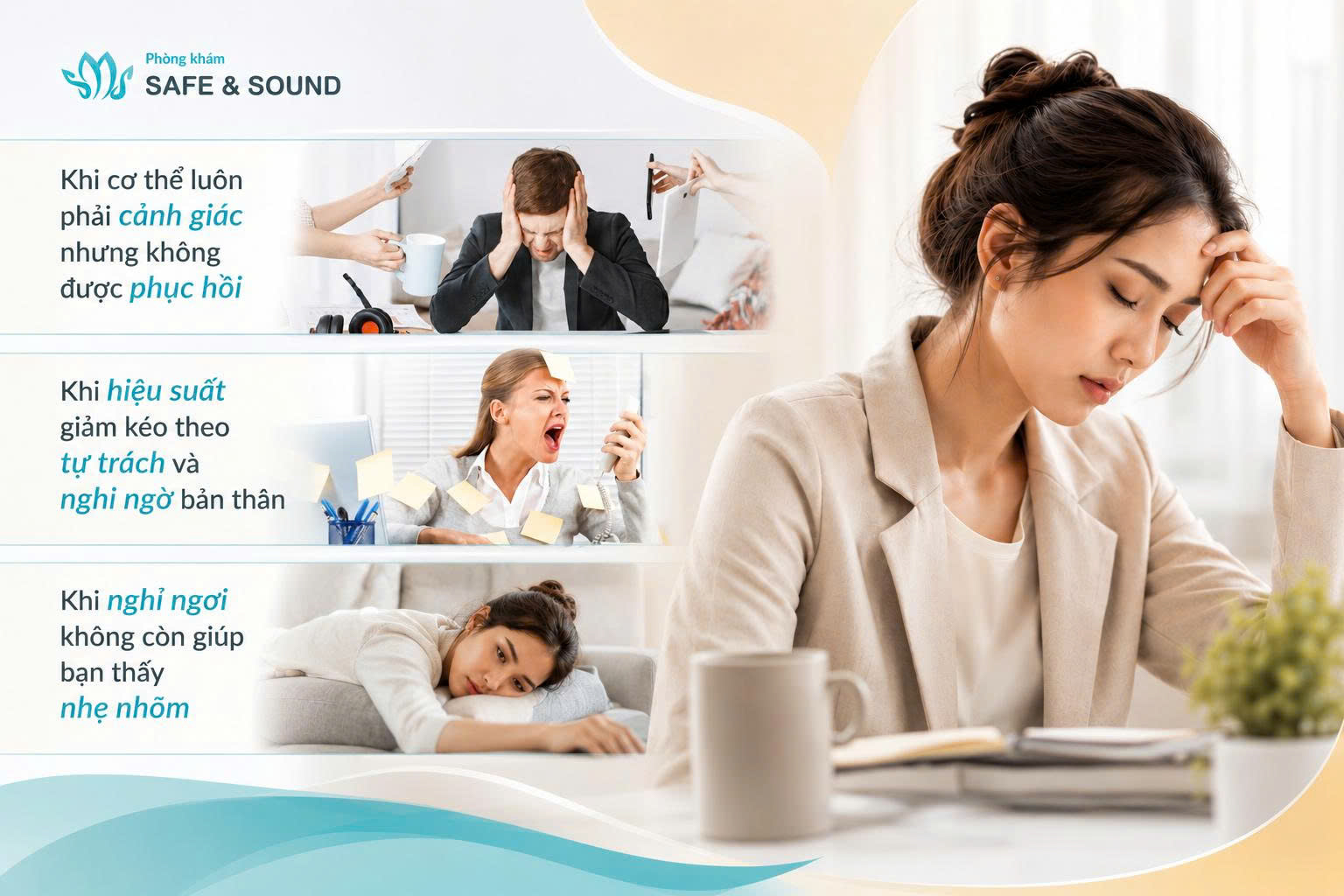
When pressure rises, the body usually enters a state of heightened alertness to help us focus and respond more quickly. This can be useful in the short term. However, when each day is filled with urgency, fear of making mistakes, fear of being late, or fear of failing to meet expectations, the body may struggle to return to a true state of rest.
At this point, a person may feel constantly tense, have difficulty sleeping, startle easily, or find it hard to relax even after leaving work. If this continues, the body’s natural ability to recover gradually declines. As a result, some people are not only exhausted at the end of the day but also wake up feeling depleted before the new day has even begun.
When Reduced Performance Leads to Self-Blame and Self-Doubt
A common cycle during prolonged work pressure is that the more exhausted a person becomes, the more their performance declines; yet the decline in performance causes them to blame themselves even more. They may need more time to complete familiar tasks, forget small details, struggle to concentrate, or delay work they once handled efficiently.
Instead of viewing these changes as signs of overload, many people conclude that they are becoming less capable, are no longer competent, or are disappointing others. At that point, pressure no longer comes only from the external demands of work; it also becomes an internal source of pressure.
This is an important feature of work-related depression. The person is not only exhausted by having too much to do but is also distressed by the feeling that they are no longer the confident, proactive, and capable version of themselves they once were. When self-blame persists, their sense of self-worth may also gradually weaken.
When Rest No Longer Brings Relief
With ordinary stress, rest usually helps the body recover. Adequate sleep, a day away from work, or time without having to deal with pressure may help a person feel lighter. However, when exhaustion has persisted for a long time, rest may no longer provide a clear sense of relief.
Some people still feel heavy after a weekend off, go on holiday without feeling happy, meet friends without being fully present, or do things they once enjoyed without any real excitement. This is not simply laziness or a lack of discipline. It may indicate that emotional well-being has been affected after a prolonged period of pressure.
When the loss of interest is no longer limited to work and begins to extend to other things that once held meaning, the problem has moved beyond ordinary occupational fatigue.
How Does the Journey from Work Pressure to Depression Usually Unfold?
Work-related depression does not develop overnight. It is the result of a prolonged accumulation of stress in which mental health is gradually worn down. Many people only realise that something is wrong when they have already reached the later stages of this process.

Stage 1: Moving Faster to Keep Up with the Pressure
Even after signs such as fatigue, sleep difficulties, or prolonged tension begin to appear, they still believe that everything will be fine if they simply try a little harder. Many people may even receive praise from supervisors or colleagues for their strong sense of responsibility, making it easier to ignore the body’s warning signals.
At this stage, the pressure may not yet have significantly affected quality of life. However, if the stress continues without sufficient time for recovery, the body will begin to send stronger warning signals.
Stage 2: The Body Speaks Up and the Mind Begins to Run Out of Energy
After maintaining a state of stress for a long period, the body is no longer able to recover as effectively as before. Many people begin waking up tired despite getting enough hours of sleep, struggle to concentrate at work, or make mistakes that were previously uncommon for them.
At the same time, activities that once brought joy no longer feel appealing. This is also the stage when signs of occupational burnout may begin to emerge. However, instead of resting, many people try to work even harder to restore their performance, causing the pressure to continue building and become more severe.
Stage 3: Self-Doubt and Withdrawal from the World Around You
When work performance declines over an extended period, many people begin to question their own abilities. They blame themselves for no longer working as effectively as before, feel guilty when they rest, or repeatedly compare themselves with their colleagues.
Negative thoughts become more frequent. Instead of viewing difficulties as a normal part of work, they begin to believe that they are not capable enough or are simply not trying hard enough.
At the same time, withdrawal becomes more noticeable. The person shares less about their emotions, avoids group activities, and gradually loses connection with the people around them. Outwardly, they may still complete their work, but internally they experience prolonged exhaustion, loneliness, and unease.
Stage 4: Depression Develops
A person with a depressive disorder may experience prolonged sadness, emptiness, or loss of motivation. Even when they are given time to rest or their workload is reduced, the heaviness does not easily disappear, and achievements that once brought joy no longer feel meaningful.
At this stage, the problem is no longer limited to work. It has begun to affect emotions, relationships, and overall quality of life. Recognising these changes early can help people understand their condition more clearly and actively seek appropriate support when needed.

Signs That Are Often Overlooked in the Workplace
Many people continue to maintain a professional appearance, complete their tasks, and attend meetings as expected. As a result, mental health difficulties may be hidden behind the image of a dedicated employee or a highly responsible manager.
Early signs do not always appear as obvious sadness. They may emerge through changes in thinking, behaviour, concentration, or physical health. Burnout and depression are particularly easy to confuse because both can cause fatigue, discouragement, and reduced motivation, but the extent of their impact is not entirely the same.
|
Aspect |
Stress / Occupational Burnout |
Signs Suggestive of Depression |
|
Physical |
Fatigue at the end of the workday, muscle tension, and difficulty sleeping when pressure increases. |
Persistent exhaustion, ongoing sleep disturbances, and changes in appetite or weight. |
|
Emotional |
Discouragement about work and pressure related to deadlines or responsibilities. |
A prolonged sense of emptiness and loss of interest in the things that once brought joy. |
|
Work |
Reduced motivation, procrastination, or difficulty concentrating. |
Feeling that every effort is meaningless and being unable to maintain performance over time. |
|
Personal life |
Rest can lead to significant improvement. |
Even with rest, it remains difficult to feel joy or relaxation. |
|
Relationships |
The impact is mainly limited to work. |
The effects may extend to family, friends, and close relationships. |
In addition to emotional changes, many other signs are easily overlooked in the workplace. The person may have difficulty concentrating, frequently forget tasks, or take much longer than usual to complete familiar responsibilities.
Some people become more irritable and tire quickly, while others gradually withdraw, communicate less, and avoid group activities that they previously joined without difficulty.
When Is Trying a Little Harder No Longer the Solution?
Effort is necessary at work, but not every problem can be solved by pushing harder. When the body and mind have been overloaded for a long time, continuing to force yourself may worsen the situation rather than help you overcome it.
One important warning sign is that rest no longer leads to clear recovery. You may sleep more but still feel tired, take the weekend off but remain tense, or temporarily put work aside while your mind still feels heavy. When exhaustion persists, the issue may involve more than a demanding schedule and may be connected to deeper mental health difficulties.
In addition, if you are not only discouraged by work but have also lost interest in family, friends, hobbies, or things that were once important to you, this should be taken seriously. Thoughts of self-blame, hopelessness, worthlessness, or having no value should not be overlooked.
Most importantly, if you experience thoughts of harming yourself or no longer wanting to live, seek immediate support from a trusted family member, a mental health professional, or an appropriate healthcare facility. You do not need to wait until you have completely broken down before treating the situation as serious. Early recognition is always a better way to protect your mental health and quality of life.
>> Read more: What Should You Keep in Mind When Seeking an Assessment for Depression?
Conclusion
Work pressure is a part of modern life, but when stress continues for a long time and exceeds a person’s ability to adapt, it can significantly affect mental health. Work-related depression usually does not appear suddenly. Instead, it develops through a quiet process of accumulation, progressing from fatigue and loss of motivation to prolonged emptiness and exhaustion.

What matters is not how much longer you can force yourself to endure, but whether you can recognise the warning signs from your body and emotions early enough. Paying attention to mental health, resting when necessary, and seeking appropriate support are not signs of weakness. They are proactive ways of protecting quality of life. At SNS (Safe & Sound Clinic), people experiencing difficulties related to work pressure, burnout, anxiety, or depression can receive support throughout the assessment process and in identifying an appropriate direction for care.
