

6 Common Signs of Depression and Symptoms That Should Not Be Overlooked | Safe and Sound
After a difficult life event, work-related pressure, or changes in relationships, it is entirely understandable for a person’s mood to become more negative. However, when these feelings persist, occur frequently, and begin to affect study, work, relationships, or daily life, they may no longer be simply a temporary period of difficulty. Recognising the signs of depression early does not mean diagnosing yourself or someone else. Rather, it is a way to better understand changes in emotions, thoughts, and behaviours, and to recognise when greater attention should be given to mental health.
What Are the Signs of Depression?
Depression is a common mood disorder characterised by persistent sadness, low mood, or loss of interest in activities that once brought pleasure. It does not only affect emotions; depression can also influence thoughts, behaviours, social relationships, and a person’s ability to manage everyday life.
Many people assume that the signs of depression are simply feelings of sadness. In reality, depression can present in many different ways. Some people may notice that they have more difficulty sleeping, feel more tired, or find it harder to concentrate than before. Others may gradually lose interest in work, hobbies, or social activities. This wide range of symptoms can make depression difficult to recognise at an early stage.
The important point is that these signs usually persist for a certain period and have a significant impact on the person’s quality of life.
6 Common Signs of Depression That Should Not Be Overlooked
Although the symptoms of depression can vary from one person to another, several signs are relatively common and are frequently reported by people experiencing this condition. Recognising the signs below may help individuals pay closer attention to changes in themselves or their loved ones and consider seeking appropriate support when necessary.
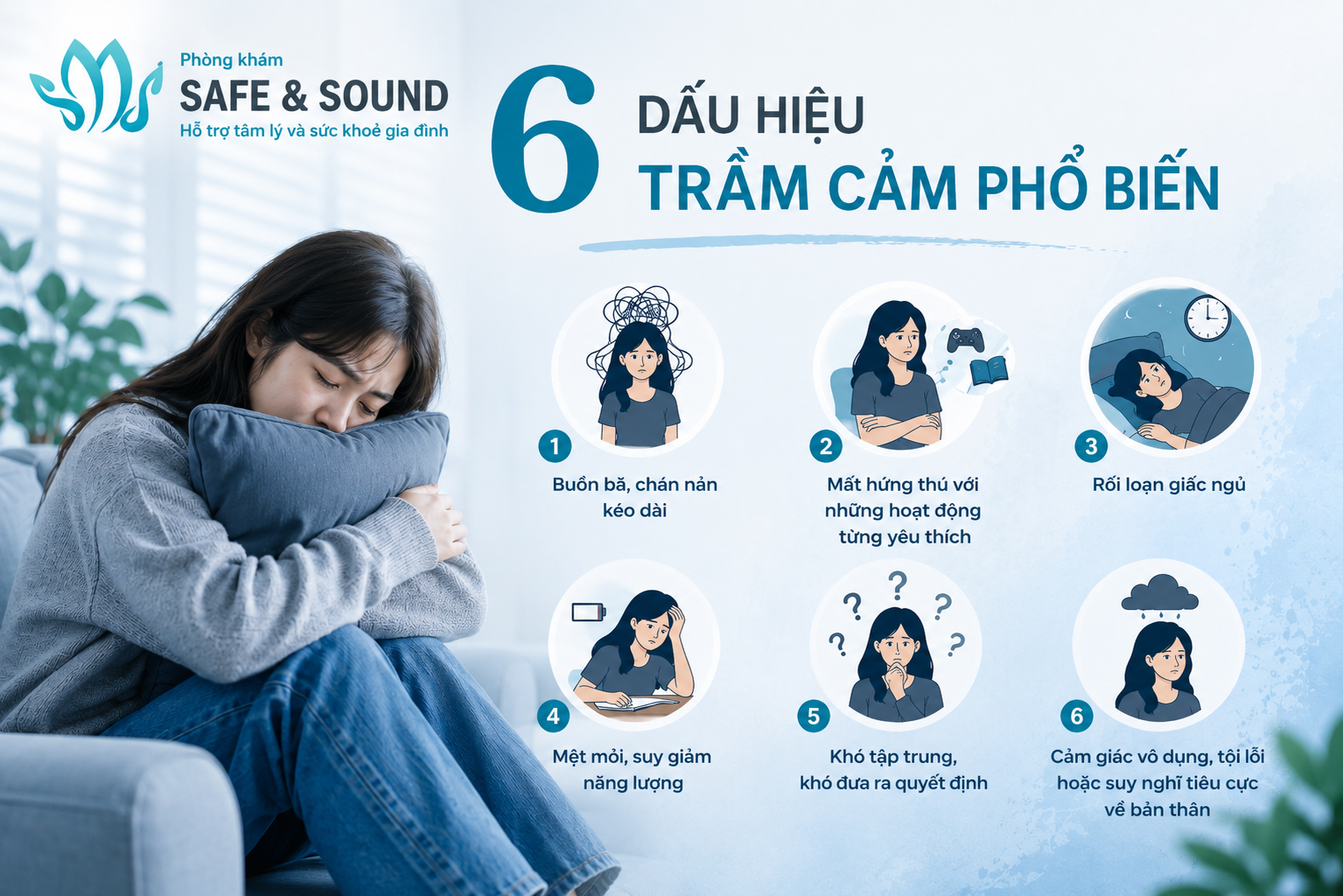
Sign 1: Persistent Sadness or Low Mood
Sadness is a normal human emotion. However, in a person showing signs of depression, this feeling often occurs nearly every day and continues for a prolonged period rather than lasting only a few hours or days.
The person may experience:
- Persistent sadness.
- Frequent feelings of discouragement or loss of hope.
- An unexplained sense of emptiness.
- Greater emotional sensitivity or crying more easily than usual.
- A tendency to view situations negatively.
These emotions may occur even when no negative event has taken place, or they may continue for much longer than would be expected in relation to the circumstances that triggered them.
Sign 2: Loss of Interest in Previously Enjoyable Activities
This is considered one of the characteristic signs of depression. Activities that once brought pleasure - such as meeting friends, reading, playing sports, caring for family members, or pursuing personal interests - may gradually become less appealing.
The person may no longer feel as enthusiastic as before and may participate only out of responsibility or habit. Over time, this can lead to:
- Reduced motivation at work or in study.
- A narrowing of social activities.
- Less interaction with family members and friends.
- A growing sense that life is monotonous or lacks meaning.
Sign 3: Sleep Disturbances
Changes in sleep are relatively common among people showing signs of depression.
Some people have difficulty falling asleep even when they feel physically tired. Others wake repeatedly during the night or wake very early and cannot return to sleep. Conversely, some people sleep more than usual but still feel low in energy after waking.
Persistent sleep problems not only increase fatigue but can also affect concentration, mood, and overall quality of life.
Sign 4: Persistent Fatigue and Reduced Energy
Fatigue is common in many health conditions. However, in people showing signs of depression, exhaustion may occur even when they have not been overworking or have had time to rest.
The person may describe:
- Constantly feeling low in energy.
- Difficulty starting or completing tasks.
- Simple activities feeling more burdensome than before.
- A lack of motivation to care for themselves or take part in everyday activities.
Persistent exhaustion can create a vicious cycle, making it increasingly difficult to maintain normal daily routines.
Sign 5: Difficulty Concentrating and Making Decisions
Depression affects not only emotions but also cognitive functioning.
A person showing signs of depression may notice that they:
- Become easily distracted while working or studying.
- Are more forgetful than usual.
- Find it difficult to sustain attention for long periods.
- Have trouble making decisions, even simple ones.
These changes may reduce performance at work or in study and may cause the person to feel more frustrated or self-critical.
Sign 6: Feelings of Worthlessness, Guilt, or Negative Thoughts About Oneself
Many people experiencing depression tend to view themselves negatively. They may:
- Frequently blame themselves.
- Feel inadequate or like a failure.
- Believe that they are a burden to others.
- Hold a pessimistic view of the future.
- Feel hopeless when facing difficulties in life.
In more serious cases, a person may have thoughts related to death or engage in self-harming behaviour. This is a sign that requires particular attention, and professional support should be sought as soon as possible.
>> Read more: Risk Factors for Depression You Should Know About

Not Everyone With Depression Shows the Same Symptoms
In reality, depression does not always follow a fixed pattern. Each person may experience different signs depending on their living circumstances, personality, ability to cope with stress, and the challenges they are facing.
Because of these differences, many people do not realise that they are experiencing a mental health problem. They may believe that their experience does not match what they have read or heard about depression and therefore overlook the early warning signs.

Signs May Present Differently From Person to Person
There is no single list of symptoms that appears in exactly the same way in everyone. While some people notice clear emotional changes, others primarily experience difficulties with sleep, energy, or concentration.
For example, one person may frequently:
- Feel sad and lose interest in life.
- Feel hopeless or pessimistic about the future.
- Become emotionally sensitive and have difficulty regulating emotions.
Meanwhile, another person may mainly experience:
- Insomnia or poor-quality sleep.
- Persistent fatigue despite resting.
- Difficulty concentrating while studying or working.
- Headaches, bodily aches, or unexplained exhaustion.
Some people may not feel noticeably sadder than before. Instead, they may become irritable, lose their temper easily, or have less patience with situations that would normally seem ordinary. This shows that depression can present in many different forms and may not always be easy to recognise.
The Level of Impact May Also Vary
The signs of depression differ not only in how they appear but also in how strongly they affect a person’s life.
Some people may still be able to maintain work, study, and daily routines despite experiencing significant emotional difficulties. However, they may have to make a great deal of effort to complete tasks that previously felt natural and manageable.
These effects may appear in different areas, including:
- Reduced performance at work or in study.
- Difficulty maintaining everyday routines.
- Withdrawal from social relationships.
- Reduced interest in activities once enjoyed.
- Frequent physical and emotional exhaustion.
Therefore, what matters is not only how many signs a person experiences but also the extent to which those signs affect their life. When symptoms persist or begin to cause difficulties in daily activities, study, work, or relationships, it is time to pay greater attention to mental health.
When Should Signs of Depression Be Taken Seriously?
Not every feeling of sadness, tiredness, or loss of motivation means that a person has depression. However, when these signs persist or begin to have a clear impact on daily life, it may be time to pay closer attention to mental health.
|
Situation |
Why Does It Require Attention? |
|
Symptoms persist for two weeks or longer |
Prolonged emotional or behavioural changes may no longer be a temporary response to life stress. |
|
Sadness or loss of interest occurs nearly every day |
These are signs commonly mentioned in descriptions of depression. |
|
Work or study is clearly affected |
Reduced concentration, motivation, or performance can lower quality of life. |
|
Difficulty maintaining everyday activities |
Tasks that were once familiar and manageable become more difficult. |
|
Relationships are affected |
The person may withdraw, avoid communication, or become less connected with others. |
|
Thoughts of death or self-harm occur |
This sign requires particular attention, and professional support should be sought as soon as possible. |
When Symptoms Persist for Two Weeks or Longer
Signs that appear briefly after a difficult event do not necessarily indicate depression. However, if changes in mood, sleep, energy, or motivation continue for two weeks or longer and show no sign of improvement, they should not be overlooked.
.png)
When Daily Life Begins to Be Affected
An important consideration is not only the number of signs present but also their level of impact. When study, work, personal routines, or relationships begin to be negatively affected, the person should give greater attention to their mental health.
When Thoughts of Death or Self-Harm Occur
This is a sign that requires particular attention. If a person frequently thinks about death, feels that life no longer has meaning, or intends to harm themselves, professional support should be sought as soon as possible.
>> Reference: How to Cope With a Relapse of Depression
Conclusion
Signs of depressive disorder are not limited to sadness. They may appear in many different forms, including loss of interest, sleep disturbances, persistent fatigue, reduced concentration, or negative thoughts about oneself. Not everyone experiences the same signs, so it is important to recognise changes that persist and affect everyday life.
Many people seek support only after emotional difficulties have significantly affected their work, study, or relationships. However, mental health deserves the same attention as physical health. Being listened to, assessed, and supported at the right time can help individuals better understand what they are experiencing and identify an appropriate direction for care.

At SNS (Safe & Sound Clinic), mental health concerns are approached with respect for each person’s individual experience, with an emphasis on listening, accompanying, and supporting every individual throughout their mental health care journey.
Understanding the signs of depression correctly is not intended for self-diagnosis. Instead, it helps people become more attentive to their own mental health and that of those around them. When symptoms persist or become increasingly severe, seeking appropriate support is an important step toward receiving timely assessment and care.
