

Breakup-Related Depression or Just Post-Breakup Distress? When the Boundary Is Not Easy to Recognize | Safe and Sound
A breakup is one of the most difficult emotional experiences many people ever go through. Some people lose sleep for many nights in a row; some are no longer interested in work or the things they once loved; and others feel as though a part of their life has suddenly disappeared. At times like these, many people wonder whether what they are experiencing is simply the normal pain of a breakup or has become a sign of breakup-related depression.
Why can a breakup have such a powerful impact on mental health?
Many people have heard the saying that time heals all wounds in love. That may be true in many cases. However, to understand why a breakup can sometimes have such a strong psychological impact, it is first necessary to recognize that love is not merely an emotional relationship.
A breakup is not only the loss of a relationship
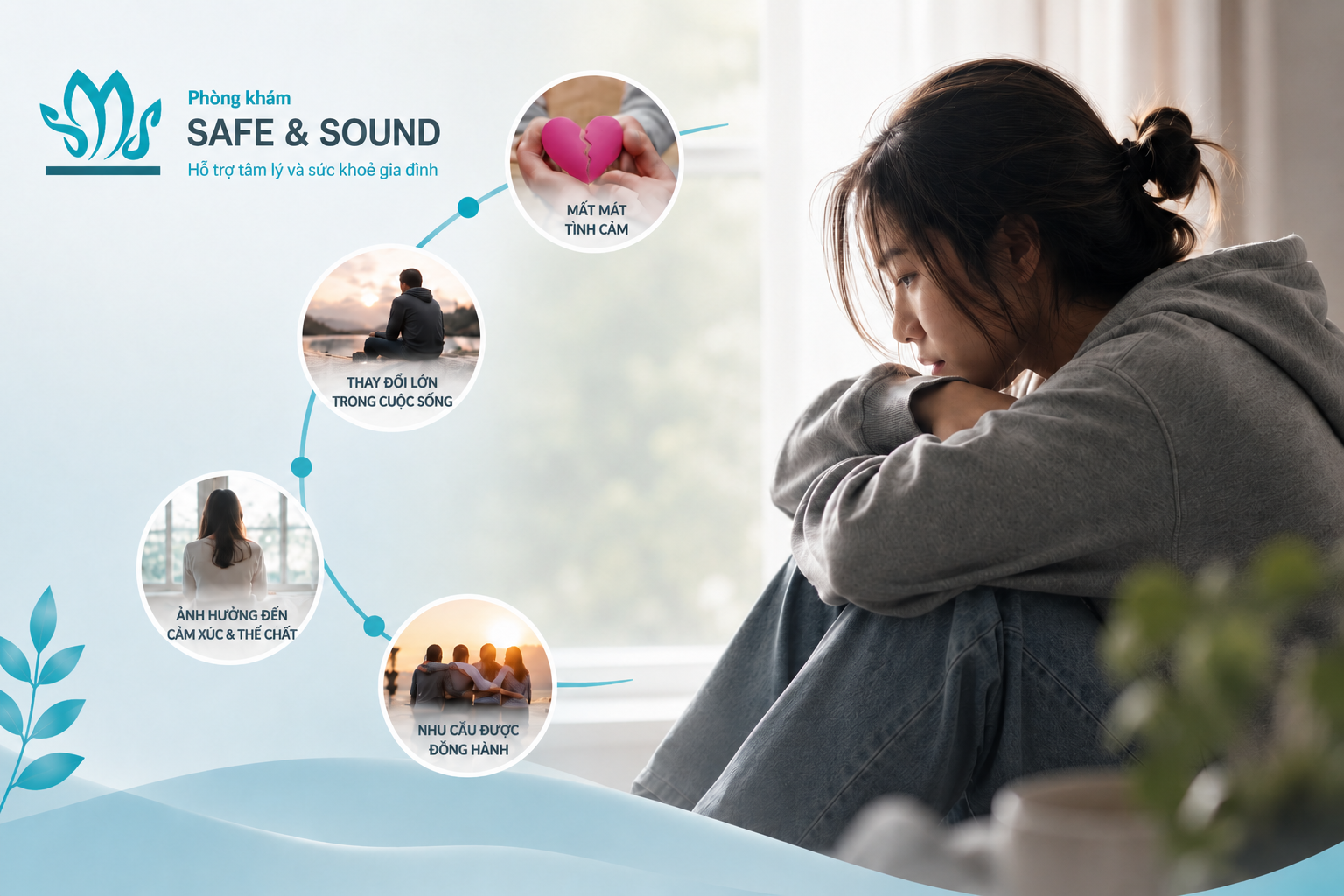
Behind a breakup may be the loss of many other things: long-established routines, the feeling of being cared for and accompanied, future plans once built together, or simply the sense of security that comes from knowing someone is always by your side.
This is also why many people feel that life has become empty after a breakup, even when they still have family, friends, and work. What they are facing is not only the end of a relationship, but also a major change in the way they understand and experience their own life.
The level of distress each person experiences does not depend entirely on how long the relationship lasted. It is also related to the meaning that relationship held for them. The deeper the attachment, the greater the sense of loss after the breakup is likely to be.
The brain responds to a breakup as it does to a painful experience
Many people describe heartbreak through very specific sensations, such as chest pain, a lump in the throat, shortness of breath, insomnia, or physical exhaustion. These experiences may make them wonder whether they are overreacting.
However, the studies mentioned in the referenced materials suggest that rejection or the loss of an important relationship may activate brain regions associated with pain. This helps explain why post-breakup distress may involve not only sadness, but also very real physical symptoms.
In addition, when a relationship ends, changes in the chemicals involved in emotion and stress may affect sleep, concentration, energy levels, and mood. This is one reason many people feel noticeably different after a romantic loss.
It is important to remember that these reactions are not signs of weakness. They reflect the way the body and mind are trying to adapt to a meaningful loss.
Why do some people recover quickly while others remain stuck for a long time?
Not everyone responds to a breakup in the same way. Some people gradually regain stability after a few weeks or months. Others continue to experience prolonged distress even after a considerable period of time. This difference may be related to many factors.
Some people invest most of their emotions and expectations in the relationship, so when it ends, they feel as though they have lost an important part of their life. Others face particularly difficult circumstances, such as betrayal, an unexpected breakup, or the end of a relationship that lasted many years.
Support from family, friends, and the surrounding environment can also make a significant difference. People who have somewhere to share their feelings and who are listened to and supported often have a better chance of moving through the difficult period than those who have to endure every emotion alone.
For this reason, there is no fixed period within which a person is expected to get over a breakup. What matters more is the direction in which their emotions are changing and how those emotions are affecting their life.
>> Further reading: How Can You Move Through the Pain of a Breakup Sooner?
Is post-breakup distress always depression?
One reason many people become worried after a breakup is that the emotions they are experiencing can resemble symptoms commonly associated with depression. Sadness, insomnia, loss of interest in life, difficulty concentrating, and frequent thoughts about what happened may occur in both states.
When a relationship ends, feeling hurt, longing for the other person, disappointed, or directionless for a period of time is a normal psychological response to a meaningful loss. This sadness is usually directly connected to the breakup and tends to ease gradually as the person adapts to the change in their life.
Depression, however, is not simply sadness caused by a specific event. Emotional difficulties may become deeper, last longer, and begin to affect many areas of life. The key issue is not how intensely a person feels sad, but how those emotions are affecting their ability to function, work, study, and connect with the world around them.
|
Post-breakup distress |
Post-breakup depression that requires attention |
|
The sadness is usually directly related to the breakup |
Negative emotions spread into many areas of life |
|
There are still moments of relief, comfort, or emotional ease |
The person can barely experience pleasure from things that once had meaning |
|
The emotions tend to ease gradually over time |
The emotions persist or become increasingly severe |
|
Most work, study, and daily activities can still be maintained |
Work, study, or everyday life is clearly affected |
|
There is still a desire to connect with family and friends |
The person withdraws and avoids social relationships |
|
The pain comes from losing an important relationship |
Negative thoughts about oneself and the future occur frequently |
|
There are no thoughts of self-harm |
Thoughts about death or self-harm may appear |
It is important not to rush into self-diagnosis based on only a few isolated signs. Emotional pain after a breakup is deeply human. However, if these difficulties persist, increasingly take over daily life, or leave you feeling unable to regain balance as before, it may be time to take your mental health more seriously.

When does post-breakup pain begin to become a warning sign?
There is no fixed amount of time within which a person must recover from a breakup. Some people need a few weeks, while others need several months to adapt gradually to the change in their life. Therefore, the main concern is not how long you have been sad, but the direction in which that sadness is developing and how it is affecting your life.
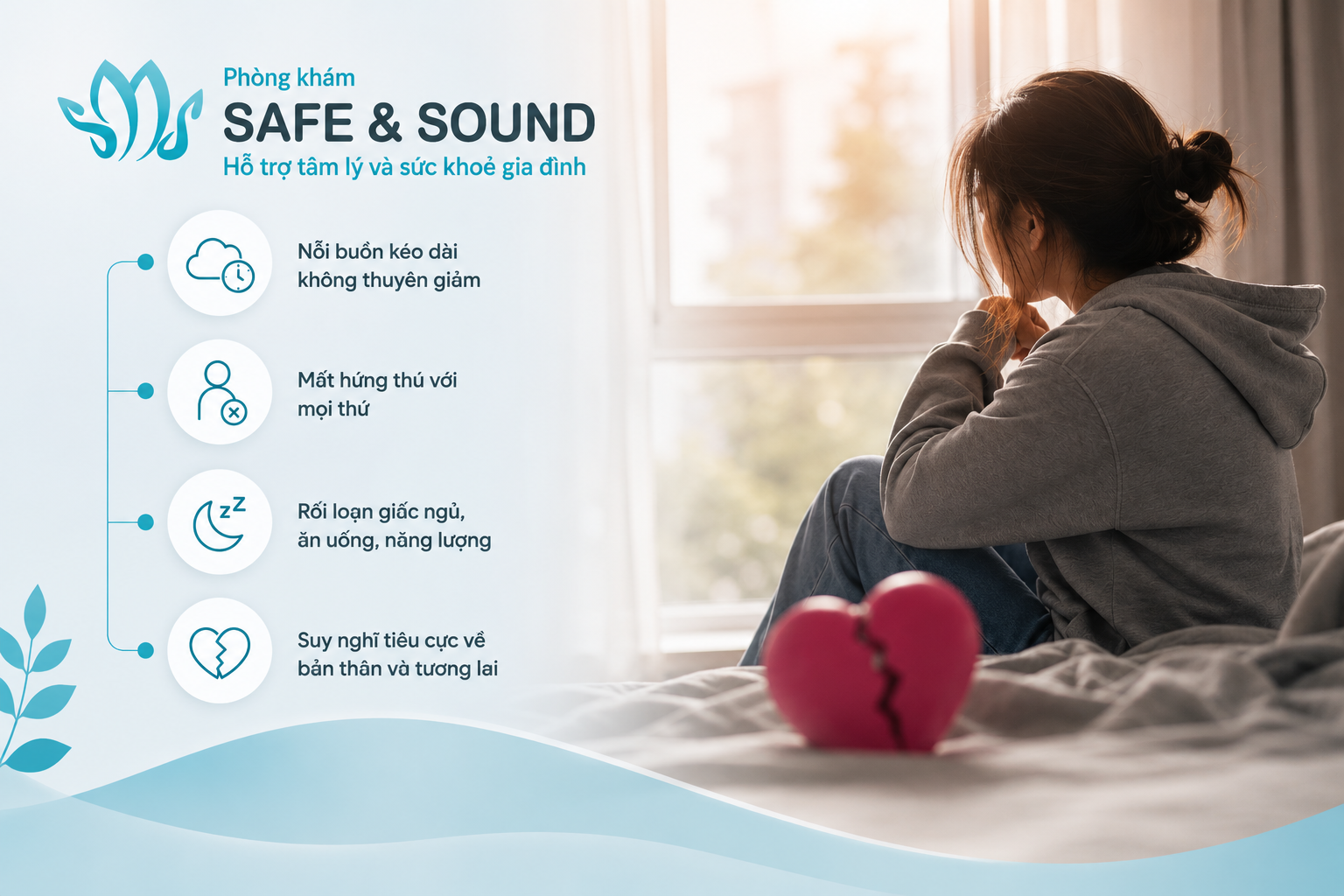
If the emotional pain does not gradually ease but instead increasingly occupies your thoughts, drains your energy, and disrupts your daily functioning, this may indicate that you need greater attention and support.
The sadness no longer fades and increasingly takes over your life
After a breakup, frequently thinking about an ex-partner or feeling hurt when recalling shared memories is understandable. Over time, however, most people gradually adapt to the loss, and these emotions become less frequent.
In some cases, by contrast, the sadness does not change or even becomes more intense. The person may spend most of their time thinking about the breakup, repeatedly replaying what happened, or asking themselves questions that have no clear answers.
Common signs may include:
- Thinking about the breakup constantly, even while working or studying.
- Finding it difficult to focus on other areas of life.
- Feeling sad almost every day.
- Being unable to see anything positive in the present or the future.
When pain occupies most of a person’s mental space for a prolonged period, it may no longer be simply regret following the end of a relationship.
Loss of interest in everything, not only romantic relationships
A person who has recently gone through a breakup may no longer feel interested in love or in activities associated with their former partner. This is relatively common. A more concerning sign is when the loss of interest spreads into many other areas of life.
Things that once brought pleasure gradually begin to feel meaningless. The person may no longer want to meet friends, engage in personal interests, work, or study. Even ordinary daily activities may feel heavy and difficult to begin.
Many people describe this state not as intense pain, but as a prolonged sense of emptiness. They still wake up each day and complete some necessary tasks, but they no longer truly experience pleasure or a connection with life as they once did.
This is one of the signs often considered when assessing mental health difficulties following a breakup.
The body begins to signal distress through physical symptoms
Emotional distress does not appear only in thoughts; it may also have a clear impact on the body. After a breakup, many people experience periods of insomnia or changes in eating habits. However, if these difficulties persist and do not improve, they may begin to affect physical health and daily functioning.
Common signs may include:
- Difficulty falling asleep or frequently waking during the night.
- Sleeping more than usual but still feeling tired.
- Loss of appetite or eating more as a way of coping with emotions.
- Constantly feeling low in energy despite having rested.
- Prolonged physical sluggishness, exhaustion, or lack of motivation.
When these changes continue for several weeks and interfere with everyday life, they should not be dismissed as a routine emotional response.

Negative thoughts begin to turn toward the self
After a breakup, many people may wonder what they did wrong or regret things they wish they had done differently. In some cases, however, self-blame gradually becomes a persistent negative judgment of one’s own worth.
The person may begin to believe:
- I am not good enough.
- I am the reason everything fell apart.
- No one will ever love me.
- There will be nothing positive in my future.
These thoughts may repeat again and again and become increasingly difficult to control. In more serious cases, some people may develop thoughts about death, feel that they no longer want to live, or engage in self-harming behavior.
If such thoughts appear, professional support should not be delayed. These are serious warning signs that require timely attention to help ensure the safety of the person experiencing them.
>> Read more: The Emotional Stages After a Breakup and How to Move Through Them
Conclusion
A breakup is a loss that can trigger very strong emotional reactions. Sadness, longing, insomnia, or emotional collapse for a period after the end of a relationship are experiences many people have gone through. Therefore, not every form of post-breakup pain is depression.
What matters is not trying to determine by yourself whether you have depression, but observing how these emotions are affecting your life. If the sadness gradually lessens over time and you are still able to maintain relationships, work, and ordinary activities, it is often part of the natural recovery process following a loss.
On the other hand, if negative emotions persist, increasingly dominate your thoughts, reduce your quality of life, or are accompanied by thoughts of harming yourself, this may be a sign that you need more than simply trying harder or enduring the situation alone.

At SNS (Safe & Sound Clinic), mental health support is approached with respect for each person’s individual experience. For those facing prolonged difficulties after a breakup or other emotional events, being properly understood and supported can be an important first step on the path toward recovery.
