

Causes of Depression: Why Do People Respond Differently to the Same Life Event? | Safe and Sound
The causes of depression are a common concern for people seeking to understand mental health. Some individuals develop symptoms after a major life event, such as the loss of a loved one, divorce, or unemployment. However, depression can also occur even when nothing in a person’s life appears particularly unusual. This leads many people to ask: Why does someone develop depression? The article below will help you better understand the factors that may be associated with the onset of depression and why people can have very different experiences when facing the same circumstances.
What Causes Depression?
When discussing depression, many people try to identify a specific reason that explains why the condition has developed. However, according to current professional literature, depression is considered a multifactorial disorder. This means that no single cause can explain depression in every person.
In some cases, symptoms appear after prolonged pressure or a major life event. Meanwhile, other people may experience similar circumstances without developing the condition. This suggests that depression usually results from the combined effects of multiple factors.
What Factors in Life Can Contribute to Depression?
A person’s living environment, accumulated past experiences, personality characteristics, physical health, and biological factors within the body may all influence mental health in very different ways.
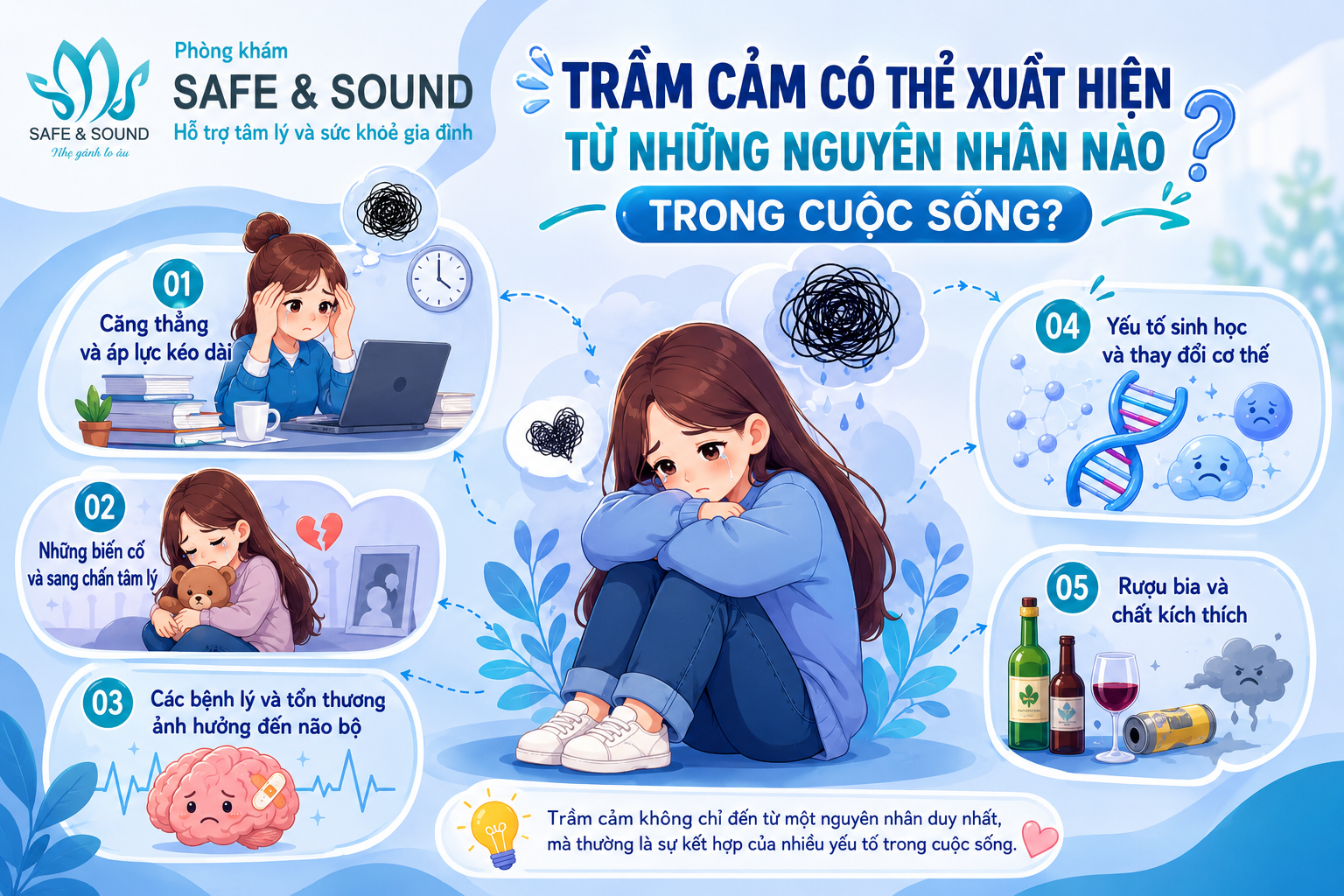
Cause 01: Prolonged Stress and Pressure in Daily Life
Pressure is an unavoidable part of life. However, the main concern is not simply that a person faces pressure, but that the stress continues for weeks or months without an opportunity for relief or recovery.
When a person must continuously adapt to demands, responsibilities, or expectations, the body remains in a prolonged state of stress. Over time, this may affect sleep, energy levels, concentration, and emotional well-being.
Commonly reported sources of pressure include:
- An excessive workload, frequent overtime, or prolonged pressure to perform.
- Academic pressure, examinations, or concerns about future direction among students.
- Financial burdens and responsibilities for caring for family members or relatives.
- Ongoing conflicts in relationships that have not been fully resolved.
Not everyone who faces pressure will develop depression. However, when several sources of pressure occur at the same time and continue over a prolonged period, mental health may be significantly affected.
Cause 02: Major Life Events and Psychological Trauma
At certain points in life, a single event can completely change a person’s sense of safety and stability.
This may involve the death of a loved one, divorce, job loss, or serious financial difficulties. These experiences are often accompanied by feelings of loss, helplessness, or disorientation, requiring the individual to cope with significant emotional challenges.
Commonly mentioned life events include:
- The loss of a loved one.
- The breakdown of a marriage or another important relationship.
- Unemployment or the loss of a primary source of income.
- A financial crisis, bankruptcy, or prolonged debt.
It is important to note that psychological pressure is not caused only by negative events. In practice, even positive changes such as marriage, childbirth, changing jobs, or moving to a new place can create a significant adjustment burden for some people.
The effect on mental health may sometimes depend less on the event itself and more on how each person experiences and responds to the change.
Cause 03: Medical Conditions and Injuries Affecting the Brain
When people think about depression, they often assume that it is entirely a psychological issue. However, brain function also plays an important role in regulating emotions and behavior.
Certain medical conditions or injuries affecting the nervous system may increase the risk of depressive symptoms. When brain regions involved in emotional processing are affected, a person’s ability to regulate mood and respond to stress may also change.
Examples commonly mentioned in professional literature include:
- Traumatic brain injury.
- Encephalitis.
- Brain tumors.
- Neurological damage that affects brain function.
This is also why an assessment of physical health may sometimes need to be conducted alongside a mental health assessment during clinical evaluation.
Cause 04: Biological Factors and Changes Within the Body
In addition to psychological and environmental factors, many studies suggest that certain biological factors may also be associated with the risk of depression. Genetics is often among the first factors mentioned.
People who have a family member with depression or another mood disorder may have a higher risk than the general population. However, this does not mean that depression will definitely occur.
Neurotransmitters in the brain, such as serotonin and noradrenaline, are also thought to play a role in emotional regulation. When the activity of these substances changes, a person’s mood and ability to regulate emotions may also be affected.
Hormonal changes during certain stages of life are another factor that deserves attention. This is why postpartum depression is often cited as a clear example of the relationship between hormones and mental health.
Cause 05: Alcohol and Other Psychoactive Substances
Many people turn to alcohol as a way to reduce stress or temporarily forget the difficulties in their lives. In the short term, this may create a temporary sense of relief. In the long term, however, the misuse of alcohol and other psychoactive substances can have many negative effects on mental health.
Alcohol and other substances can affect nervous-system functioning, disrupt sleep, reduce emotional control, and make existing psychological difficulties more severe.
Therefore, rather than resolving pressure, dependence on these substances may become a factor that increases the risk of depressive symptoms or causes them to persist.
>> Further reading: Are You Aware of the Risk Factors for Depression?

Why Can a Person with Depression Still Smile, Talk, and Continue Daily Activities?
One of the most common misconceptions about depression is the belief that a person with depressive disorder must always appear sad, cry frequently, or become completely unable to study or work. As a result, when someone still attends school regularly, completes their work, meets friends, or even smiles and talks often, others may assume that the person cannot be depressed.
In reality, mental health difficulties are not always visible from the outside. Many people experiencing depression can maintain their daily routines for a long time. They still wake up each morning, go to work, care for their families, and complete necessary responsibilities. However, this does not mean that they feel well.
The difference is that these activities may no longer bring the same sense of interest or enjoyment as before. Some people describe themselves as continuing to live, work, and communicate with others, but doing everything as a routine or an obligation that must be completed. There may be little visible change on the outside, while inside they experience persistent fatigue, emptiness, or emotional exhaustion.
Therefore, the fact that someone can still smile, study, or work normally is not evidence that they are not experiencing mental health difficulties. Depression does not always present through tears or an obvious breakdown. Sometimes, the greatest struggles are hidden behind an entirely normal appearance.
.png)
Who May Be More Vulnerable When Facing Prolonged Pressure?
Not everyone who experiences the same life event faces the same risk of depression. Some people gradually regain emotional stability, while others continue to struggle and develop several symptoms associated with depression.
This occurs because each person’s psychological response is shaped by many different factors, including their living circumstances, available support, previous experiences, and ability to adapt to stress.
- Pregnant and postpartum women: This is a period in which the body and daily life undergo many changes within a short time. Hormonal changes, the pressure of caring for a baby, prolonged sleep deprivation, or the feeling that one must perform the role of a mother perfectly may make some women more psychologically vulnerable.
- Working adults: In addition to work-related pressure, many people must manage financial responsibilities, family obligations, and social relationships. When several pressures occur simultaneously over a long period, emotional and mental exhaustion may gradually develop.
- People experiencing loss: The death of a loved one, divorce, unemployment, or a financial crisis can all have a strong impact on mental health. However, the degree of impact often depends on the person’s ability to adapt, their support resources, and their previous life experiences.
- Students: Examinations, grades, and uncertainty about the future are common sources of pressure for students. Some may view an examination as a challenge to overcome, while others may experience the pressure as overwhelming and feel continuously anxious about the outcome.
>> Read more: Depression in High School Students - Early Warning Signs Parents Should Not Overlook
When Is It Time to See a Mental Health Professional?
Not every feeling of sadness or stress is a sign of depression. However, if emotional changes persist and begin to affect daily life, this may be a time to pay closer attention.
Below are several situations in which seeking support from a qualified mental health professional should be considered:
|
Warning Sign |
Why It Deserves Attention |
|
Symptoms persist for two weeks or longer |
They may no longer represent a temporary emotional response to life pressure. |
|
Loss of interest in previously enjoyable activities |
This is one of the commonly reported symptoms of depression. |
|
Difficulty concentrating or reduced academic or work performance |
This directly affects quality of life. |
|
Persistent sleep disturbance or changes in appetite |
These may be related to changes in mental health. |
|
Symptoms continue to increase |
This suggests that the difficulties are having a greater impact on daily life. |
|
Thoughts of death or self-harming behavior |
Professional support should be sought as soon as possible. |
Seeking support is not a sign of weakness. It is a proactive step toward caring for mental health when emotional difficulties have begun to affect daily life.
Conclusion
The causes of depression do not lie in a single factor. Instead, depression usually results from the combined influence of psychological, environmental, biological, and personal circumstances. This complexity is why each person’s experience of depression can be very different.
Understanding the causes of depression is not intended to encourage self-diagnosis or to identify a single factor to blame. What matters more is recognizing risk factors, understanding the warning signs, and proactively seeking appropriate support when needed.
If you notice persistent emotional changes that affect your studies, work, or relationships, speaking with a mental health professional may be an important first step toward understanding what you are experiencing.

At SNS (Safe & Sound Clinic), mental health care is approached with respect for each person’s individual experience. Through clinical consultation and professional assessment, the team focuses on listening to the difficulties experienced by people with depressive disorders, helping them better understand their condition and choose an appropriate care pathway. Seeking support at the right time can make a meaningful difference in the process of caring for and restoring mental health.
