
Depression After Losing a Loved One: Why Do Some People Gradually Recover While Others Remain Trapped in Grief? | Safe and Sound
Losing a loved one is one of the most difficult experiences many people may face in life. After a loss, feelings of sadness, longing, regret, or emptiness are completely natural reactions. However, not everyone goes through the recovery process in the same way, and not all prolonged pain is simply a grief response to bereavement. This is also why many people ask: What is depression after losing a loved one, and why do some people gradually recover while others are unable to move beyond the pain of loss? The article below will help you better understand common psychological responses after the death of a loved one, the factors that may affect recovery, and the signs that it may be time to seek appropriate support.
What Is Depression After Losing a Loved One?
Losing a loved one is an event that can have a profound impact on mental health. After a loss, many people experience emotions such as sadness, longing, regret, emptiness, or difficulty accepting reality. These are generally natural responses during the process of adjusting to the death of someone important in their life.
However, not everyone recovers in the same way. While many people gradually learn to accept the loss and return to their usual rhythm of life, others remain trapped in prolonged emotional pain. They may experience difficulty with work, relationships, or caring for themselves.
It is important to understand that not all prolonged grief is depression. However, when the sense of loss continues to affect daily life, makes it difficult for a person to find meaning in ordinary activities, or prevents them from adapting to their new reality, these difficulties may require greater attention.
>> Further reading: Grief After Losing a Loved One: What Is Normal and What Is Prolonged Grief Disorder?
Common Psychological Responses After Losing a Loved One
Each person may experience loss differently. When faced with the death of a loved one, some people express their emotions very clearly, while others tend to remain silent or withdraw. Although these reactions may look different, they are generally common responses during the process of adapting to loss.
- Denial and difficulty accepting the truth: Many people experience shock or feel as though what has happened is not real. They may find it difficult to believe that their loved one has truly died, feel emotionally numb, or become detached from what is happening around them.
- Anger and searching for an explanation: As reality gradually becomes clearer, anger may emerge. Some people try to identify a cause or blame someone as a way of explaining the loss they are facing.
- Regret, self-blame, or “if only” thoughts: Thoughts such as “if only” or “what if” may begin to appear. They may repeatedly think about what they did not have the chance to do for their loved one or blame themselves for what happened. A bereaved person may search for a hypothetical alternative in which events could have unfolded differently.
- Sadness and a clear awareness of the loss: A grieving person may cry frequently, lose interest in familiar activities, feel lonely or exhausted, or experience difficulties with eating and sleeping.
- Acceptance and adjustment to a new life: Acceptance does not mean forgetting the person who died or no longer feeling grief. It is the point at which a person begins to view the loss as part of life and gradually finds ways to adapt to a new reality.
Memories of the loved one remain, but the pain no longer takes over life as completely as it once did. The bereaved person begins to reconnect with relationships, work, and activities that bring meaning to life.

Why Do Some People Gradually Recover While Others Remain Trapped in Grief?
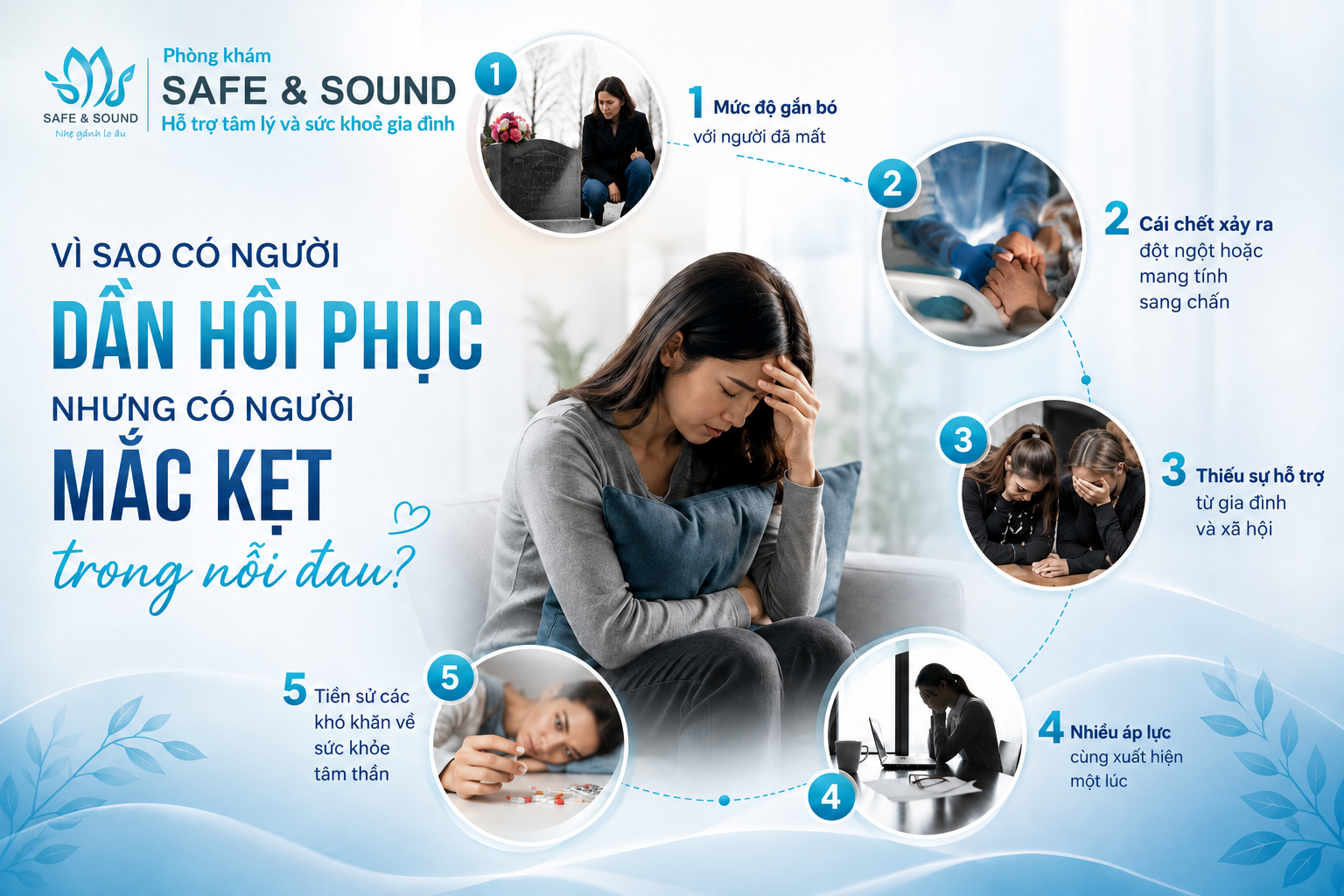
Difficulty recovering does not mean that a person is weak or is not trying hard enough. Loss is a deeply personal experience influenced by many factors, including the level of attachment to the person who died, the circumstances surrounding the loss, support from others, and other challenges the person may already be facing in life.
Factor 1: The Level of Attachment to the Person Who Died
When the person who died was a spouse or partner, parent, child, or primary caregiver, the emotional impact is often more profound. In addition to emotional pain, the person left behind may also face major changes in daily life after losing someone who was closely connected to them, shared life with them, or served as an important source of support.
The deeper the attachment, the more pronounced the sense of emptiness and loss may be. Some people not only miss the person who died but also struggle to adapt to the changes their absence has created. This is one reason some people need more time to regain balance and establish a new rhythm of life after loss.
Factor 2: The Death Was Sudden or Traumatic
An unexpected death can lead to shock, disorientation, or persistent thoughts about what happened. Many people become trapped in questions such as “Why did this happen?”, “If only I had acted differently at that time,” or “What if I could go back to that moment?” These thoughts can sometimes make adapting to the loss more difficult.
For some people, memories of the event repeatedly return to mind, especially when the death involved traumatic images or experiences. This is another reason some people need more time to face the loss and gradually regain balance in their lives.
Factor 3: Limited Family and Social Support
The presence of family, friends, and other close people often plays an important role in adapting to loss. Having someone who listens, shares the burden, or simply remains present during difficult periods can make grief somewhat easier to bear.
In contrast, people who live in isolation, have limited social connections, or have no one with whom to share their emotions may be more likely to remain trapped in grief. When someone must face loss alone, feelings of loneliness, emptiness, and hopelessness may become more intense over time.
Factor 4: Other Psychological Difficulties or Life Events Occurring at the Same Time
When several sources of stress occur at the same time, a person's ability to adapt may be significantly affected. Instead of focusing only on coping with the pain of loss, they must also use their energy to manage many other problems around them.
This can intensify emotional overload and slow the recovery process after bereavement. It also explains why people who experience a similar loss may be affected in very different ways.
Factor 5: A History of Depression, Anxiety, or Other Mental Health Difficulties
People who have previously experienced depression, anxiety, or other psychological difficulties may be more vulnerable when facing a major event such as the death of a loved one. This does not mean they will certainly develop mental health problems after the loss, but it is a factor that deserves attention.
When confronted with profound grief, emotional difficulties experienced in the past may sometimes return or become more noticeable. Adapting to the loss may therefore be more difficult than it is for people without a similar history.
.png)
What May Help Make the Recovery Process More Manageable
Adapting to loss usually takes time, patience, and sometimes support from the people around us. Although each person will face grief differently, the following approaches may make the recovery process more manageable and support mental health during this difficult period.
- Allow yourself to experience grief: Sadness, longing, and emptiness are natural responses to loss. Acknowledging these emotions can help a person face grief in a healthier way.
- Talk with family members and trusted people: Sharing feelings with family, friends, or other close people can reduce loneliness and create opportunities to receive understanding and support.
- Maintain self-care activities: Eating regularly, getting appropriate rest, staying physically active, and trying to maintain basic daily routines can support mental health during a difficult period.
- Take part in activities that provide connection and meaning: Meeting friends, joining community activities, or continuing work and hobbies that once brought joy may help the adjustment process move forward more smoothly.
- Avoid relying on alcohol and stimulants: Alcohol or other substances may provide temporary relief, but they do not resolve the pain of loss. In some cases, they may make psychological difficulties more severe.
>> Read more: Treating Depression at Home: Practical Supportive Strategies
When Should You Seek Professional Support?
Each person recovers at a different pace after a loss. However, in some cases, emotional difficulties may exceed a person's ability to adapt on their own and may require greater attention.
|
Signs to Pay Attention To |
Why Does It Matter? |
|
The pain persists and shows no sign of easing |
Grief continues to occupy most of the person's life and makes it difficult to adapt to the loss. |
|
Emotions clearly affect work, study, or relationships |
Emotional difficulties begin to interfere with daily life, the ability to work or study, or the maintenance of social relationships. |
|
Frequent self-blame related to the loss |
Feelings of guilt or repeated “if only” and “what if” thoughts continue over time and make the pain more intense. |
|
No longer wanting to engage socially or losing interest in life |
The person is experiencing significant difficulty in the recovery process. |
|
Thoughts of self-harm or not wanting to continue living |
This sign requires particular attention, and professional support should be sought as soon as possible. |
In addition to the signs above, you may also consider seeking support if you feel that you have been trying for a long time to cope with the loss but are still unable to regain balance in your life. Sometimes, sharing emotions that are difficult to put into words with a qualified professional can make the recovery process more manageable.
Conclusion
Depression after losing a loved one is not simply sadness in response to loss; it may involve prolonged emotional and mental health difficulties. However, not every grief response is depression, because each person experiences and adapts to loss differently.
What matters is recognizing emotional changes that are affecting your life and actively seeking support when needed. Being listened to, understood, and supported at the right time can help make the recovery process more manageable.

At SNS (Safe & Sound Clinic), mental health care is approached with respect for each person's individual experience. Through professional consultation and assessment, the specialist team supports people experiencing depressive disorders in better understanding what they are going through and choosing an appropriate care approach on their journey toward mental health recovery.
