
Symptoms of Prolonged Stress: Recognizing Physical, Emotional, Cognitive, and Behavioral Signs | Safe and Sound
Symptoms of prolonged stress are not simply feelings of tension or fatigue that appear during a few busy days. When pressure continues over time, the body and mind may begin to send out a range of warning signals through physical, emotional, cognitive, and behavioral changes. However, not everyone recognizes these signs from the beginning. Many people assume they are simply overworked, sleep-deprived, or going through a temporarily difficult period. Understanding the symptoms of prolonged stress correctly can help people recognize their condition early, proactively adjust their lifestyle, and seek appropriate support when needed.
What Is Prolonged Stress?
Stress is the body’s natural response to pressure, challenges, or situations that require us to adapt. In many cases, stress is not entirely negative. A certain level of stress can help us concentrate better, respond more quickly, and complete tasks more effectively.
However, when sources of pressure occur continuously or persist over a long period of time, the body remains in a constant state of tension. At this point, stress no longer plays a supportive role and begins to negatively affect physical health, mental well-being, and quality of life.
It is important to note that prolonged stress does not only appear as anxiety. It can take many different forms, including headaches, insomnia, digestive problems, memory difficulties, irritability, or changes in daily behavior. Because the symptoms are so varied, many people do not realize that the problems they are experiencing may be related to prolonged stress.
See also: Are You Experiencing Stress?
Symptoms of Prolonged Stress: Physical, Emotional, Cognitive, and Behavioral
Prolonged stress can affect many aspects of life at the same time. Not everyone experiences the same symptoms. Some people notice clear physical changes, while others primarily struggle with emotions, thoughts, or behavior. Looking at symptoms by category can make them easier to recognize and understand more comprehensively.
Physical Symptoms of Prolonged Stress
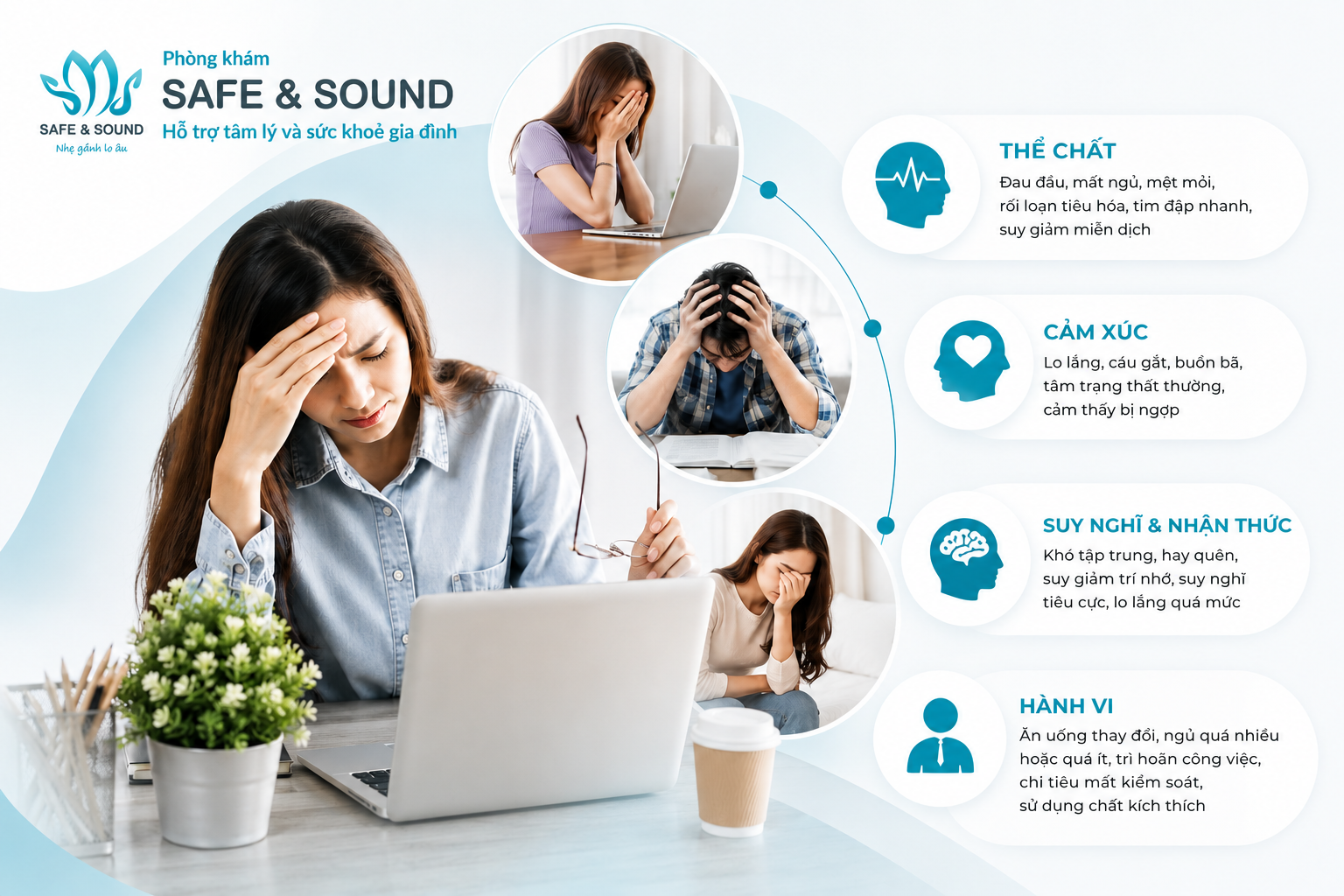
When stress persists, the body is often the first place where warning signs appear. A person experiencing prolonged stress may not simply feel temporarily tired, but may continuously experience physical tension, low energy, and difficulty recovering even after resting. Common symptoms include:
- Recurring headaches: A dull ache, prolonged pain, or headaches that return repeatedly without a clearly identifiable cause. Stress can contribute to or worsen certain types of headaches, but recurring headaches can have many other causes and should not automatically be attributed entirely to stress.
- Muscle tension and body aches: These are most commonly felt in the neck, shoulders, lower back, or as generalized body soreness. When under stress, the body may unconsciously tighten muscle groups as a protective response. Over time, this can lead to chronic muscle tension.
- Sleep disturbances: These may include difficulty falling asleep, light or fragmented sleep, or frequently waking during the night. In many cases, even after getting enough hours of sleep, a person may still wake up feeling tired and unrestored.
- Digestive problems: The digestive system is highly sensitive to stress signals from the brain. This can easily lead to symptoms such as abdominal cramps, bloating, indigestion, nausea, or changes in bowel habits when stress levels increase.
- Palpitations and rapid heartbeat: A person may frequently feel that their heart is racing or pounding, often accompanied by restlessness. These symptoms are usually most noticeable when facing stressful situations that require intense concentration.
- Reduced energy: The body may feel constantly depleted, sluggish, and become tired more quickly than usual. You may find it difficult to maintain your energy throughout the day, and even familiar tasks may begin to feel exhausting.
Note: Cardiovascular and respiratory symptoms such as palpitations, chest pain or tightness, and shortness of breath can have many different causes. These symptoms should not automatically be attributed entirely to stress. If they are new, severe, or persistent, medical evaluation is recommended.
If these signs recur, persist, and often appear alongside pressure from work or daily life, they may indicate that the body has been under excessive strain for too long.
Emotional Symptoms of Prolonged Stress
Prolonged stress can make emotions more sensitive and more difficult to regulate. A person may still continue working and carrying out daily activities as usual, while internally feeling constantly tense, easily irritated, easily upset, or emotionally weighed down.
Common symptoms include:
- Frequent anxiety: Feeling uneasy, restless, or unable to relax even when there is no clearly identifiable problem.
- Irritability: Reacting strongly to small issues or losing patience more easily than usual.
- Mood fluctuations: Becoming sad, disappointed, hurt, or discouraged more easily without a clear reason.
- Feeling overwhelmed: Work, responsibilities, or relationships begin to feel increasingly burdensome.
- Feeling easily overloaded: It may feel as though everything is happening at once and you no longer have enough energy to cope.
- Withdrawal and difficulty connecting: Having less desire to communicate, feeling lonely, or feeling misunderstood by others.
An important point is that these emotions do not usually appear all at once. They often build gradually, making it increasingly difficult for a person experiencing stress to maintain emotional stability and a sense of balance.
Cognitive Symptoms of Prolonged Stress
Stress does not only make the body tired and emotions tense; it can also affect the way a person thinks, remembers information, and makes decisions. These signs are often overlooked because many people assume they are simply “having trouble concentrating” or “working too much.”
Common symptoms include:
- Difficulty concentrating: The mind becomes easily distracted, making it difficult to stay focused on one task for an extended period.
- Forgetfulness: Forgetting recently assigned tasks, appointments, or having difficulty remembering new information.
- Difficulty making decisions: Becoming hesitant and indecisive, or conversely, making rushed decisions because of excessive stress.
- Negative thinking: Tending to interpret situations negatively, underestimate oneself, or become more pessimistic than the situation warrants.
- Excessive worry about the future: Repeatedly imagining negative scenarios even though they have not happened.
- Feeling mentally overloaded: The more you try to think, the more confused you become, and the more confused you feel, the harder it is to solve problems.
When stress persists, negative thinking can become a cycle: the more you worry, the more stressed you become, and the more stressed you become, the harder it is to think clearly.
Behavioral Symptoms of Prolonged Stress
Changes in behavior often indicate that stress has begun to affect the way a person functions in everyday life. At first, these changes may seem minor and easy to overlook, but if they persist, they can affect work, health, and relationships.
Common symptoms include:
- Changes in eating habits: Loss of appetite, eating less than usual, or eating more in an attempt to find temporary comfort.
- Changes in sleep: Insomnia or sleeping more than usual but still not feeling restored.
- Procrastination: Difficulty getting started on tasks, working more slowly, or neglecting responsibilities.
- Avoiding social interaction: Having less desire to meet, talk to, or share with others.
- Increased use of stimulants or substances: Relying more heavily on caffeine, tobacco, alcohol, or other substances to reduce stress.
- Restless behaviors: Nail-biting, pacing, difficulty sitting still, or repeatedly performing the same action.
If these behaviors occur frequently, they may no longer be temporary habits but may indicate that stress has persisted and is affecting daily life.
How Does Prolonged Stress Affect You, and How Can You Take Care of Yourself?
Symptoms of prolonged stress do not only cause short-term discomfort but can also affect many areas of life if they are not recognized and addressed appropriately. These effects may appear in work, study, physical health, and mental health.
Prolonged stress does not only make the body feel uncomfortable in the short term; it can also affect work, study, physical health, emotions, and overall quality of life. When stress continues over time, people often find it more difficult to concentrate, become more forgetful, make rushed decisions, or feel that their mind is constantly overloaded. As a result, performance at school or work and the ability to solve problems may gradually decline.
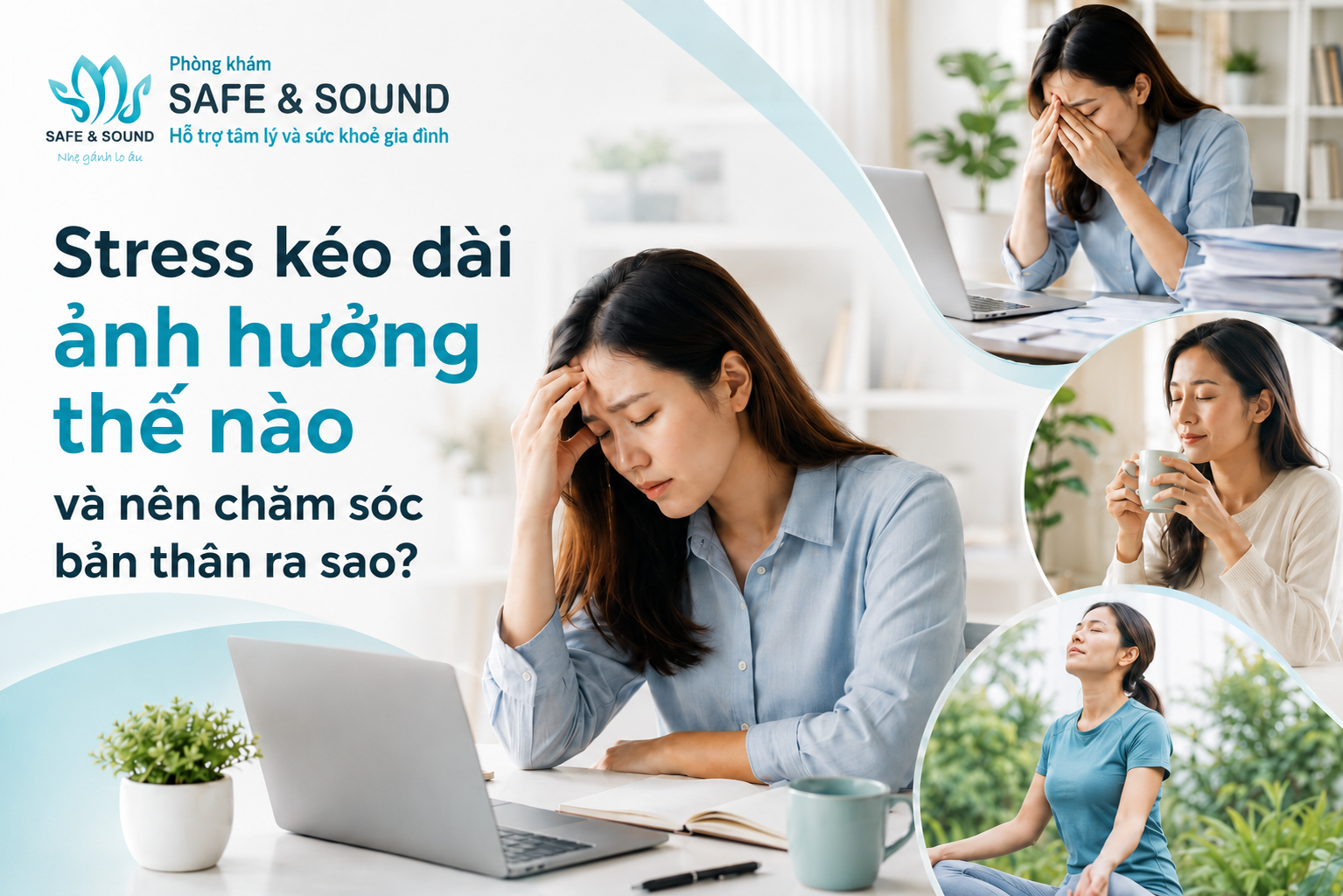
To take care of yourself, you can begin with small but consistent changes:
- Maintain a stable daily routine, prioritize enough sleep, and allow yourself adequate rest.
- Engage in light physical activity such as walking, stretching, or deep breathing to help reduce physical tension.
- Share your stress with family members, friends, or someone you trust.
- Reorganize your workload, break larger goals into smaller steps, and handle one task at a time.
- Reduce sources of overload whenever possible instead of continually forcing yourself to endure them.
If symptoms persist, become more severe, or clearly affect study, work, relationships, and daily functioning, it may be appropriate to consider seeking support from a mental health professional. Receiving the right support can help a person better understand their condition and find more suitable ways to care for themselves.
See also: How to Maintain a Positive Mindset and Reduce Stress Effectively with a Psychologist
When Should You Seek Professional Support?
Not every case of stress requires immediate professional intervention. However, when symptoms persist, occur frequently, or begin to clearly affect quality of life, seeking appropriate support can help you better understand your condition and find more effective ways to care for yourself.

Many people try to cope with stress on their own by resting or adjusting their lifestyle. While these approaches may help in some cases, if fatigue, insomnia, anxiety, or psychological pressure continues, it may be a sign that the body and mind need additional support.
| Signs | Why Does It Matter? |
|---|---|
| Stress persists despite rest and lifestyle adjustments | This may indicate that current self-care strategies are not leading to noticeable improvement. |
| Insomnia, fatigue, or anxiety occur frequently | These symptoms may affect both physical and mental health over time. |
| Academic or work performance declines | Stress may be beginning to affect concentration, memory, and the ability to complete tasks. |
| Relationships are frequently affected by conflict or emotional distance | Stress can influence emotions, behavior, and the way a person interacts with others. |
| Using alcohol, tobacco, or stimulants to cope with pressure | This may indicate difficulty regulating emotions and managing stress effectively. |
| Frequent negative thoughts or feelings of hopelessness | These are warning signs that should receive attention and early assessment. |
| Thoughts of self-harm | Professional support should be sought promptly to help ensure personal safety. |
It is important to remember that seeking professional support does not mean that your condition has already become extremely serious. In many cases, speaking with a mental health professional early can help identify the sources of stress, develop appropriate coping strategies, and prevent negative effects from continuing to interfere with everyday life.
Conclusion
Symptoms of prolonged stress can appear in many different ways, ranging from headaches, insomnia, fatigue, and digestive problems to anxiety, irritability, difficulty concentrating, or changes in daily habits. Whether these signs appear physically or emotionally, they may indicate that the body and mind have been adapting to pressure for an extended period. If they are not recognized and addressed appropriately, prolonged stress can affect health, work performance, relationships, and overall quality of life.
Listening to changes in your body and mind, proactively adjusting your lifestyle, and seeking support when necessary are important steps in protecting mental health. Sometimes, what is needed is not to keep pushing through, but to understand what is happening and find a more appropriate way forward.
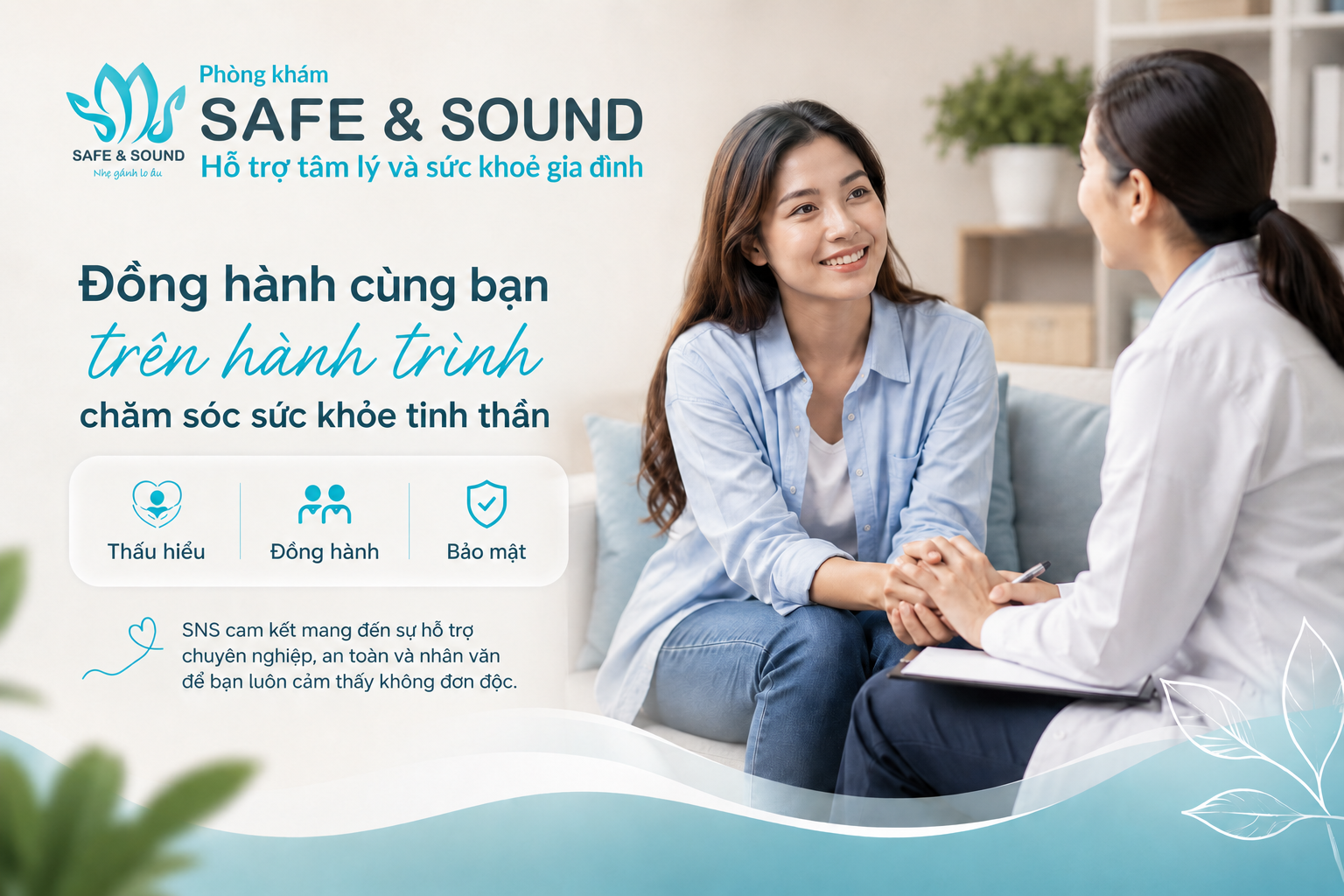
If you notice that symptoms of prolonged stress are affecting your life or you find it difficult to regain balance under current pressures, speaking with a mental health professional may help you better understand your condition and develop an appropriate support plan. At SNS (Safe & Sound Clinic), our professional team is always ready to accompany each person through the process of caring for their mental health, from recognizing psychological difficulties early to finding appropriate solutions that support a healthier and more balanced life.
