

7 Key Criteria for Buying a Health-Tracking Smart Ring in 2026
From a relatively unfamiliar tech device a few years ago, smart rings are gradually becoming a new trend in personal healthcare. Their compact design, ability to continuously monitor health, and comfortable wearing experience are leading many people to consider buying smart rings instead of traditional wearable devices. However, the market is now flooded with products of varying prices, features, and technologies. This leaves many people wondering how to choose a smart ring that suits their actual needs instead of just following advertisements. If you're looking to find out where to buy a smart ring or need a clear set of criteria before making a decision, the article below will help you make a more comprehensive assessment.
Why are more and more people choosing smart rings?
Previously, when people thought of health tracking devices, they immediately thought of smartwatches. However, smartwatches aren't always suitable for everyone.
Many people find wearing a watch uncomfortable while sleeping. Others want to monitor their health continuously but dislike the feeling of wearing a large device on their wrist all day. Smart rings, on the other hand, offer a much more discreet and natural experience.
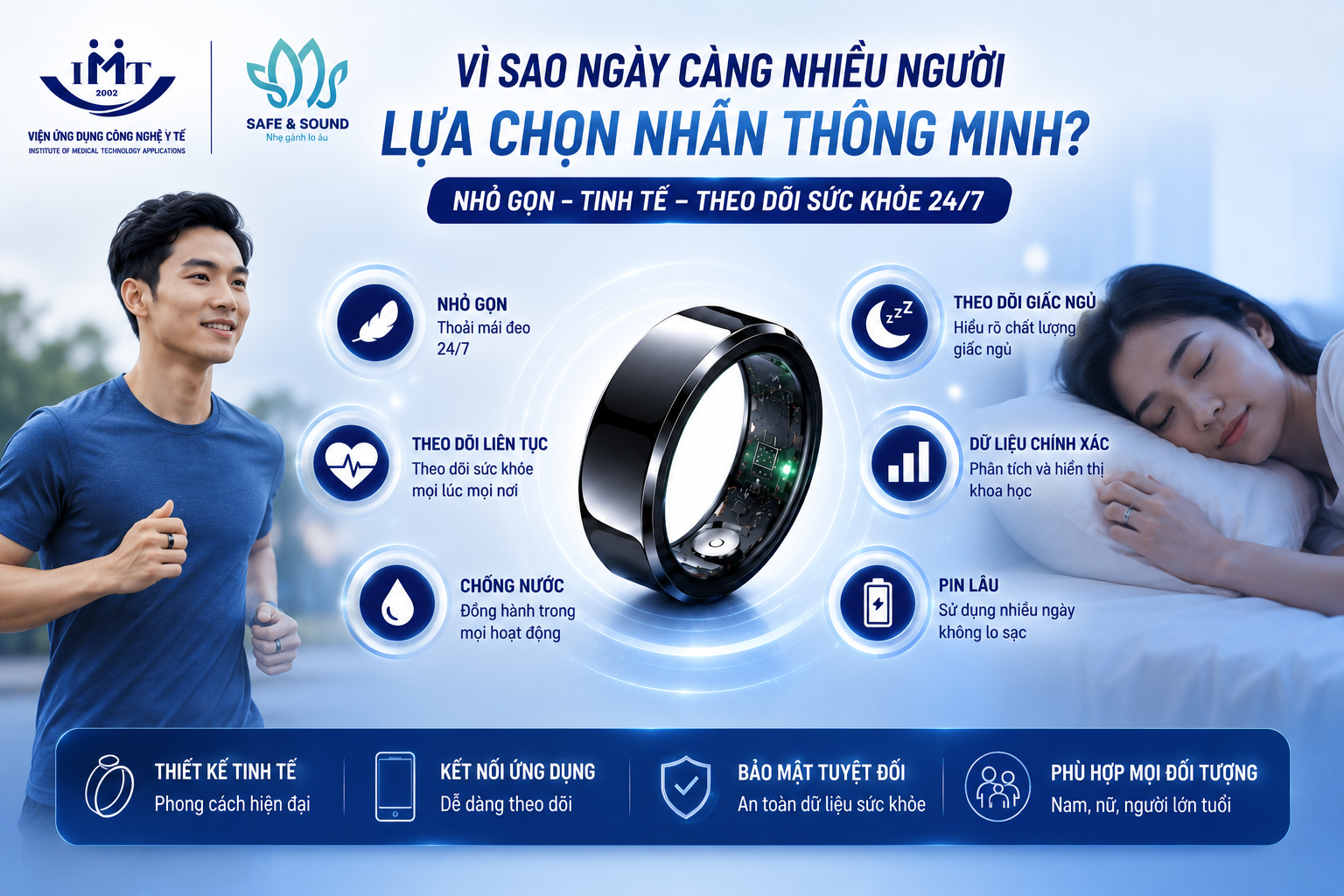
With their compact size, users can wear them almost 24/7 without affecting their daily activities. At the same time, the latest generation of smart rings are still capable of tracking many important health metrics such as:
- Heart rate
- SpO2
- Blood pressure
- Sleep
- Activity level
- Health trends over time
>> See also: What's the Difference Between Smart Rings and Smartwatches? 5 Points That Make Health-Concerned People Hesitate
Top 7 criteria to consider when buying a smart ring.
The smart ring market has been growing rapidly in recent years. Simply searching "buy smart ring" on Google reveals dozens of different products with prices ranging from a few hundred thousand to tens of millions of Vietnamese dong.
If you're wondering where to buy a smart ring or don't know where to start evaluating a product, the following 7 criteria will help you make the right choice and avoid making impulsive purchasing decisions.
Health monitoring capabilities
When looking to buy a smart ring, most users are often attracted by its compact design, modern appearance, or attractive price. However, if the main goal is health monitoring, these are not the most important factors.
A smart ring that looks nice but doesn't provide useful data will quickly become a rarely used tech accessory after the first few weeks of use. The real value of a smart ring lies in its ability to continuously monitor health and help users better understand their bodies.
Consider these two scenarios. Scenario one: you only know you slept 7 hours today. Scenario two: you know you slept 7 hours, but only had 1 hour and 15 minutes of deep sleep, woke up 4 times during the night, and your sleep quality has been declining over the past two weeks. Clearly, the second dataset offers far more value.
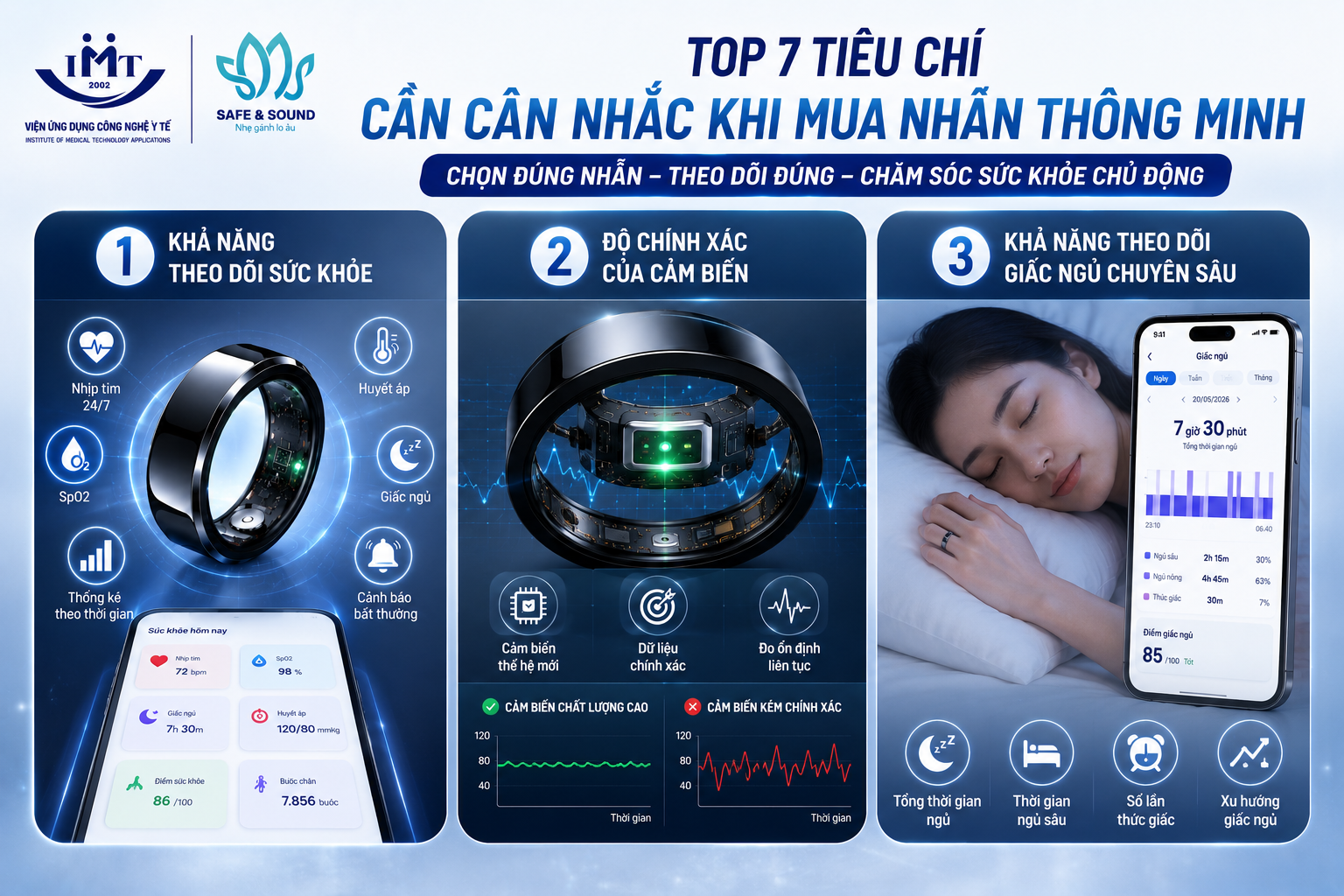
That's why, when choosing a smart ring, users should prioritize products that can track multiple important health metrics simultaneously, rather than focusing on just one or two individual features. A modern health-tracking smart ring should be able to:
- Continuous heart rate monitoring 24/7
- Monitor SpO2 levels.
- Monitor blood pressure
- Monitor sleep quality
- Track activity levels
- Statistical analysis by day, week, and month.
- Warning when abnormalities occur.
The more data that is recorded continuously, the easier it is for users to see small changes in their bodies before they become major problems.
Sensor accuracy
One of the most common mistakes when buying a smart ring is judging the product based on the number of advertised features. In reality, a ring with 20 features but inconsistent data is far less valuable than a product with only 5-7 features but accurate and consistent measurement capabilities.
Health is a particularly sensitive area. If the data is unreliable, users may make inaccurate judgments about their own health status. For example, if heart rate readings fluctuate abnormally due to faulty sensors, users may become unnecessarily anxious. Conversely, if the device fails to detect actual bodily changes, early warning signs may also be missed.
That's why experts often recommend that users shouldn't just look at the specifications sheet. Instead, take the time to learn more:
- Sensor technology is used.
- Product research and development unit
- The technology ecosystem behind the device.
- Real user reviews
- The ability to update software during use.
A good device should not only provide measurement results at a single point in time but also help users see trends in their health over the day, week, and month. Ultimately, what users need isn't a lot of features, but reliable data to support their long-term healthcare.
Advanced sleep tracking capabilities
If we had to choose one feature that users are most interested in on current smart rings, it would probably be sleep tracking. The reason is simple. We spend about a third of our lives sleeping, yet we know very little about the quality of our own sleep.
Most people judge sleep quality subjectively. If they get 7-8 hours of sleep, they assume they've had enough rest. However, this isn't always the case. A modern smart ring not only records sleep duration but also helps users gain a deeper understanding of their sleep patterns through data such as:
- Total sleep time
- Deep sleep time
- Light sleep duration
- Number of times waking up during the night
- Overall sleep quality
- Sleep patterns over time
This data helps users detect many problems that were previously almost impossible to recognize through ordinary senses. Especially for those who frequently work under high pressure, middle-aged people, or those concerned about long-term health, the ability to track sleep in depth is a very important criterion to consider when buying a smart ring.
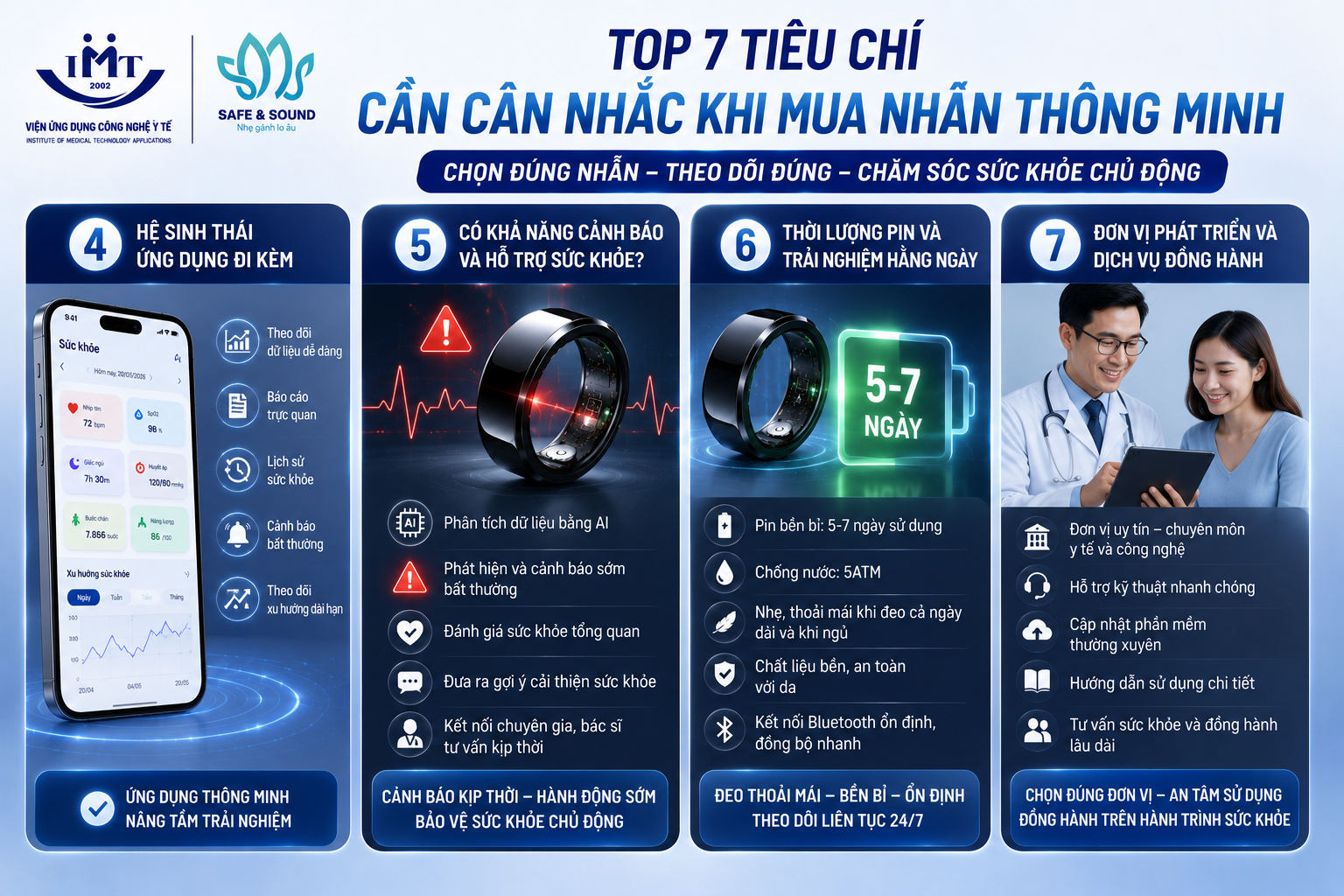
The accompanying application ecosystem
Many people believe that the value of a smart ring lies entirely in its hardware. In reality, the app ecosystem is what determines the long-term user experience.
Imagine a device capable of collecting a vast amount of health data, but the app is difficult to use, reports are confusing, or it doesn't store complete history. In that case, most users would quickly lose interest after a short time. Conversely, a quality app should support:
- Monitor data in real time.
- Visual health report compilation
- Long-term health history storage
- Compare data by day, week, and month.
- Synchronize with your phone quickly.
- Receive alerts when anomalies occur.
Especially as the trend of proactive healthcare grows, users not only want to see data but also want to understand the meaning of that data. Therefore, before deciding to buy a smart ring, take the time to experience or thoroughly research the accompanying application instead of judging the product solely by its external design.
Is it capable of providing health warnings and support?
This criterion is considered the next step forward for the smart wearable industry. In the early stages, health devices mainly focused on data recording.
Today, users expect more than that. They don't just want to know their heart rate or SpO2 level. What they're really interested in is: Are those readings normal? Are there any abnormalities? What should they do if changes occur?
That's where health monitoring and support capabilities come into play. A modern health monitoring device should be able to:
- Detecting unusual fluctuations
- Send timely alerts.
- Support for initial health assessment
- Propose appropriate solutions.
- Connect with experts when needed.
This is also the difference between a simple measuring device and a proactive health care platform. In the future, the greatest value of a smart ring will not lie in how many metrics it measures, but in its ability to help users better understand their health.
Battery life and daily usage experience
A health tracking device is only effective when used continuously. If it needs to be removed frequently for charging or is uncomfortable to wear, data collection will be interrupted and the user experience will be significantly diminished.
That's why battery life is always an important criterion when choosing a smart ring. Generally, users should prioritize products with a battery life of 5-7 days or more to minimize the need for frequent charging. Besides battery life, several other factors also directly affect the user experience:
|
Criteria |
Recommendation |
|
Battery life |
From 5-7 days or more |
|
Water resistance |
Have |
|
Weight |
Lightweight and comfortable |
|
Material |
Durable, skin-friendly |
|
Bluetooth connection |
Stable |
|
Synchronization application |
Fast and easy to use. |
A good smart ring is one that users almost forget they're wearing, yet it silently records their health data every day. That's the ideal experience of a modern wearable device.
Development and accompanying services unit
When searching for where to buy smart rings, many people often focus on the price or specifications, forgetting a very important factor: the company behind the product. In reality, health-tracking smart rings are not simply just a piece of technology.
This device is directly related to personal health data and long-term healthcare. Therefore, users should consider questions such as:
- Who is the product development unit?
- Do you have expertise in the medical field?
- What does the supporting ecosystem behind it consist of?
- Is there a technical support and consulting team available?
- Is the product updated regularly?
A reputable brand not only sells devices but also accompanies users throughout the entire usage process. Instead of just buying a ring, users are actually choosing a health care ecosystem for themselves and their families.
Don't just focus on what the device can do on the first day of use. Thoroughly research the warranty period, return policy, technical support, and customer service policies. A health tracking device is a long-term product, so the support from the supplier is just as important as the product's technological features.

>> See also: 7 Smart Health Tracking Technologies Leading the Trend in 2026
Conclude
The smart ring market is growing rapidly with many different options. However, buying a smart ring shouldn't be based solely on price or design. A truly valuable product should help users effectively monitor their health, understand their body metrics, and support building a more proactive lifestyle every day.
Before deciding to buy a smart ring, take the time to thoroughly evaluate the criteria regarding sensors, health features, app ecosystem, and developer to choose the product that best suits your needs.
.png)
Developed with the vision of a "proactive health monitoring device with a doctor's support," the IMT Ring not only supports monitoring metrics such as heart rate, SpO2, blood pressure, and sleep, but also aims to build a comprehensive healthcare ecosystem. Through its integrated AI technology platform and expert connectivity, users can easily monitor, manage, and better understand their health status every day.
If you're looking for a solution that helps you proactively monitor your health in a simpler and more convenient way in modern life, the IMT Ring could be a worthwhile option to start your health care journey with even the smallest changes each day.
