

What Is the Difference Between a Smart Ring and a Smartwatch? 5 Points That Make Health-Conscious Users Hesitate
You want to track your sleep, heart rate, activity level, or other small changes in your body each day. But when researching smart wearable devices, a question arises: should you choose a familiar smartwatch or a smart ring, which is becoming a new trend? Both devices are capable of tracking health, recording exercise data, and helping users better understand their bodies. However, behind their seemingly simple design differences, each device was developed with entirely different goals in mind. So, what are the differences between smart rings and smartwatches ? Which is the better choice for those who care about their health and want to build a proactive health-monitoring habit? Let's explore five key differences that leave many people still undecided between these two devices.
What are Smart Rings and Smartwatches?
Before delving into the comparison, we need to understand the nature of these two devices.
A smartwatch is a wearable device that integrates many features such as receiving notifications, making calls, controlling music, tracking activity, and managing health.
Meanwhile, smart rings are wearable devices that incorporate biosensors to track body-related metrics such as heart rate, SpO2, sleep quality, and activity levels.
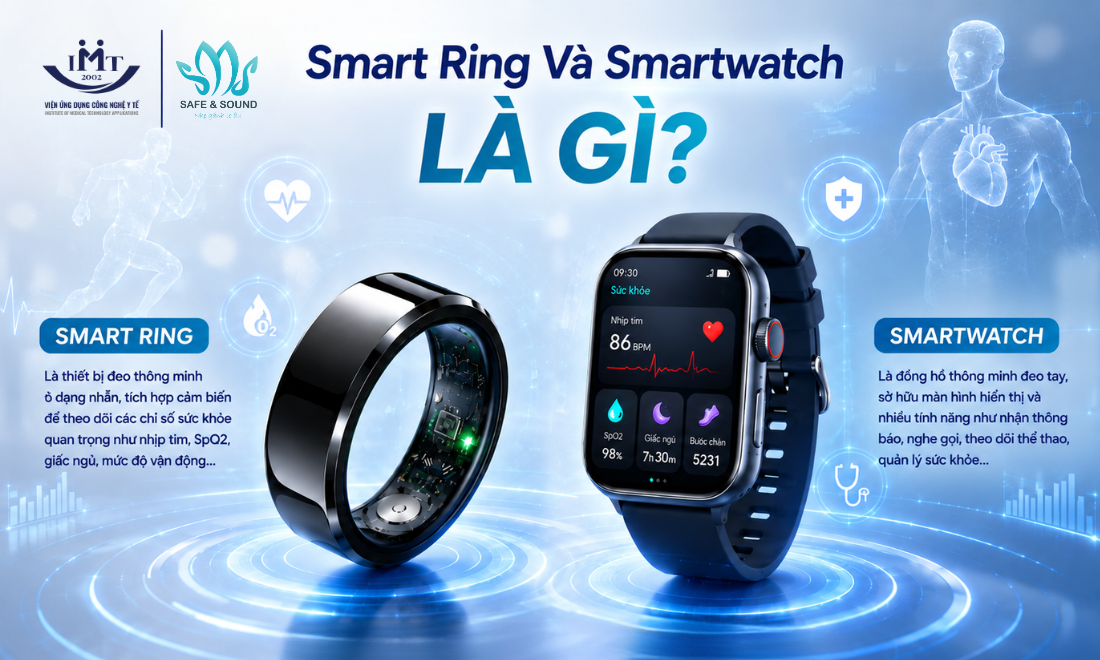
Although both belong to the category of smart wearable devices, the development philosophies of these two products differ significantly.
What's the Difference Between Smart Rings and Smartwatches? 5 Points That Make Many People Undecided
Some people choose smartwatches for their versatility and convenient connectivity. Others switch to smart rings because they want continuous health monitoring without being distracted by too many other features. Below are five key differences between smart rings and smartwatches that users should consider before making a choice.
1. Purpose of use: Versatile or health-focused?
This is considered the biggest difference between smart rings and smartwatches today.
From the moment they appeared on the market, smartwatches were positioned as versatile technological devices. Besides health tracking, users could receive notifications, make and receive calls, reply to messages, control music, track schedules, and use various applications right on their wrists. For many people, a smartwatch is almost a miniature version of a smartphone.
Meanwhile, smart rings take a completely different approach. Instead of integrating a host of technological features, smart rings are designed to focus on collecting biometric data and monitoring health. What these devices prioritize is not the number of features, but the ability to continuously record data over extended periods.
This allows users to easily track changes in their bodies on a daily, weekly, or monthly basis, rather than focusing only on instantaneous metrics. That's also why many people are increasingly viewing smart rings as specialized personal health tracking devices rather than just a regular tech accessory.
2. Daily wearing experience
Another factor driving many people to switch from smartwatches to smart rings is the comfort of wearing them. In fact, not everyone likes wearing a watch 24 hours a day. Many people only use smartwatches for work or exercise, then take them off when they get home or before going to bed.
The reason is quite simple. Despite significant optimization, smartwatches are still relatively large devices. When worn for extended periods, especially while sleeping, some people may find them uncomfortable or cause discomfort.
In contrast, smart rings have a much more compact design. After a period of use, most users almost forget they are wearing the device on their wrist. This is especially important for continuous health tracking features.
Because health data is only truly valuable when recorded consistently over many hours or days. If users frequently remove the device, the data collection process will be interrupted, reducing the accuracy of health reports. The ease of use is one of the reasons why smart rings are becoming increasingly popular.
3. Ability to track sleep and circadian rhythms
If there's one reason why many people decide to switch from smartwatches to smart rings, it's usually sleep, which is perhaps the most important factor. Essentially, both smart rings and smartwatches can track many common health metrics such as heart rate, SpO2, calorie consumption, step count, and sleep quality.
However, the placement of the two devices makes a significant difference. Fingers are an area with a high concentration of capillaries and small blood vessels. Therefore, the sensors can capture biological signals more clearly in many cases.
This is also why many smart ring brands today focus heavily on features such as sleep tracking, resting heart rate, stress levels, and body recovery capabilities.
Meanwhile, smartwatches often excel in sports activities. Their large screens allow for the display of real-time data during workouts, such as speed, distance, heart rate, and exercise time.
If you regularly run, cycle, or go to the gym, a smartwatch might offer more benefits. Conversely, if you prioritize sleep tracking and long-term health monitoring, a smart ring is often the better choice.
4. Battery life and charging frequency
Most users only really pay attention to battery life after a few weeks of use. When the device needs to be charged too frequently, continuous health tracking can easily be interrupted.
A modern smartwatch must operate the screen, connect via Bluetooth and GPS, receive notifications, and handle multiple tasks simultaneously. Therefore, its energy consumption is higher. Users often need to charge their devices quite frequently, depending on the model and usage intensity.
Meanwhile, smart rings are designed to be much more minimalist. The device doesn't need a display screen, doesn't have to handle many tasks that require direct user interaction, and primarily operates in background data recording mode.
As a result, battery life is often optimized better relative to the device's size. Importantly, reducing the frequency of charging also allows for more continuous health monitoring. Users have to remove the device less often, and the collected data is more comprehensive.
5. Level of concentration and minimizing distractions.
Interestingly, the difference between the two devices lies not only in the technology but also in the life experience they offer.
Smartwatches help users connect with the world faster. Every call, message, email, or social media notification can appear right on their wrist. This is very convenient in busy work and life. However, for some people, constantly receiving notifications can unintentionally create a feeling of being bothered or make it difficult to concentrate on their current work.
In contrast, smart rings operate in a much more discreet way. The device primarily records data and synchronizes information to a health app on the phone. Users don't need to constantly look at the screen or check notifications throughout the day.
Therefore, many people who pursue a minimalist lifestyle or want to balance technology and health are increasingly choosing smart rings as a more discreet companion in their daily lives.
|
Criteria |
Smart Ring |
Smartwatch |
|
Design |
Compact, ring-shaped |
Wristwatch type |
|
Health monitoring |
Very powerful |
Strong |
|
Sleep tracking |
Optimization |
Good |
|
Making calls, sending messages |
Limit |
Have |
|
Receive notifications |
Limit |
Full |
|
Level of comfort while sleeping |
High |
Medium |
|
Fashion |
Minimalism |
Outstanding |
|
Concentration ability |
High |
More easily distracted. |
Quick Comparison Table: Smart Rings vs. Smartwatches
>> See also: 7 Important Criteria When Buying a Smart Ring to Track Your Health in 2026

Should You Choose a Smart Ring or a Smart Watch?
After learning about the differences between smart rings and smartwatches, the question most people are probably asking is: which one is right for me?
In reality, there is no single device that is absolutely better than another. Each product is developed to serve different needs. The important thing is not whether a smart ring or a smartwatch is more advanced, but rather which device best suits each person's lifestyle, usage goals, and level of health concern.
In fact, more and more people are choosing to combine both devices. Smartwatches are used for work, sports training, and daily connectivity, while smart rings handle continuous health monitoring, especially at night while sleeping.
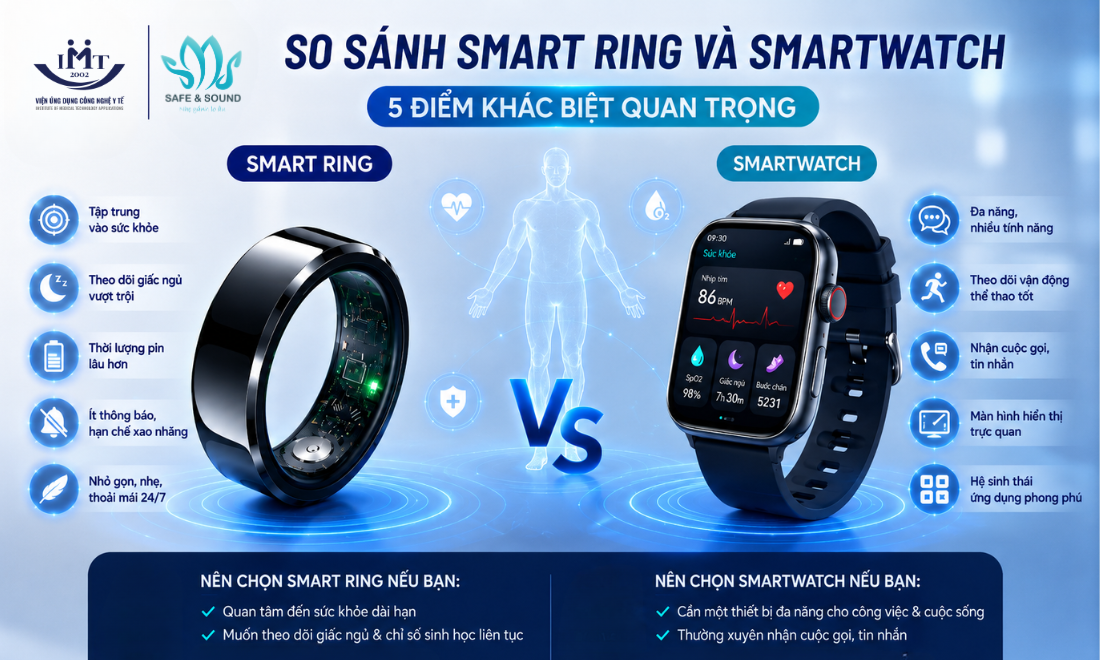
However, if you can only choose one device, you can refer to the suggestions below:
Smartwatches are suitable for:
- This person frequently receives calls, text messages, and work-related notifications.
- For tech enthusiasts who want to use many features right on their wrist.
- People who exercise regularly.
- People need a versatile device that serves both work and daily life needs.
Smart rings are suitable for:
- People who are interested in long-term health monitoring.
- For those who want to continuously monitor sleep, heart rate, blood pressure, and SpO2.
- People prioritize comfort when wearing the device all day.
- People who follow a minimalist lifestyle limit distractions.
- This person is looking for a more specialized personal health tracking device.
Ultimately, the choice between a smart ring and a smart watch shouldn't be based on trends or popularity. A truly suitable device is one you can use regularly every day, thus forming a habit of proactively monitoring and caring for your health over the long term.
>> See also: Smart Ring, Smartwatch or Health App: Which is the Right Health Tracking Solution for 2026?
New Trends in Personal Health Tracking Devices
The smart wearable market has undergone a significant transformation in recent years. While previously users prioritized products with as many features as possible, demand is now shifting towards devices that offer more in-depth health care support.
This shift stems from the increasing awareness of the importance of proactive health monitoring. Instead of focusing solely on daily step count or calorie consumption, modern consumers want a deeper understanding of the signals their bodies are sending, such as sleep quality, resting heart rate, stress levels, and recovery ability after exercise.
That's also why personal health tracking devices are increasingly investing heavily in sensor technology and data analysis capabilities. In this trend, smart rings are emerging as a new option thanks to their compact design, ability to be worn continuously, and focus on health monitoring rather than integrating too many entertainment or connectivity features.
In addition, users now have new expectations for smart wearable devices:
- Continuous health monitoring without causing discomfort during use.
- Early detection of abnormal signs in the body.
- Store and analyze data by day, week, and month.
- Providing reports that help users better understand their own health.
- Connect with the healthcare ecosystem and personal health data management platforms.
These changes have paved the way for the strong growth of smart rings in the market. Instead of directly competing with smartwatches, many experts believe that smart rings are opening up a separate segment, focusing on proactive health monitoring and building long-term health care habits.
In the future, as the demand for personal health management continues to grow, smart rings are likely to become more than just a passing trend; they will become an important part of the modern health tracking ecosystem, alongside smartwatches and other smart healthcare technologies.
Conclude
When comparing smart rings and smartwatches , the biggest difference isn't in appearance but in purpose. While smartwatches aim for versatility and connectivity, smart rings focus on a continuous and less distracting health monitoring experience.
The choice between a smart ring and a smart watch will depend on individual needs. However, with more and more people becoming interested in proactive health, smart rings are becoming a notable trend in the personal health tracking device category today.
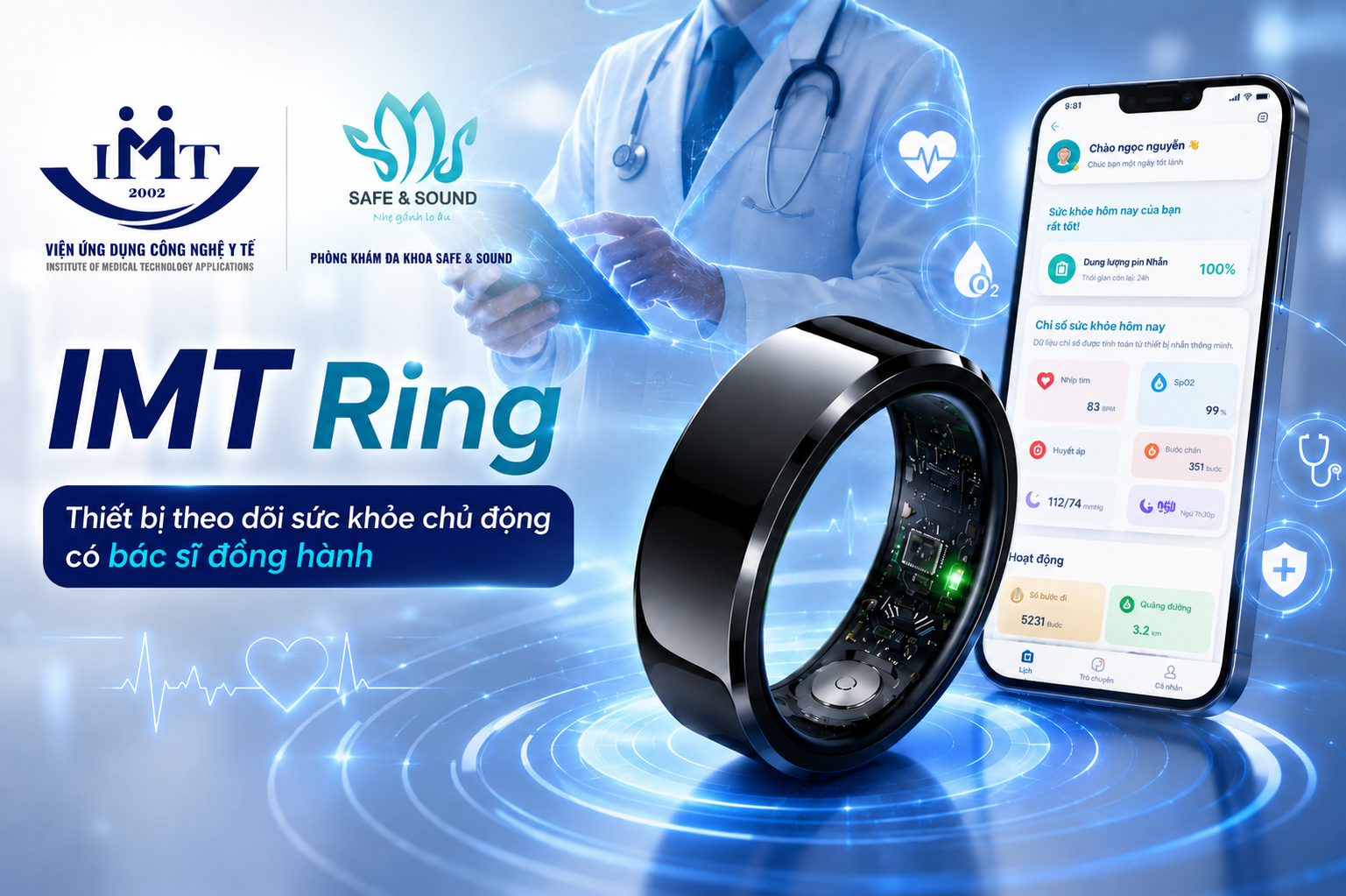
Developed with the vision of a "proactive health monitoring device with a doctor's support," the IMT Ring not only supports monitoring metrics such as heart rate, SpO2, blood pressure, and sleep, but also aims to build a comprehensive healthcare ecosystem. Through its integrated AI technology platform and expert connectivity, users can easily monitor, manage, and better understand their health status every day.
If you're looking for a solution that helps you proactively monitor your health in a simpler and more convenient way in modern life, the IMT Ring could be a worthwhile option to start your health care journey with even the smallest changes each day.
