

Should You Use a Smart Ring? 6 Reasons to Buy One for Health Tracking
Most health problems don't immediately manifest with obvious symptoms. They often begin with very subtle changes. The problem is that most of us find it difficult to recognize these changes based solely on our senses. This is why more and more people are turning to personal health tracking devices to better understand their bodies. Among the various smart wearable devices available today, smart rings are becoming a notable trend. So, should you use a smart ring ? Is it a worthwhile long-term investment in your health? Let's explore six reasons why more and more people are choosing this device.
What is a Smart Ring?
A smart ring is a smart wearable device designed as a ring worn on the finger. Inside the device is a system of biosensors capable of collecting and analyzing various data related to the user's health.
Depending on the product, smart rings may support tracking metrics such as:
- Heart rate
- SpO2 level
- Sleep quality
- Activity level
- Calories burned
- Stress level
- The body's ability to recover.
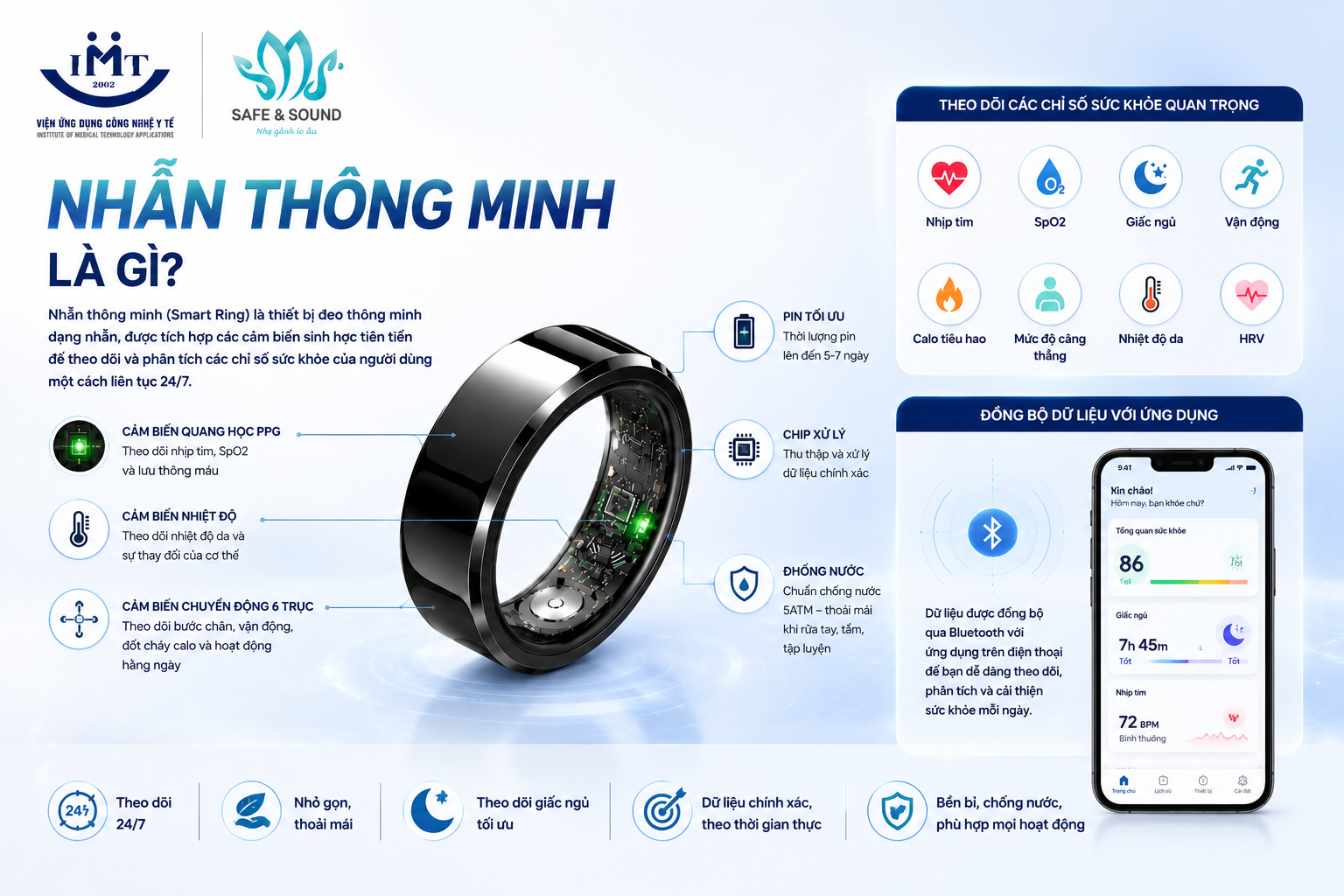
Once recorded, the data will synchronize with the mobile app, allowing users to easily track and manage their health on a daily, weekly, or monthly basis.
Unlike smartwatches, which focus on various technological features like making calls or receiving notifications, smart rings are developed with the aim of becoming a tool to support proactive health monitoring in daily life.
>> See also: What is a Smart Ring? 7 Health Tracking Features Worth Considering
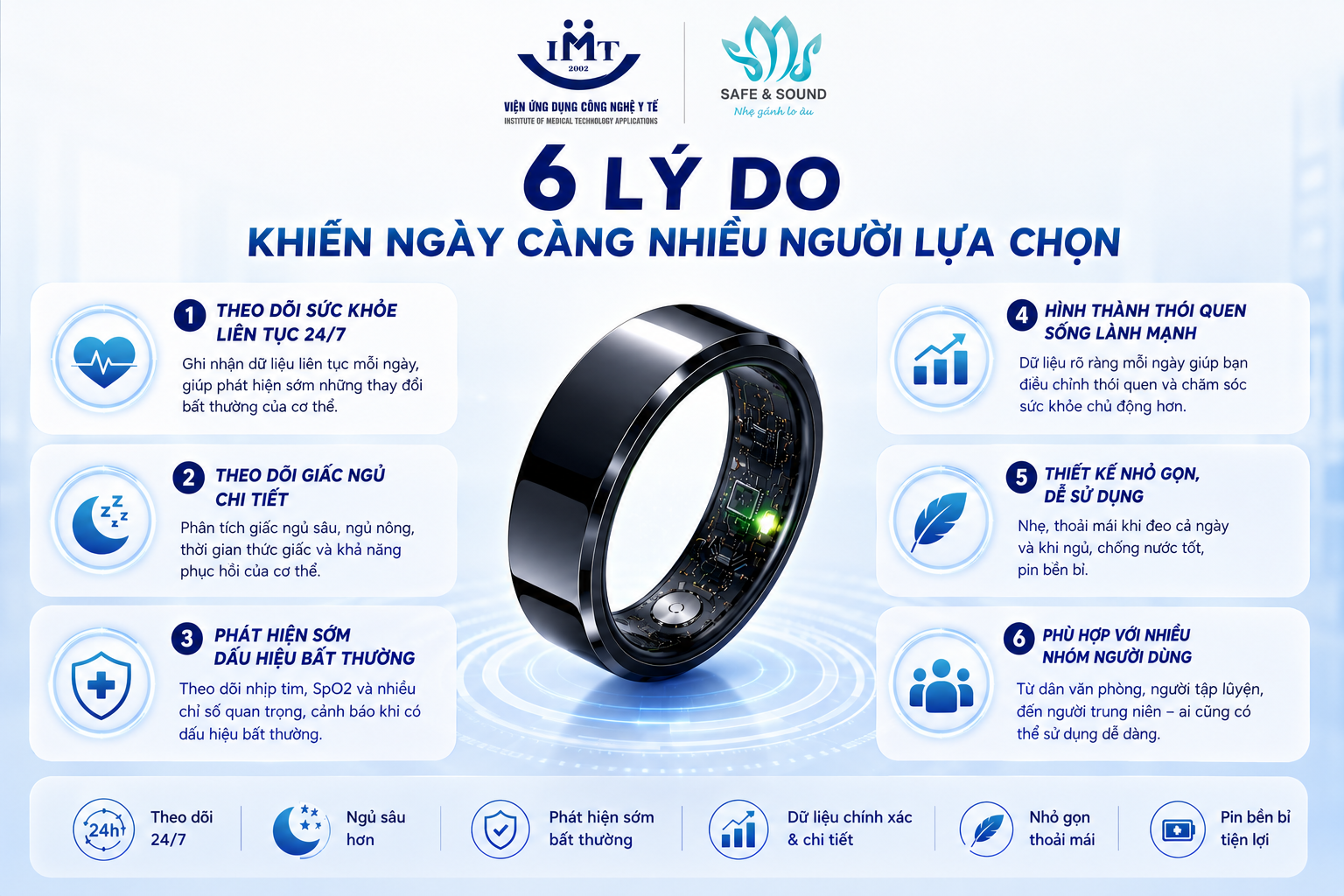
Should You Use a Smart Ring? 6 Reasons Why More and More People Are Choosing It.
While a few years ago smartwatches were almost the only option when it came to smart wearable devices, smart rings are now gradually creating a new trend in the health technology market. This change doesn't stem from fashion or novelty, but from the growing need for proactive health monitoring.
Nowadays, many people no longer wait until symptoms appear before paying attention to their health. Instead, they want to understand their bodies better each day through real-world data. This is precisely the gap that smart rings are addressing very well.
So why should you use a smart ring? Here are six reasons why this device is becoming increasingly popular.
Continuous health monitoring 24 hours a day.
One of the biggest limitations of self-monitoring health is that we often only check our bodies at specific times. For example, measuring heart rate when feeling tired or checking blood pressure when the body shows signs of abnormality.
However, health is a continuous process. A single indicator often doesn't fully reflect the body's condition. What's more important is the trend of changes in indicators over time.
That's why smart rings are highly valued for proactive health monitoring. The device can record data throughout the day, even when the user is working, resting, or sleeping.
Thanks to this, users can observe subtle changes in their bodies that would normally be difficult to notice. This also provides a foundation for more scientific and proactive healthcare, rather than relying solely on personal feelings.
Supports detailed sleep quality monitoring.
Many people often judge sleep quality based on subjective feelings. Sleeping for 8 hours is considered good sleep, while waking up feeling tired means poor sleep.
However, the reality is much more complex.
Some people get enough sleep but have a very low rate of deep sleep. Others frequently wake up in the middle of the night without even realizing it. These factors directly affect the body's ability to recover and energy levels the following day.
Smart rings can track sleep-related data such as deep sleep time, light sleep time, wake-up time, and total sleep duration. With long-term tracking, users can easily identify habits that are affecting their rest quality.
This is also why many people, after using smart rings, have started changing their sleep schedules, reducing late-night activities, or adjusting their daily routines to improve their overall health.
Helps detect early signs of abnormalities.
One of the greatest values of personal health tracking devices is their ability to detect subtle changes in the body early on.
In daily life, very few people have the habit of regularly checking their heart rate, SpO2, or other vital signs. Most only do this when they feel unwell or during routine health checkups.
Meanwhile, many health problems often develop silently over a long period before obvious symptoms appear.
Thanks to their ability to continuously record data, smart rings can help users detect unusual bodily trends earlier. Some devices even offer alerts when they detect indicators exceeding normal thresholds.
Of course, smart rings are not medical diagnostic devices. However, early detection of abnormal signs always helps users be more proactive in monitoring and caring for their health.
Helps to form proactive health care habits.
This is an often underestimated benefit, yet it has the greatest long-term impact. Previously, many people had almost no concept of daily health monitoring. Health indicators were typically only considered during doctor visits or routine checkups.
When using a smart ring, health data is clearly displayed every day. Users begin to pay more attention to their sleep time, activity levels, heart rate, and daily habits. These small changes contribute to a healthier lifestyle over time.
|
Habit |
Before use |
After use |
|
Sleep |
Assessment by feeling |
Tracking with data |
|
Motor |
Lack of control |
Daily monitoring |
|
Heart rate |
Less interested |
Monitor regularly. |
|
Overall health |
Passive |
Be more proactive |
Instead of waiting for their bodies to send warning signals, users gradually develop the habit of paying attention to their health every day and making appropriate adjustments.
Compact design, easy to use daily.
Not everyone likes wearing a watch all day. Many people find it uncomfortable to sleep with a smartwatch on, or simply don't want to carry a large electronic device on their wrist in all circumstances.
This is the outstanding strength of smart rings. With their compact design, light weight, and appearance similar to a regular ring, smart rings hardly alter the user's daily routines.
You can wear it while working, exercising, traveling, or relaxing without feeling cumbersome. This is especially important for long-term health monitoring because data is only truly valuable when it is recorded continuously and comprehensively.
The comfort during use is also one of the reasons why many people continue wearing smart rings for longer than other wearable devices.
Suitable for a wide range of users.
Many people believe that smart rings are only for tech enthusiasts or those who need in-depth health monitoring. However, in reality, this device can be suitable for a wide range of different groups of people.
Whether you're an office worker, a frequent late-night worker, an athlete, or a middle-aged person concerned about your health, a smart ring can offer unique benefits.
|
User group |
Key benefits |
|
Office staff |
Monitoring health in a sedentary environment. |
|
People who frequently stay up late |
Monitor sleep quality |
|
People who practice sports |
Monitor heart rate and recovery rate. |
|
Middle-aged people |
Monitor key health indicators. |
|
Health-conscious people |
Develop proactive health care habits. |
What all these user groups have in common is a desire to better understand their bodies. Instead of simply reacting when health problems arise, they choose to monitor and care for their bodies daily to build a more proactive and sustainable lifestyle.
>> See also: What is Proactive Healthcare? 6 Changes in How Many People Care About Their Health
Should you use a smart ring instead of a smartwatch?
After learning about the benefits of smart rings, many people wonder whether smart rings can completely replace smartwatches. The answer is not entirely.
Although both belong to the category of smart wearable devices, smart rings and smartwatches are developed with different goals. Smartwatches aim for versatility, allowing users to receive notifications, make and receive calls, reply to messages, control music, and support many activities in work and daily life.
Meanwhile, smart rings focus more heavily on personal health monitoring. The device is designed to continuously record biological data and help users better understand their body's condition over time.

|
Criteria |
Smart Ring |
Smartwatch |
|
Health monitoring |
Very powerful |
Strong |
|
Sleep tracking |
Optimization |
Good |
|
Receive notifications |
Limit |
Full |
|
Listen to the call |
Are not |
Have |
|
Sleep comfort |
High |
Medium |
|
Focus on health |
High |
Medium |
Instead of replacing each other, these two devices are gradually becoming complementary products in the modern healthcare ecosystem.
Conclude
So, should you use a smart ring? If you're looking for a personal health tracking device that can accompany you in your daily life, help monitor important metrics, and build proactive health habits, then the answer is yes.
The true value of a smart ring lies not in owning a new tech accessory, but in its ability to help users better understand their bodies every day. And in the context of increasing health awareness, this is why smart rings have become a worthwhile option for many people today.
Developed with the vision of a "proactive health monitoring device with a doctor's support," the IMT Ring not only supports monitoring metrics such as heart rate, SpO2, blood pressure, and sleep, but also aims to build a comprehensive healthcare ecosystem. Through its integrated AI technology platform and expert connectivity, users can easily monitor, manage, and better understand their health status every day.
.png)
If you're looking for a solution that helps you proactively monitor your health in a simpler and more convenient way in modern life, the IMT Ring could be a worthwhile option to start your health care journey with even the smallest changes each day.
