

5 Popular Ways to Improve Sleep Today
Sleep occupies nearly one-third of a person's life, but not everyone truly gets enough sleep or sleeps properly. Many people spend 7–8 hours in bed each night but still wake up feeling tired, unfocused, or persistently sluggish. This shows that the duration of sleep doesn't necessarily accurately reflect the quality of rest the body receives. Therefore, more and more people are interested in ways to improve sleep in order to enhance physical and mental health and work performance. So what are the most popular and effective methods? Let's find out in the article below.
Why are more and more people concerned about sleep quality?
Modern life causes many people to go to bed late, have restless sleep, or frequently wake up feeling tired despite getting enough rest.
Many people only start paying attention to sleep when their bodies begin to show signs such as lack of concentration, decreased energy, prolonged stress, or reduced work performance. However, health experts say that sleep is not simply a time for rest, but also a time for the body to recover, regenerate energy, and maintain many important functions.
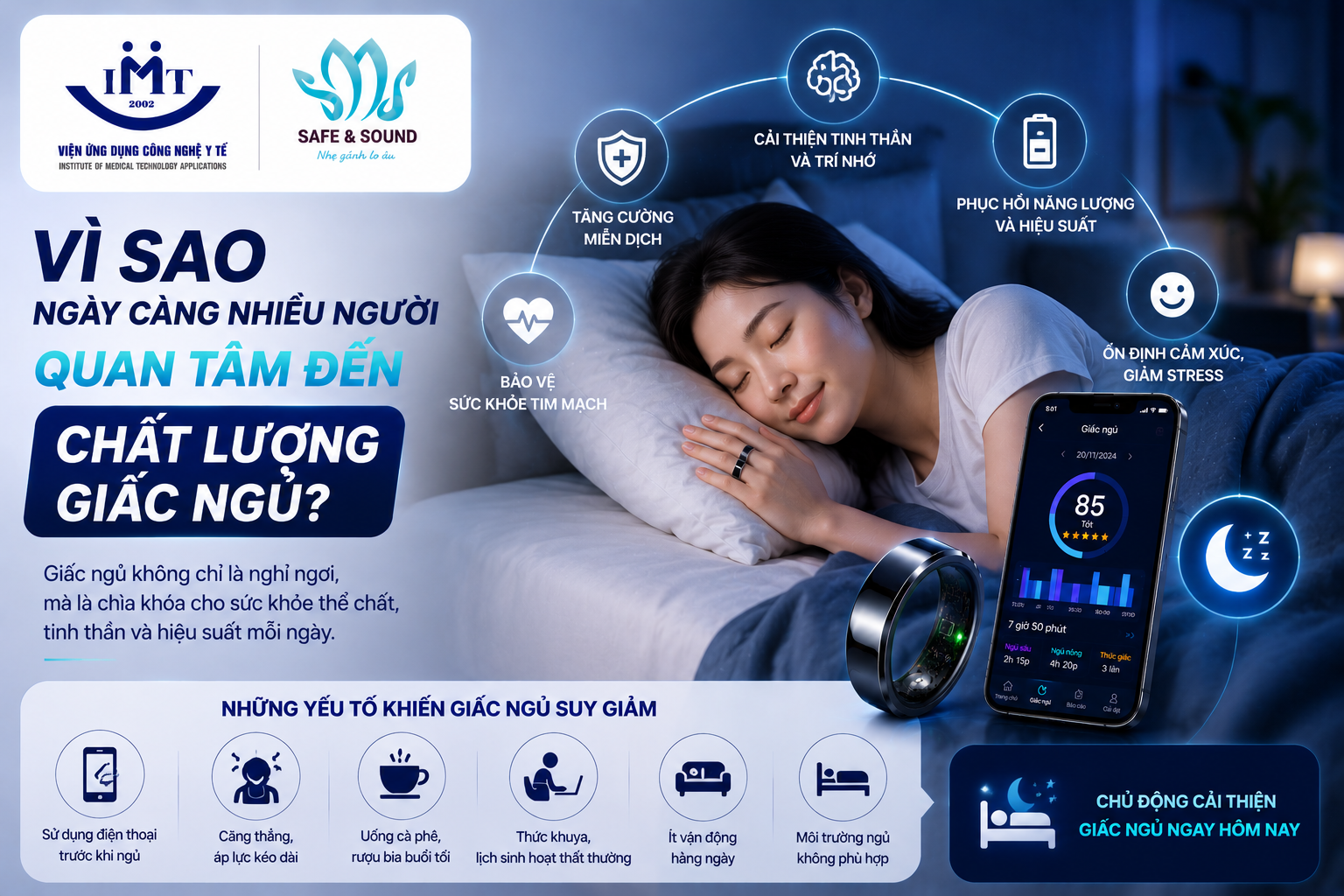
That's why more and more people are looking for ways to improve their sleep so they can sleep better, wake up feeling more refreshed, and enhance their quality of life. So what are some of the most popular methods currently being used? Let's find out below.
>> See also: 5 Important Health Indicators a Smart Ring Can Track Every Day
What Causes Sleep Quality to Decline?
Before exploring ways to improve sleep quality, we need to understand the factors that are silently affecting our sleep every day. Many people believe the cause is simply insufficient sleep. In reality, sleep quality is influenced by many different factors.
|
Reason |
Impact on sleep |
|
Staying up late regularly |
Reduce the duration of deep sleep. |
|
Using your phone before bed |
Difficulty falling asleep |
|
Prolonged stress |
Easily wake up in the middle of the night. |
|
Drinking coffee in the evening |
Causes difficulty sleeping. |
|
Lack of exercise |
Reduced quality of rest |
|
An unsuitable sleeping environment |
Restless sleep, difficulty recovering |
It's worth noting that many of these habits have become part of modern life. Therefore, improving sleep often begins with small changes in daily routines.
"Highlighting" 5 Ways to Improve Sleep That Many People Are Currently Using.
Getting better sleep doesn't always require complicated methods. In many cases, simply adjusting a few simple habits can make a significant difference. Below are five ways to improve sleep that many people are using to enhance their daily rest.
Establish a Fixed Sleep and Wake-Up Schedule
One of the most common mistakes today is going to bed and waking up at different times each day. Many people go to bed at 11 PM on weekdays but stay up until 2 or 3 AM on weekends. This constantly disrupts the body's biological clock.
By maintaining a consistent sleep schedule, the body will gradually develop a natural habit and find it easier to fall asleep. Some simple principles can be applied:
- Go to bed at the same time every day.
- Wake up at a fixed time, even on weekends.
- Avoid sleeping in excessively to catch up on sleep.
- Maintain an appropriate sleep duration of 7–9 hours each night.
This is considered the most important foundation if you want to improve your sleep quality in the long term.
Limit Electronic Devices Before Bedtime
Phones, tablets, and laptops have become indispensable to many people. However, browsing social media or watching videos right before bedtime is one of the common causes of impaired sleep.
Blue light from screens can affect the production of melatonin – the hormone that helps the body feel sleepy. Additionally, consuming too much information in the evening makes it harder for the brain to relax.
If you want to sleep better, you should:
- Stop using your phone about 30–60 minutes before going to sleep.
- Limit your viewing of content that evokes strong emotions.
- Reduce screen brightness in the evening.
- Replace it with reading a book or listening to relaxing music.
This is a small change, but it often yields noticeable results after just a few weeks of implementation.
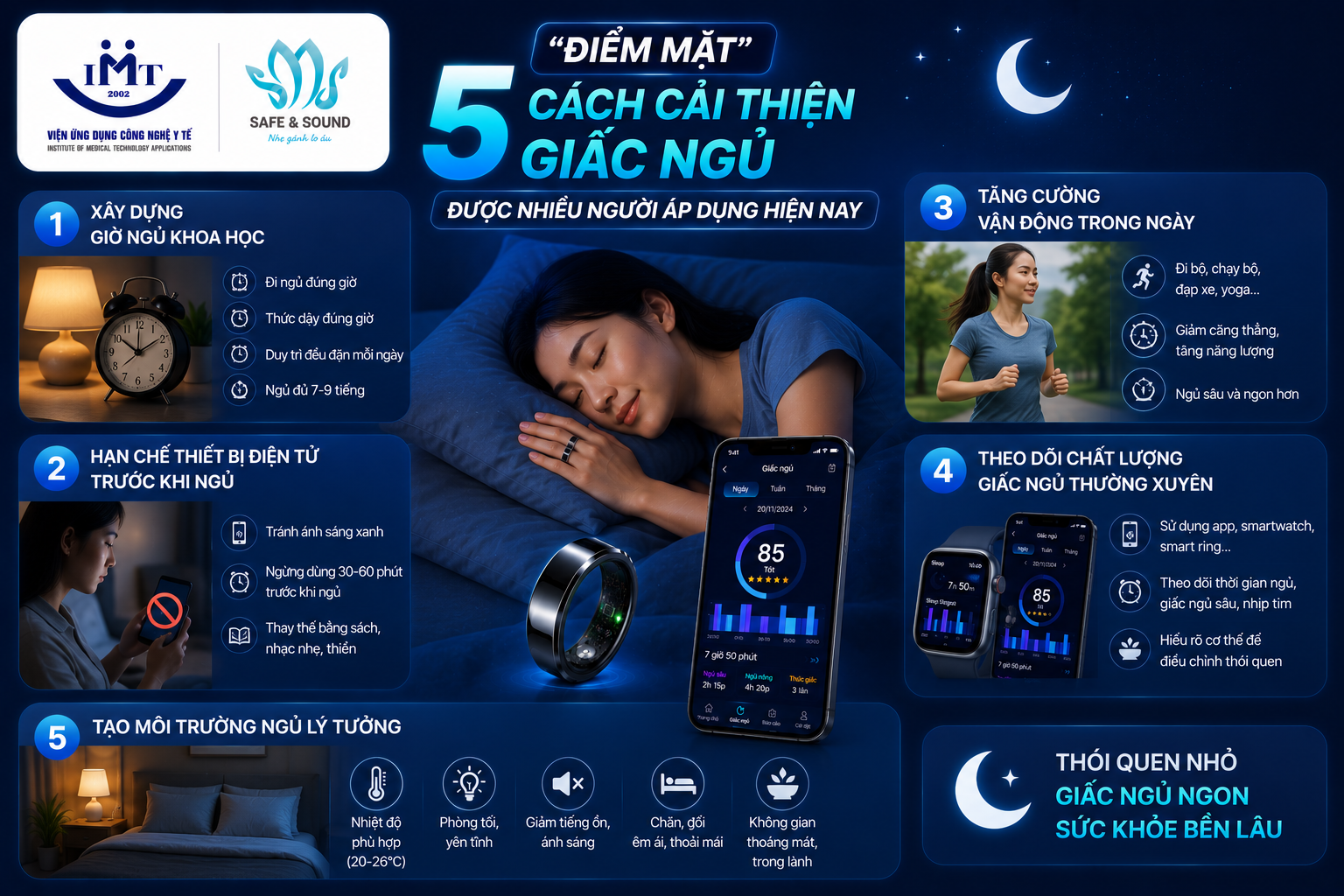
Increase Physical Activity During the Day
Many studies show that people who exercise regularly tend to sleep better than those who are less physically active. Exercise helps the body burn energy, reduce stress, and support the regulation of the natural circadian rhythm.
You don't necessarily need to do high-intensity workouts. Simple activities like:
- Walk for 30 minutes every day.
- Cycling.
- Legs.
- Stretching exercises.
- Climb the stairs instead of taking the elevator.
Both can contribute to improving sleep quality. However, avoid strenuous exercise close to bedtime as this can make your body more alert instead of relaxing.
Monitor your sleep quality regularly.
A notable trend in recent years has been the use of sleep tracking devices and apps. Many people don't realize they're not sleeping well or frequently waking up in the middle of the night until they start tracking their data.
Current support tools include:
|
Tools |
Function |
|
Sleep tracking app |
Analyzing sleep duration and quality. |
|
Smartwatch |
Sleep and heart rate monitoring |
|
Specialized sleep tracking device |
Many health indicators were recorded. |
|
Smart Ring |
Compact, continuous sleep tracker |
Through the collected data, users can learn:
- Actual sleep time.
- Percentage of deep sleep.
- Number of times I woke up.
- The quality of the body's recovery.
As a result, adjusting unhealthy habits becomes easier. This is one of the methods favored by many people because of its intuitive nature and the ability to track progress over time.
Create the Ideal Sleeping Environment
Sometimes the reason you're not sleeping well stems from your daily sleeping environment. A room that's too bright, too hot, or too noisy can all affect the quality of your sleep.
To create a better sleeping environment, you can:
- Keep the bedroom quiet.
- Adjust the temperature accordingly.
- Use blackout curtains.
- Limit the light emitted from electronic devices.
- Choose bedding that suits your body.
These seemingly simple changes can help your body relax better and make it easier to fall into a deep sleep.
>> See also: 6 Ways to Track Sleep Using Smart Devices to Better Understand Your Body
The Role of Technology in Improving Sleep
While previously sleep quality assessments were primarily based on subjective feelings, technology has now made this process much more intuitive and accurate.
Many people initially thought they slept quite well until they started using sleep tracking tools. The recorded data revealed that they frequently woke up in the middle of the night, had less deep sleep, or slept significantly less than they initially thought.
This is also why sleep tracking apps and devices are becoming increasingly popular in modern life. Instead of just knowing how many hours they sleep, users can gain a better understanding of what's happening throughout their rest period.
Some of the information that current sleep tracking tools can provide includes:
- Total actual sleep time.
- Deep sleep and light sleep periods.
- The number of times you wake up during the night.
- Time to fall asleep.
- Heart rate during sleep.
- The degree of body recovery after sleep.
Thanks to this data, users can easily identify habits that are affecting the quality of their rest. Currently, users can choose from many different solutions depending on their needs.
|
Tools |
Characteristic |
|
Sleep tracking app |
Accessible, low cost |
|
Smartwatch |
Combine health and fitness tracking. |
|
Sleep tracking device |
In-depth analysis |
|
Smart Ring |
Continuous sleep tracking, compact, and comfortable to wear. |
Among these options, smart rings are becoming a popular choice due to their ability to track daily sleep naturally and with minimal disruption to sleep. With their compact design, users can wear them continuously throughout the night to collect data without almost noticing the device's presence.
Of course, technology cannot completely replace good sleep habits. However, sleep tracking tools can act as a "companion," helping individuals better understand their bodies and make appropriate adjustments to improve the quality of their rest in the long term.
Who Should Care About Improving Their Sleep?
In fact, anyone can benefit from better quality sleep. However, there are specific groups of people who should pay attention to monitoring and improving their sleep from an early age.
Because sleep not only affects alertness the next day but also directly impacts physical and mental health and long-term quality of life, the following groups are encouraged to pay more attention to the quality of their rest:
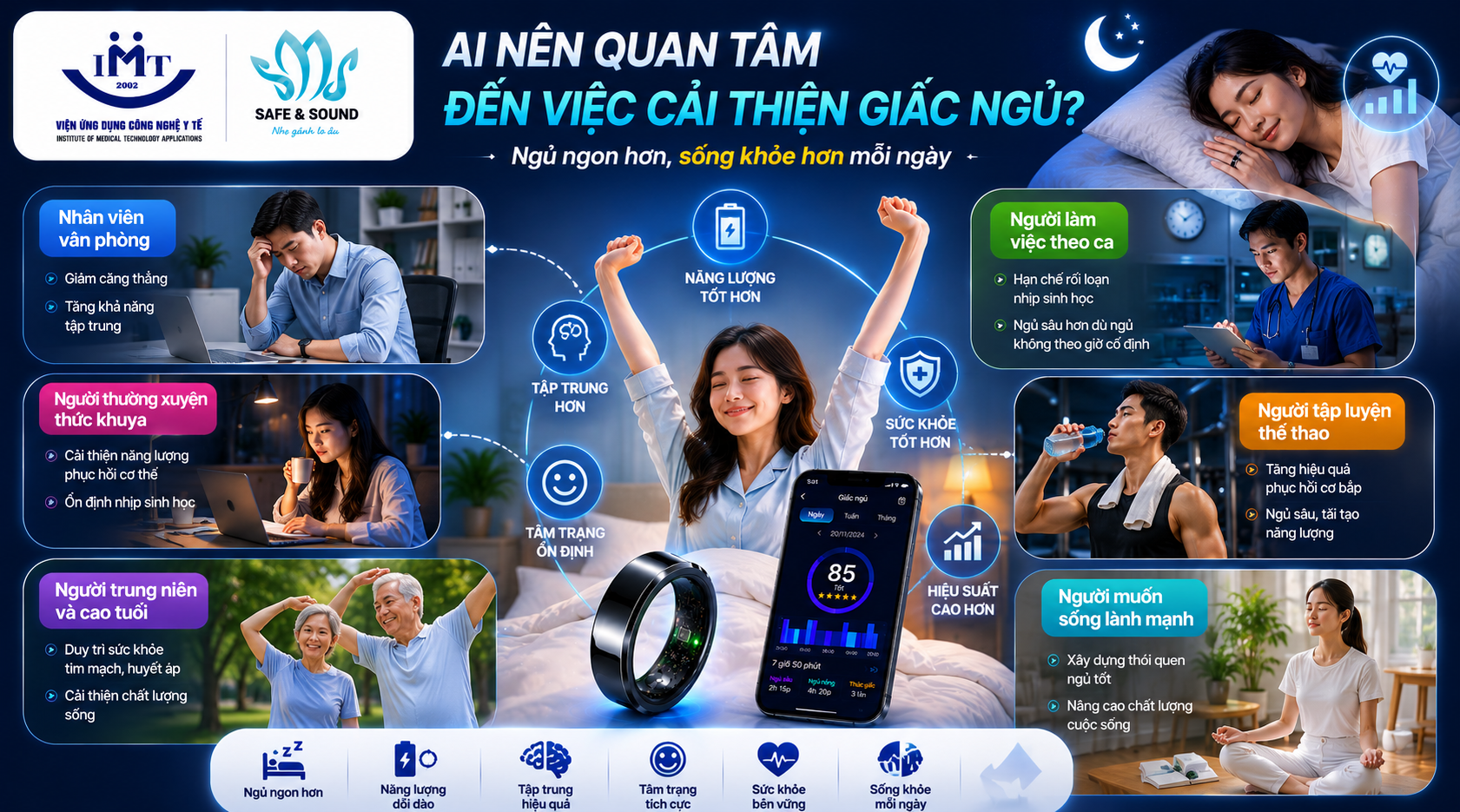
Office workers are often stressed.
This group is prone to insomnia, poor sleep quality, or waking up feeling low on energy due to prolonged work stress. Improving sleep quality helps enhance concentration, reduce fatigue, and improve work performance throughout the day.
Shift workers
People who work night shifts or have irregular schedules often face the risk of circadian rhythm disruption. Monitoring sleep and establishing a suitable rest schedule can help the body adapt better to the nature of their work.
People who frequently stay up late
A persistent habit of staying up late not only affects energy levels but also impacts many important bodily functions. For this group, monitoring daily sleep helps identify the extent of sleep deprivation and adjust their daily routines accordingly.
Athletes
Many people focus on nutrition and exercise but overlook the importance of sleep. Meanwhile, sleep is the crucial period for muscle recovery, energy replenishment, and preparation for subsequent workouts. Quality sleep can directly impact workout effectiveness and overall recovery.
Middle-aged and elderly people
As we age, sleep quality tends to decline. Paying attention to sleep not only improves mental health but also contributes to overall health and long-term quality of life.
People who want to build a healthy lifestyle.
Even without sleep problems, maintaining good sleep habits offers numerous benefits. Quality sleep is fundamental to physical and mental health, as well as daily work performance.
It can be said that improving sleep is not only for those who are having difficulty resting, but also one of the important steps to help each person proactively take better care of their health every day.

Conclude
There is no one-size-fits-all formula when it comes to improving sleep. However, establishing good sleep habits, limiting electronic devices before bedtime, increasing physical activity, monitoring sleep quality, and optimizing the sleep environment are all methods that many people are effectively applying.
The most important thing isn't to change everything in one day, but to maintain positive habits consistently. Because quality sleep not only helps you sleep better, but it's also the foundation for long-term physical and mental health and quality of life.
.png)
Developed with the vision of a "proactive health monitoring device with a doctor's support," the IMT Ring not only supports monitoring metrics such as heart rate, SpO2, blood pressure, and sleep, but also aims to build a comprehensive healthcare ecosystem. Through its integrated AI technology platform and expert connectivity, users can easily monitor, manage, and better understand their health status every day.
If you're looking for a solution that helps you proactively monitor your health in a simpler and more convenient way in modern life, the IMT Ring could be a worthwhile option to start your health journey with even the smallest changes each day.
