

Smart Ring, Smartwatch, or App: Which Personal Health Tracker Is Right for 2026?
The development of personal health tracking devices allows individuals to access their body data in real time. With just a smartphone, smartwatch, or smart ring, users can monitor their heart rate, SpO2, sleep quality, activity levels, and many other important metrics. However, with the market offering an increasing number of options, a question arises: Smart Ring, Smartwatch, or Health App – which is the most suitable personal health tracking device in 2026?
What are Personal Health Monitoring Devices?
Personal health tracking devices are tools designed to record, store, and analyze data related to a user's physical condition. Unlike conventional technology devices, their primary goal is not entertainment or communication, but rather to help users better understand their health.
Currently, commonly monitored indicators include:
|
Index |
Meaning |
|
Heart rate |
Reflects the activity of the cardiovascular system. |
|
SpO2 |
Assessing blood oxygen saturation levels |
|
Blood pressure |
Monitoring cardiovascular health |
|
Sleep |
Assessing the body's ability to recover |
|
Physical activity |
Track your daily activity levels. |
|
Body energy |
Reflects overall physical condition |
When this data is monitored continuously, it will help users gain a more comprehensive understanding of their own health.
>> See also: What is a Smart Ring? 7 Health Tracking Features Worth Considering
Why is the demand for personal health monitoring increasing sharply in 2026?
Healthcare is gradually shifting from a "treat when sick" model to a "proactive monitoring for prevention" model. Instead of waiting for routine checkups or only paying attention to their health when unusual symptoms appear, more and more people are choosing to monitor their health indicators daily to better understand their own condition.
So what are the factors driving the strong growth of personal health tracking trends in 2026?
Healthcare is shifting from a passive to an active approach.
In the past, most healthcare took place in hospitals or medical facilities. People typically only checked their bodies when they felt unwell or when a routine check-up was required.
However, many studies have shown that most health problems don't appear suddenly. They often begin with small changes that last for weeks or months before manifesting as clear symptoms.
A gradually increasing resting heart rate, persistently declining sleep quality, decreased activity levels, or abnormal fluctuations in blood pressure are all early warning signs from the body.
Therefore, instead of waiting until their bodies "speak up," many people are starting to choose personal health tracking devices to better understand their condition each day.
Smart Health technology is changing the way we manage our health.
The development of smart health is not simply about collecting data. Modern platforms today can:
- Data is recorded continuously 24/7.
- Long-term health history storage
- Analyzing changing trends
- Abnormal alert
- Connect with experts when needed.
This helps users not only see the numbers but also understand their meaning within the overall health picture.
Are Health Apps on Mobile Phones Enough to Track Your Health?
Health apps on mobile phones are the first platform that helps many people access personal health management. They are simple, easy to use, and almost anyone can get started right away without investing in any additional equipment.
However, to assess whether health apps are truly sufficient for daily health monitoring needs, we need to consider both the advantages and limitations of this solution.
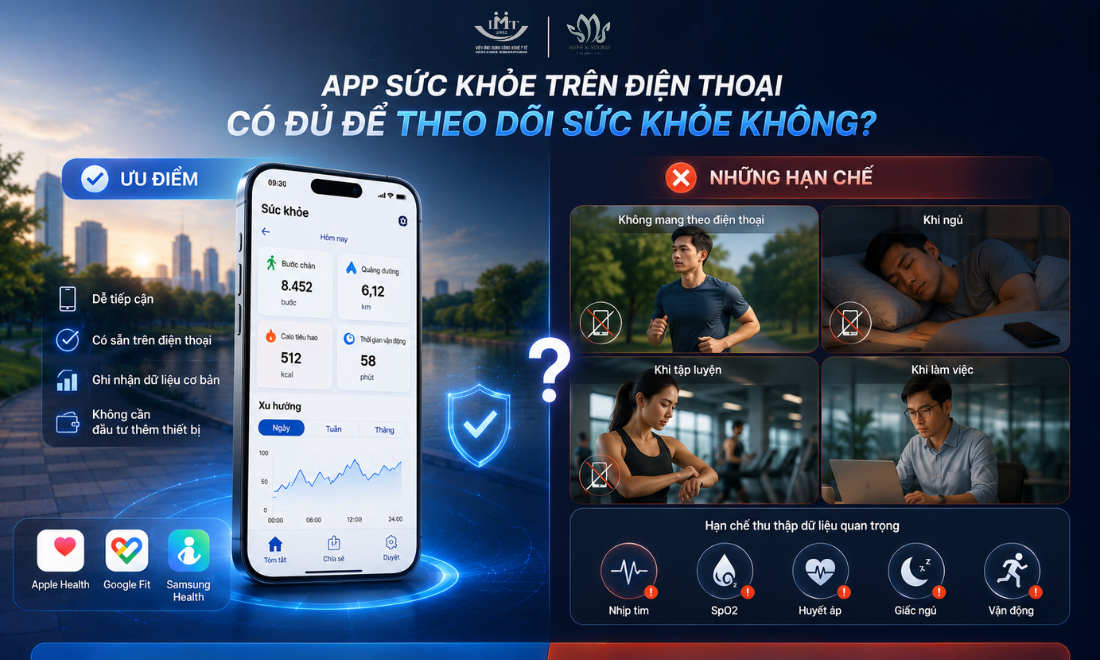
Advantages of health apps
The popularity of smartphones has facilitated the rapid growth of health platforms in recent years. Apps like Apple Health, Google Fit, and Samsung Health are now pre-installed on many phone models and allow users to record basic data such as:
- Everyday footsteps
- Distance traveled
- Calories burned
- Exercise time
- Training goals
- Weight and body mass index
The biggest advantage of this solution lies in its convenience. Users don't need to buy any additional equipment to begin their personal health monitoring journey. Simply carrying their phone will automatically record basic data through built-in sensors and algorithms.
In addition, many current applications also support features such as setting exercise goals, tracking workout progress, synchronizing data across different platforms, storing health history over time, and creating easy-to-follow visual reports.
For those who are new to health or want to build more active habits, a health app is a reasonable option. It's also a great starting point for many people to get acquainted with the concept of managing personal health data before moving on to more advanced solutions.
Limitations of using only health apps
Despite offering many benefits, phones are not designed to be dedicated health tracking devices. Unlike smartwatches or smart rings, which can be in direct contact with the body for extended periods, phones are typically only carried during certain times of the day.
For example:
- Many people place their phones far away from their beds when they sleep.
- When exercising, phones may be left in pockets or not carried at all.
- When working, phones are usually placed on the desk instead of being kept close at all times.
- When relaxing at home, users don't always hold their phones constantly.
This significantly limits the ability of phones to collect biological data. Several important health indicators such as heart rate, SpO2, blood pressure, sleep, and the body's recovery ability cannot be continuously recorded using only a smartphone.
Furthermore, health apps primarily serve to store and display data rather than directly measuring data from the user's body. In other words, health apps are only truly effective when combined with smart wearable devices capable of collecting real-time data.
Smartwatch – A Multifunctional Health Tracking Device
Following the rapid growth of health apps on smartphones, smartwatches are seen as the next step in the digitalization of personal healthcare. This group of devices has also significantly changed how many people approach health monitoring over the past 5-10 years.
Unlike phones, which only record a portion of data through sensors and apps, smartwatches are in direct contact with the body for most of the time they are used. This allows the device to collect more health data and provide a more comprehensive view of the user's physical condition.
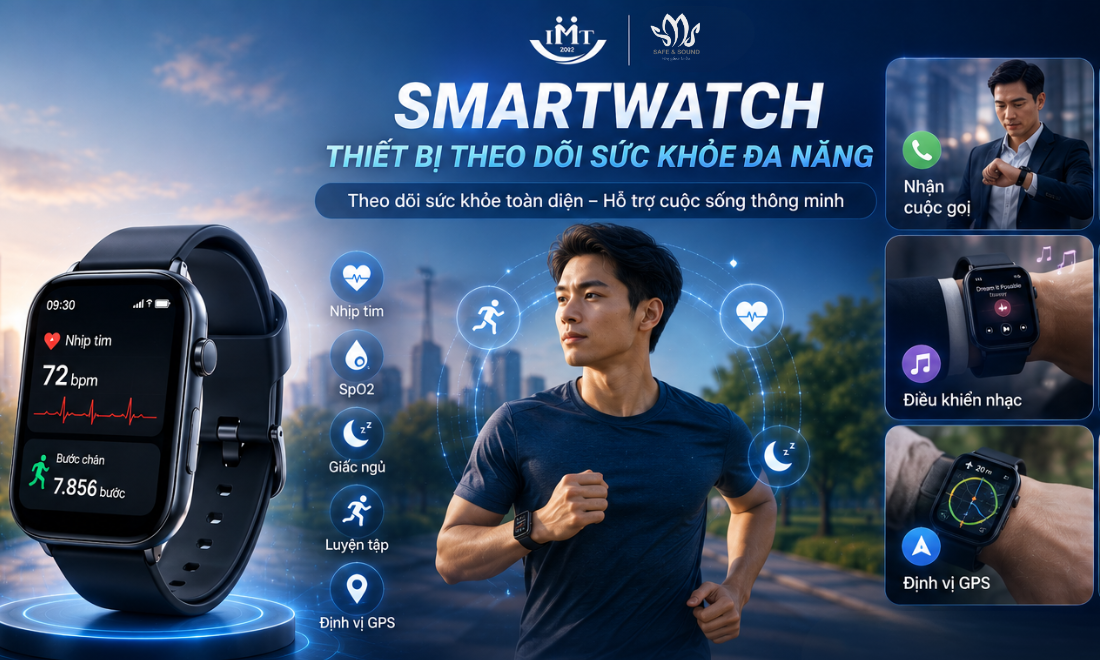
What are smartwatches good at?
One of the reasons smartwatches have become so popular is their ability to combine technology, health, and lifestyle convenience in a single device. Beyond the traditional timekeeping function, modern smartwatches are equipped with a range of features to support users in their daily work and activities, such as:
- Monitor heart rate, SpO2, and sleep.
- Track physical activity.
- Record the sports training sessions.
- Receive calls and messages.
- Music control
- Electronic payment
- GPS positioning
Smartwatches can be described as a combination of a health monitoring device and a personal tech assistant. Especially for sports enthusiasts, smartwatches offer many benefits in tracking exercise progress. This data makes building healthy lifestyle habits more intuitive and motivating.
Additionally, smartwatches are suitable for people who frequently work on their phones but want to limit the need to constantly check their devices. Quickly viewing notifications or answering calls directly on the wrist saves time and increases convenience in daily life.
Common limitations of smartwatches
Despite their versatility, smartwatches still have some limitations, leading many people to start looking for alternatives in recent years.
The first limitation is battery life. Due to the need to operate the screen continuously along with many other smart features, most smartwatches currently only last 1 to 3 days before needing to be recharged. At first glance, this may not seem like a big problem. However, when the goal is continuous 24/7 health monitoring, having to remove the device for charging frequently will interrupt data collection.
This particularly affects data such as:
- Sleep
- Resting heart rate
- The body's ability to recover.
- The indicators are displayed at night.
Furthermore, not everyone feels comfortable wearing a watch while sleeping. For many, the feeling of having a device on their wrist all night can be uncomfortable or affect the quality of their rest. As a result, they often take off their watch before bed and inadvertently miss one of the most important periods for monitoring their health.
Another limitation stems from the very versatility of smartwatches. Besides health functions, the device constantly displays messages, calls, social media notifications, etc. This sometimes turns the smartwatch into a "second screen" instead of a device focused on health care.
For those who want to minimize technology or track their health in a more natural way, receiving dozens of notifications every day can be distracting and feel intrusive.
Smart Ring – The New Trend in Personal Health Tracking Devices in 2026
If smartwatches revolutionized the way health features were brought to the user's wrist, then smart rings are seen as the next step, where technology becomes more compact and discreet while still ensuring continuous health data collection.
Many experts even predict that 2026 will be a period of strong growth for the smart ring market as users increasingly prioritize comfort and in-depth health monitoring rather than simply owning a multi-functional tech device.
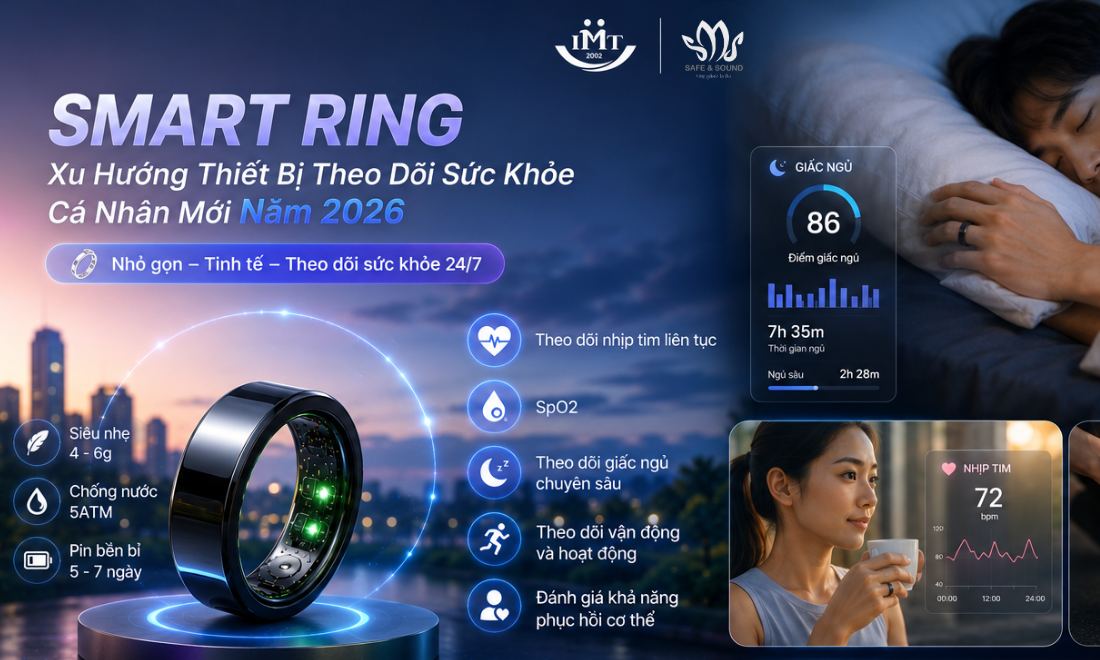
Why are smart rings gaining attention?
While smartwatches focus on versatility, health-tracking smart rings focus almost entirely on health data. This is the biggest difference between the two product lines.
While smartwatches must balance many features such as communication, entertainment, notifications, and fitness tracking, smart rings are designed with the core goal of recording and analyzing the user's health metrics.
The compact design is also a huge advantage. A smart ring typically weighs only a few grams and is about the same size as a regular ring. After using it for a while, many people almost forget they're wearing the device.
This is precisely what makes smart rings suitable for the following people:
- I don't like wearing a watch all day.
- Want to monitor your health discreetly?
- Regularly working in an office
- Focus on long-term health data.
- To minimize distractions from technology.
Unlike smartwatches that constantly display notifications, smart rings operate silently in the background, focusing on data collection rather than attracting the user's attention.
Continuous health monitoring 24/7
One of the key factors determining the value of a personal health tracking device is continuity. Health doesn't change at a fixed point in time. Body metrics are constantly fluctuating depending on activity, emotions, living environment, and quality of rest.
If data is only recorded intermittently, users will find it very difficult to see the complete picture of their health status. That's why the ability to continuously monitor is a major advantage of smart rings.
A modern smart ring can support monitoring heart rate, SpO2, blood pressure, sleep quality, physical activity, and provide daily, weekly, and monthly data statistics. The important thing isn't how many metrics are measured, but rather the ability to store and connect this data into a complete system.
Is sleep tracking better than a smartwatch?
This is one of the reasons why many people choose smart rings. Many people find wearing a watch uncomfortable while sleeping. In contrast, smart rings are significantly lighter and have less impact on daily activities. This makes sleep tracking feel more natural.
For many people, this is the most valuable data because sleep is closely linked to energy, concentration, work performance, and long-term health.

>> See also: 7 Important Criteria When Buying a Smart Ring to Track Your Health in 2026
Conclude
There isn't one personal health tracker that's right for everyone. If you only need basic features, a health app might be a reasonable starting point. If you want a versatile device that serves both work and fitness needs, a smartwatch is a worthwhile option.
However, if the goal is continuous health monitoring, long-term data management, and building proactive health care habits, smart rings are emerging as one of the most noteworthy healthcare technology trends of 2026.
The most important thing isn't which device you choose, but maintaining a daily health monitoring routine to understand your body sooner, and thus make better health decisions in the future.
.png)
Developed with the vision of a "proactive health monitoring device with a doctor's support," the IMT Ring not only supports monitoring metrics such as heart rate, SpO2, blood pressure, and sleep, but also aims to build a comprehensive healthcare ecosystem. Through its integrated AI technology platform and expert connectivity, users can easily monitor, manage, and better understand their health status every day.
If you're looking for a solution that helps you proactively monitor your health in a simpler and more convenient way in modern life, the IMT Ring could be a worthwhile option to start your health care journey with even the smallest changes each day.
