

6 Steps for Daily Health Monitoring to Proactively Detect Abnormal Signs
Most people only really pay attention to their health when their bodies show unusual signs. A persistent headache, unexplained fatigue, or a routine health checkup with abnormally high readings are what make us start to worry. However, many health problems don't appear suddenly. They often develop subtly over weeks or months before manifesting as obvious symptoms. That's why daily health monitoring is becoming a popular choice for many people. So what data should you track daily, and how can you make health tracking truly valuable?
Why is daily health monitoring necessary instead of just routine checkups?
Regular health checkups are an important habit for assessing overall body condition at any given time. However, for most people, health checkups typically only happen once or twice a year. This means that for hundreds of days, we are largely unaware of how our bodies are changing.
Meanwhile, health is not a fixed state. Heart rate, blood pressure, sleep quality, and activity levels can all change daily due to work, life stress, diet, and lifestyle habits.
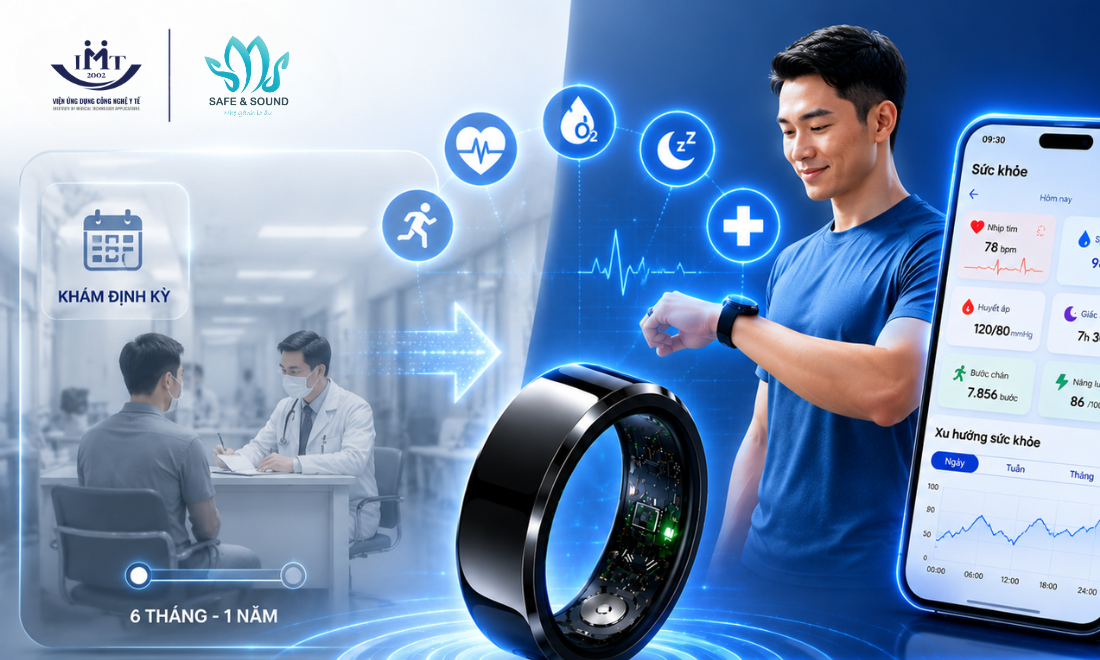
Many people still think that as long as their body doesn't show any unusual symptoms, their health is fine. In reality, many bodily changes occur silently over a long period before manifesting as obvious signs.
For example, someone might go to work and live a normal life, but their sleep quality has been steadily declining for weeks. Another person might frequently feel tired but not realize their resting heart rate is gradually increasing over time. Or there are cases where blood pressure begins to fluctuate abnormally but is only discovered during a subsequent health checkup.
This is why daily health monitoring is becoming increasingly important to many people. Instead of only knowing their health status through a few checkups a year, users can proactively observe important indicators to better understand their bodies.
Some health data that should be monitored regularly include: Heart rate, SpO2 level, Blood pressure, Sleep quality, Daily activity level, and Trends in health over time.
The important thing is that the value of health monitoring lies not in individual numbers, but in the ability to recognize changing trends in the body. For example:
|
Index |
One check |
Continuous monitoring |
|
Heart rate |
Normal |
There has been a gradual upward trend over the past two months. |
|
Sleep |
Get enough sleep (7 hours). |
The duration of deep sleep is continuously decreasing. |
|
Blood pressure |
Within safe limits |
Changes are starting to appear. |
|
Motor |
Nothing unusual. |
Activity levels have decreased by 30% compared to before. |
Looking at the results of just one day, it's difficult to notice these changes. However, when the data is stored and tracked continuously, users will have a more comprehensive view of their own health.
Daily health monitoring doesn't mean living in constant anxiety or self-diagnosing. On the contrary, it's a way for individuals to better understand their bodies, detect early warning signs, and proactively adjust their lifestyles before health problems impact their quality of life.
In the context of ever-advancing technology, health monitoring has become easier than ever. Smart health tracking devices can help record and manage data daily, enabling users to build proactive health care habits instead of only paying attention to their bodies when problems arise.
>> See also: Smart Ring, Smartwatch or App: Which is the Right Personal Health Tracking Device for 2026?
A summary of 6 steps to daily health tracking for beginners.
Many people think that health monitoring is a complicated process requiring specialized equipment or in-depth medical knowledge. The reality is quite the opposite. When health indicators are continuously monitored over a long period, they form a comprehensive picture that helps users better understand their current health status and any changes in their bodies.
If you're just starting your daily health monitoring journey, begin with these six basic steps.
Step 1: Monitor your heart rate daily.
When it comes to cardiovascular health, many people often think of blood pressure or electrocardiograms. However, heart rate is one of the most basic and easily monitored indicators. Heart rate reflects the number of times the heart contracts in a minute to pump blood throughout the body.
The important thing isn't a single measurement, but rather the trend of change over time. A normal heart rate reading today may not fully reflect your health status if it consistently fluctuates over several weeks.
For example, if your resting heart rate normally hovers around 65 bpm but suddenly increases to 75-80 bpm for several consecutive days without changing your lifestyle, it could be a sign that your body is under stress, lacks sleep, is under pressure, or hasn't fully recovered after exercise.
Conversely, people who maintain a healthy lifestyle and exercise regularly tend to have a more stable resting heart rate over time.
Heart rate monitoring is not intended for self-diagnosis of medical conditions. Its greatest value lies in its ability to help users better understand their body's response to work, sleep, exercise, and daily routines.
Step 2: Monitor SpO2 levels
Compared to heart rate or blood pressure, SpO2 is a relatively new concept for many people. SpO2 is an indicator that reflects the level of oxygen saturation in the blood. Simply put, it's data indicating whether the body is receiving enough oxygen to maintain vital functions.
Under normal conditions, the body maintains a stable SpO2 level of 95% - 100%. However, when this level continuously decreases or shows unusual fluctuations, it may be a sign that needs attention.
Interestingly, many perfectly healthy people never monitor their SpO2 levels in their daily lives. Only when they experience respiratory, mobility, or fitness-related problems do they realize how valuable this data is.
Regular SpO2 monitoring helps users better observe their body's ability to adapt to physical activity, rest quality, and long-term health changes.
That's also why more and more health monitoring devices are incorporating continuous SpO2 monitoring instead of just measuring it when needed.
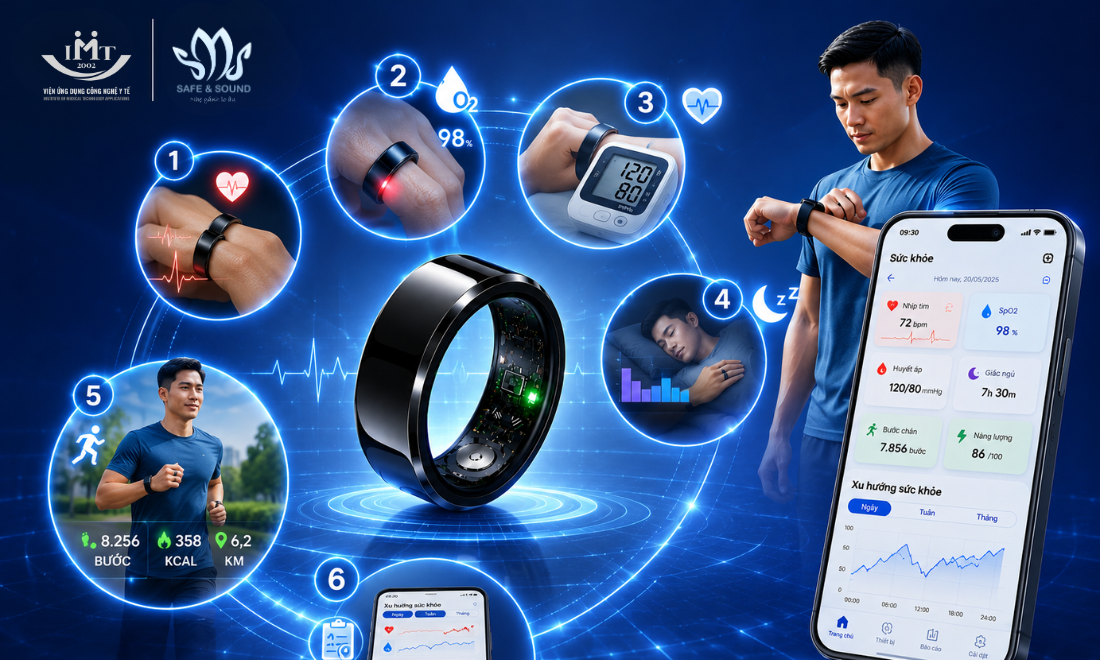
Step 3: Monitor blood pressure regularly.
Blood pressure has long been considered one of the most important health indicators. Worryingly, abnormal blood pressure often develops quite silently. Many people only discover the problem when symptoms appear or during routine health checkups.
In fact, blood pressure can fluctuate due to:
- Prolonged stress
- Lack of sleep
- High-salt diet
- Lack of physical activity
- Age
- Unhealthy lifestyle habits
Measuring blood pressure only every few months makes it difficult to see the true trends in your body's health. Conversely, regular monitoring and data recording provide a more comprehensive view of your cardiovascular health.
Especially for middle-aged and elderly people, or those with a history of cardiovascular problems, regular blood pressure monitoring not only helps raise health awareness but also supports the early detection of noticeable changes before they affect daily life.
Step 4: Monitor sleep quality
Many people believe that simply getting 7-8 hours of sleep is enough to keep their bodies healthy. In reality, the quality of sleep is more important than the number of hours slept.
Some people sleep for a long time but still feel tired the next morning. Conversely, many people sleep less but still feel full of energy. The difference lies in the quality of their rest. Data to track include:
- Total sleep time
- Deep sleep time
- Number of times waking up during the night
- Overall sleep quality
- Trends change over time.
Sleep is considered a time when the body recovers both physically and mentally. When sleep quality declines, many important bodily functions are affected, such as concentration, work performance, immunity, and cardiovascular health.
Therefore, tracking your sleep isn't simply about seeing how many hours you slept last night, but also about better understanding how your body is recovering after each day's activities.
Step 5: Track daily activity and energy levels.
The body is constantly sending signals through daily activities. One common mistake is focusing only on medical indicators while neglecting the level of physical activity.
In fact, physical activity is a very clear indicator of health status. If your step count gradually decreases, you exercise less, or your body frequently lacks energy, these are all signals worth paying attention to.
Tracking daily activity helps users:
- Maintain an exercise routine.
- Reduce the risk of sitting for too long.
- Build a more positive lifestyle.
- Understanding the connection between exercise and health.
Numerous studies have shown that maintaining regular physical activity is closely linked to cardiovascular health, weight management, and long-term quality of life. Therefore, the number of steps or the amount of time spent exercising each day are not just numbers, but also indicators reflecting an individual's lifestyle and overall health.
Step 6: Manage your personal health data instead of just viewing individual metrics.
The real value lies in long-term data. Many people have a habit of opening an app, quickly checking a few metrics, and then forgetting about them immediately afterward. However, health tracking isn't about viewing data day by day in isolation. More importantly, it's about the ability to manage personal health data over the long term.
A normal heart rate reading today may not fully reflect your overall health status. However, if the data is continuously stored over weeks or months, users will begin to see changing trends in their bodies.
It could be:
- Resting heart rate gradually increases over time.
- Sleep quality is continuously declining.
- The level of physical activity is lower than before.
- Blood pressure fluctuates more than normal.
It is these small changes that often yield the greatest value in proactive health monitoring. When data such as heart rate, SpO2, blood pressure, sleep, and physical activity are linked together on a single platform, users gain a more holistic view of their bodies instead of just looking at each metric individually.
This also forms the basis of the growing trend of personal health data management in today's digital age.

Health monitoring is more than just looking at data.
One of the biggest limitations of many current technology devices is that users receive a lot of data but don't know what that data means. Numbers only truly become valuable when they help us better understand our own health and know how to react appropriately when abnormal changes occur.
That's also why modern healthcare trends go beyond just measuring; they also focus on analysis, alerts, and supporting users throughout their health monitoring process.
Instead of asking, "What is your heart rate today?", users today are more interested in questions like:
- Is my heart rate changing abnormally?
- Is your sleep quality gradually declining?
- Is this month's health trend better or worse than last month?
- What should I do if I notice any unusual symptoms?
That is the true value of modern healthcare technology.
>> See also: Top 5 Important Health Indicators You Can Monitor Daily at Home
Conclude
Daily health monitoring through metrics such as heart rate, SpO2, blood pressure, sleep, and activity data helps individuals better understand their bodies, detect noticeable changes early, and proactively adjust their lifestyles accordingly.
Health doesn't change overnight. Unusual signs often appear early but are easily overlooked in the hustle and bustle of daily life. Healthcare shouldn't begin only when the body has problems. It should start with listening to your body every day.
.png)
Developed with the vision of a "proactive health monitoring device with a doctor's support," the IMT Ring not only supports monitoring metrics such as heart rate, SpO2, blood pressure, and sleep, but also aims to build a comprehensive healthcare ecosystem. Through its integrated AI technology platform and expert connectivity, users can easily monitor, manage, and better understand their health status every day.
If you're looking for a solution that helps you proactively monitor your health in a simpler and more convenient way in modern life, the IMT Ring could be a worthwhile option to start your health care journey with even the smallest changes each day.
