

What Is Health Monitoring? 6 Key Benefits in Modern Life
Many health problems don't appear suddenly but often begin with subtle signs such as restless sleep, irregular heartbeat, frequent fatigue, or decreased concentration. However, if you rely solely on subjective feelings, these changes are easily overlooked. That's why the concept of proactive health monitoring is gaining more and more attention. Instead of only checking their health when they have unusual symptoms or during routine checkups, people now tend to monitor their physical condition more regularly to better understand their own health. So what is health monitoring ? What are the benefits of daily health monitoring? Let's find out in the article below.
What is Health Monitoring?
Health monitoring is the process of recording, tracking, and evaluating indicators related to one's physical condition to help users better understand their health over time.
The metrics that can be tracked may include:
- Heart rate
- Blood pressure
- Blood oxygen concentration (SpO2)
- Sleep quality
- Number of steps
- Activity level
- Calories burned
- Stress level
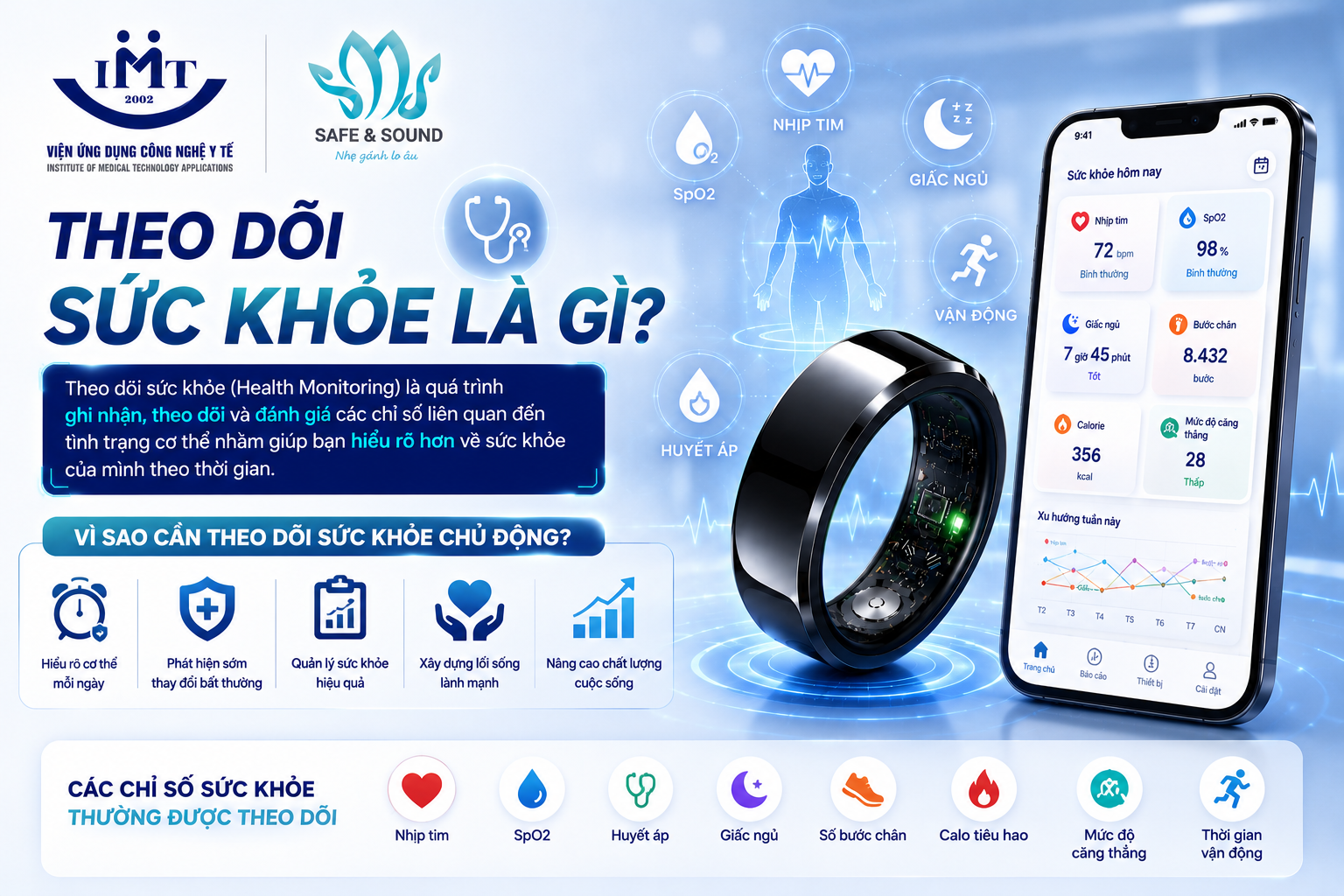
Previously, health monitoring was primarily done at medical facilities or during routine health checkups. However, with the development of technology, users can now easily manage their daily health through health tracking devices such as smartwatches, smart rings, or health apps on their phones.
The goal of health monitoring is not to replace medical check-ups and treatment, but rather to help users better understand their bodies, detect abnormal changes early, and build healthier lifestyles.
Commonly Monitored Health Indicators Today
When it comes to health monitoring, many people simply think of measuring heart rate or counting steps each day. However, in reality, a person's health is reflected through many different indicators, from cardiovascular health and sleep quality to activity levels and the body's ability to recover.
Thanks to technological advancements, modern health monitoring devices can automatically record and analyze a wealth of important data. This information provides users with a more comprehensive understanding of their physical condition, rather than relying solely on subjective feelings.
Below are some common health metrics currently being monitored on health monitoring devices:
|
Index |
Meaning |
|
Heart rate |
Monitoring cardiovascular activity |
|
SpO2 |
Assessing blood oxygen levels |
|
Blood pressure |
Supports cardiovascular health monitoring. |
|
Sleep |
Assessing the quality of rest and recovery |
|
Number of steps |
Track activity levels |
|
Calories burned |
Physical activity management |
|
Stress level |
Monitoring mental state |
|
Exercise time |
Assessing lifestyle habits |
Each indicator in the table above reflects a different aspect of health. For example, heart rate and blood pressure help users better understand their cardiovascular health, while sleep data indicates whether the body is recovering well after a day of work and activity.
This also forms an important foundation for making personal healthcare and daily health management more scientific, proactive, and effective in modern life.
>> See also: Top 5 Important Health Indicators You Can Monitor Daily at Home
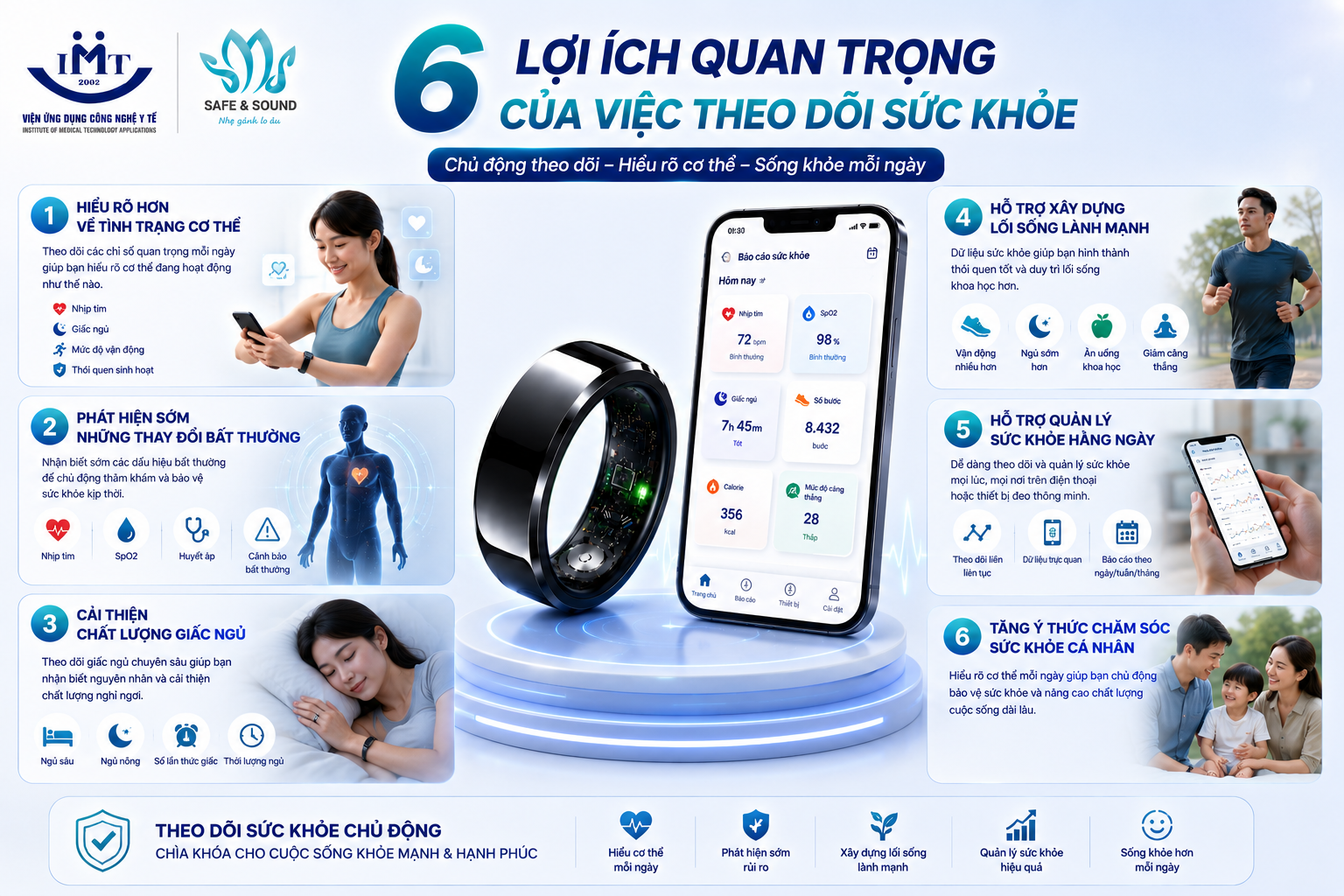
6 Important Benefits of Health Monitoring
The development of health tracking devices is not simply a technological trend. In the context of increasingly busy lives, many people are beginning to realize that healthcare shouldn't be limited to monthly check-ups.
Instead, proactive health monitoring is becoming a new habit that helps individuals better understand their bodies and make appropriate adjustments in their daily lives. So what are the benefits of health monitoring? Below are six key values that are making more and more people interested in managing their daily health.
Gaining a Better Understanding of Your Body Condition
Many people often assess their health based on feelings. If they don't have a headache, feel tired, or experience any unusual symptoms today, they assume their body is still healthy. However, health isn't always clearly reflected in how we feel.
Some people get eight hours of sleep but have very poor sleep quality. Others are inactive but don't realize their physical fitness is gradually declining. There are also cases where heart rate or blood pressure fluctuates for weeks without the individual being aware. Regular health monitoring will give users a better understanding of:
- Average heart rate per day.
- Actual sleep quality.
- Level of physical activity.
- Lifestyle habits.
- Stress level.
Instead of guesswork, users will have concrete data to understand how their bodies are functioning. This is the first step towards building a healthier and more scientific lifestyle.
Early Detection of Abnormal Changes
One of the biggest benefits of proactive health monitoring is the ability to detect abnormalities early. Often, we only go for a health check-up when we feel something is wrong. However, many bodily changes often occur silently over a long period before noticeable symptoms appear.
|
Situation |
If not monitored |
If you monitor regularly |
|
abnormally high heart rate |
Difficult to recognize |
Trend changes are easy to detect. |
|
Sleep quality decreases |
I just feel tired. |
There is specific data. |
|
SpO2 decreased slightly. |
Often overlooked |
It can be monitored continuously. |
|
Prolonged stress levels |
Late detection |
Observable through data |
Of course, health monitoring devices cannot replace doctors or specialized medical equipment. However, early detection of bodily changes always helps users be more proactive in seeking medical check-ups and examinations when necessary.
Improve Sleep Quality
Sleep is one of the factors that directly affects both physical and mental health. A person may eat a balanced diet and exercise regularly but still feel low on energy if their sleep quality is poor.
The problem is that many people today don't really know how they sleep. Through health tracking devices, users can monitor:
- Deep sleep time.
- Light sleep duration.
- Number of times waking up in the middle of the night.
- Total sleep duration.
- Quality of recovery after sleep.
This data helps users identify habits that affect sleep, such as regularly staying up late, using their phones before bed, drinking coffee too late, and prolonged stress. Once the causes are understood, improving the quality of their rest becomes much easier.
Supporting the Development of a Healthy Lifestyle
Interestingly, data can change human behavior. When people see the number of steps they take each day, many start walking more.
When they realized they were getting too little sleep, they started going to bed earlier. When they noticed their stress levels were steadily increasing, they paid more attention to rest and work-life balance. The differences between the two lifestyles can be illustrated in the table below:
|
Habit |
Failure to monitor health |
Health monitoring is available. |
|
Sleep |
Assessment by feeling |
Data-driven evaluation |
|
Motor |
Lack of control |
Monitor regularly. |
|
Cardiovascular health |
Less interested |
Regular monitoring |
|
Stress level |
Difficult to recognize |
Reference data is available. |
|
Lifestyle |
Passive |
Be more proactive |
These small changes can make a huge difference to your health for years to come.
Support for More Effective Daily Health Management
Modern life keeps many people constantly busy. Work, studies, family, and social relationships sometimes push personal health care to the bottom of the priority list.
Health tracking devices have emerged to address this problem by making health management simpler. With just a few taps on a phone or smart wearable device, users can track:
- Heart rate.
- Sleep.
- Level of physical activity.
- SpO2 level.
- Calories burned.
- Health data by day, week, and month.
Instead of having to memorize or rely on intuition, users can access information in a more intuitive and understandable way. This is also why health tracking devices are becoming powerful tools for managing daily health.
Popular Health Monitoring Devices Today
Previously, health monitoring was typically associated with hospitals, clinics, or routine health checkups. However, with the development of technology, users today can easily access tools to support health monitoring at home or during their daily activities.
Modern health monitoring devices not only record health data but also help users track changes in their bodies over time. This makes personal health care much more convenient and proactive.
Depending on their needs, users can choose from a variety of different devices:
|
Device |
Key features |
|
Smartwatch |
Monitor activity, heart rate, and sleep. |
|
Smart Ring |
Continuous health monitoring, compact design. |
|
Electronic blood pressure monitor |
Monitor your blood pressure at home. |
|
SpO2 meter |
Monitor blood oxygen levels. |
|
Health applications |
Managing personal health data |
Each device will suit different needs.
For example, blood pressure monitors or SpO2 monitors are often used when users want to check a specific indicator at a particular time. Meanwhile, health apps on smartphones play the role of storing and managing that data.
However, a prominent trend in recent years has been the development of smart wearable devices. Instead of just measuring at a single point in time, these devices are capable of continuously collecting data throughout the day.
Several advantages contribute to the increasing popularity of smart wearable devices:
- Continuous health monitoring 24/7.
- Easy to carry around in daily life.
- Data will automatically sync with your phone.
- Provides daily, weekly, and monthly health reports.
- Support in building proactive health monitoring habits.
Among smart wearable devices, smartwatches and smart rings are currently the two most popular choices.
While smartwatches are suitable for those who need many features such as making calls, receiving notifications, and assisting with work, smart rings focus strongly on continuous health monitoring with a compact, discreet design that is more comfortable for long-term use.
The diversity of health tracking devices available today reflects the growing trend towards personalized healthcare. Users not only want to know if they are healthy but also want to better understand the changes happening inside their bodies every day.

Who Should Get Regular Health Checkups?
Many people still believe that health monitoring is only really necessary for older adults or those with pre-existing medical conditions. However, in modern life, anyone can benefit from proactive health monitoring.
Because health isn't just a problem when the body gets sick. Daily habits like staying up late, lack of exercise, prolonged stress, or an unbalanced diet can all affect health over time.
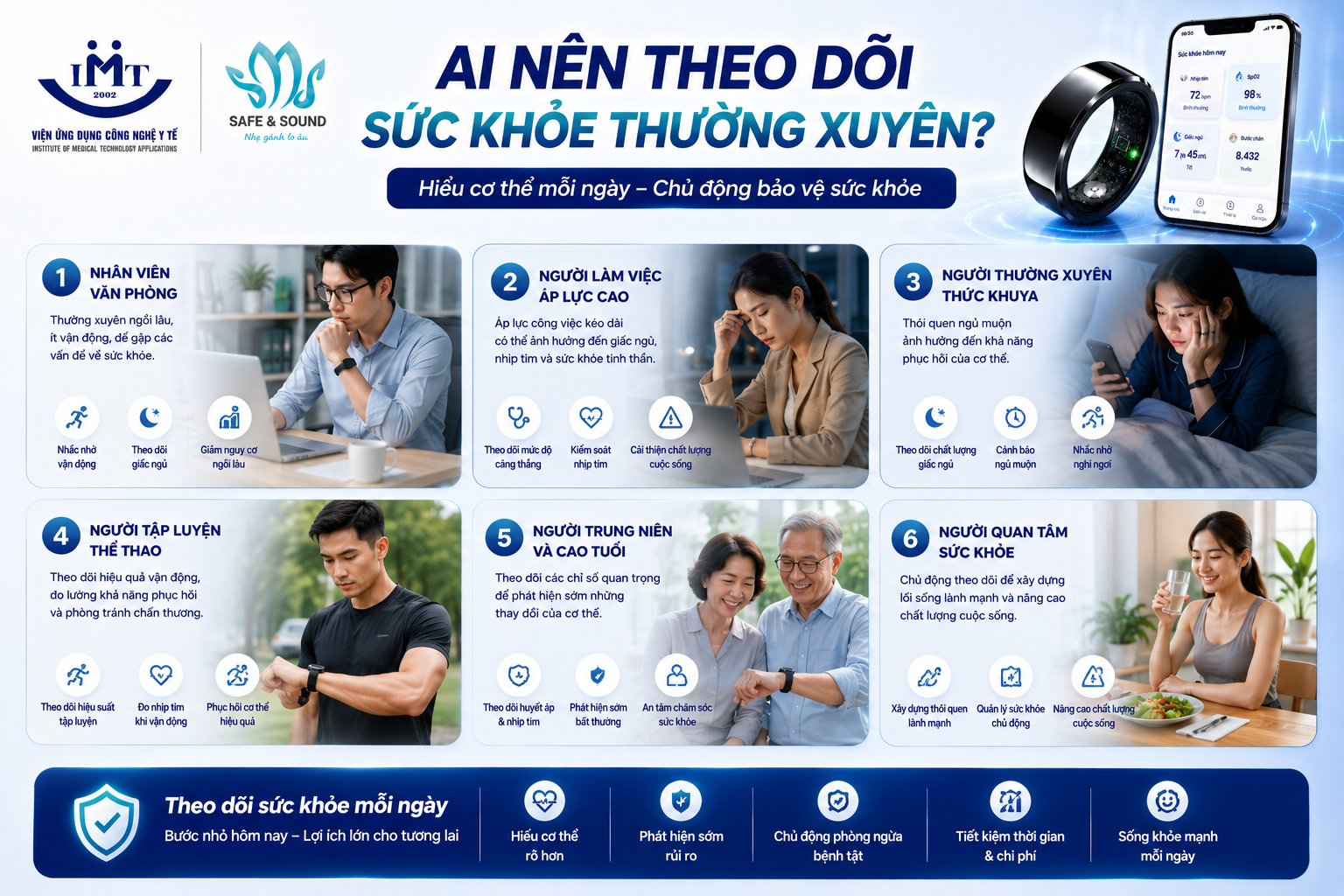
Regular health monitoring helps users detect changes in their bodies early and adjust their lifestyles accordingly.
- Office workers: This group is very susceptible to problems related to lack of physical activity, musculoskeletal pain, and prolonged stress. Monitoring their health helps them recognize their daily activity levels and adjust their rest periods accordingly.
- For those working in high-pressure environments: Work pressure can directly impact sleep, heart rate, and mental health. Monitoring these indicators helps users better understand the impact of stress on their bodies and develop appropriate work-life balance plans.
- People who frequently stay up late: Many young people today have a habit of going to bed late or not resting at all. Sleep data will help them recognize chronic sleep deprivation and improve the quality of their rest.
- For athletes: For those who love to exercise, monitoring heart rate, calorie expenditure, and body recovery is crucial for building a more effective training plan.
- Middle-aged and older adults: As age increases, the need for health monitoring becomes more important. Indicators such as blood pressure, heart rate, and SpO2 can help users track changes in their bodies during the aging process.
- For those who want to build a healthy lifestyle: Even when healthy, health monitoring still brings many positive benefits. The goal of health monitoring is not only to detect problems but also to help maintain a more scientific, balanced, and proactive lifestyle every day.
In short, anyone who wants to better understand their body can start monitoring their health today. The most effective way to care for your health isn't when illness strikes, but when you proactively pay attention to your body before problems arise.
>> See also: 7 Proactive Health Care Habits Many People Maintain Every Day
Conclude
Health monitoring is the process of recording and managing important bodily indicators to help users better understand their health status. In today's increasingly busy world, proactive health monitoring is becoming an important part of modern lifestyles.
Health monitoring not only helps detect abnormalities early, but also supports improved sleep, the development of healthy lifestyle habits, and enhanced personal health awareness. With the support of modern health monitoring devices, managing daily health has never been easier.
.png)
Developed with the vision of a "proactive health monitoring device with a doctor's support," the IMT Ring not only supports monitoring metrics such as heart rate, SpO2, blood pressure, and sleep, but also aims to build a comprehensive healthcare ecosystem. Through its integrated AI technology platform and expert connectivity, users can easily monitor, manage, and better understand their health status every day.
If you're looking for a solution that helps you proactively monitor your health in a simpler and more convenient way in modern life, the IMT Ring could be a worthwhile option to start your health care journey with even the smallest changes each day.
