

What Is Sleep Tracking? 5 Reasons Why Health-Conscious People Are Adopting This Habit
Some people get enough sleep but still wake up feeling tired, having difficulty concentrating, or lacking energy. Conversely, some people sleep less but still maintain alertness and work effectively throughout the day. Thanks to advancements in technology, sleep tracking is no longer confined to laboratories or hospitals. Today, users can easily track sleep through smart wearable devices such as smartwatches or smart rings. So what exactly is sleep tracking? Why is this habit becoming an important part of modern healthcare? Let's find out in the article below.
What is Sleep Tracking?
Sleep tracking is the process of recording, analyzing, and evaluating data related to a user's sleep to help them better understand the quality of their rest. Instead of just knowing how many hours they sleep each night, modern sleep tracking technologies can provide much more detailed information, such as:
- Total sleep time.
- Deep/light sleep duration.
- Number of times waking up in the middle of the night.
- Time to fall asleep.
- Heart rate during sleep.
- The body's ability to recover after sleep.
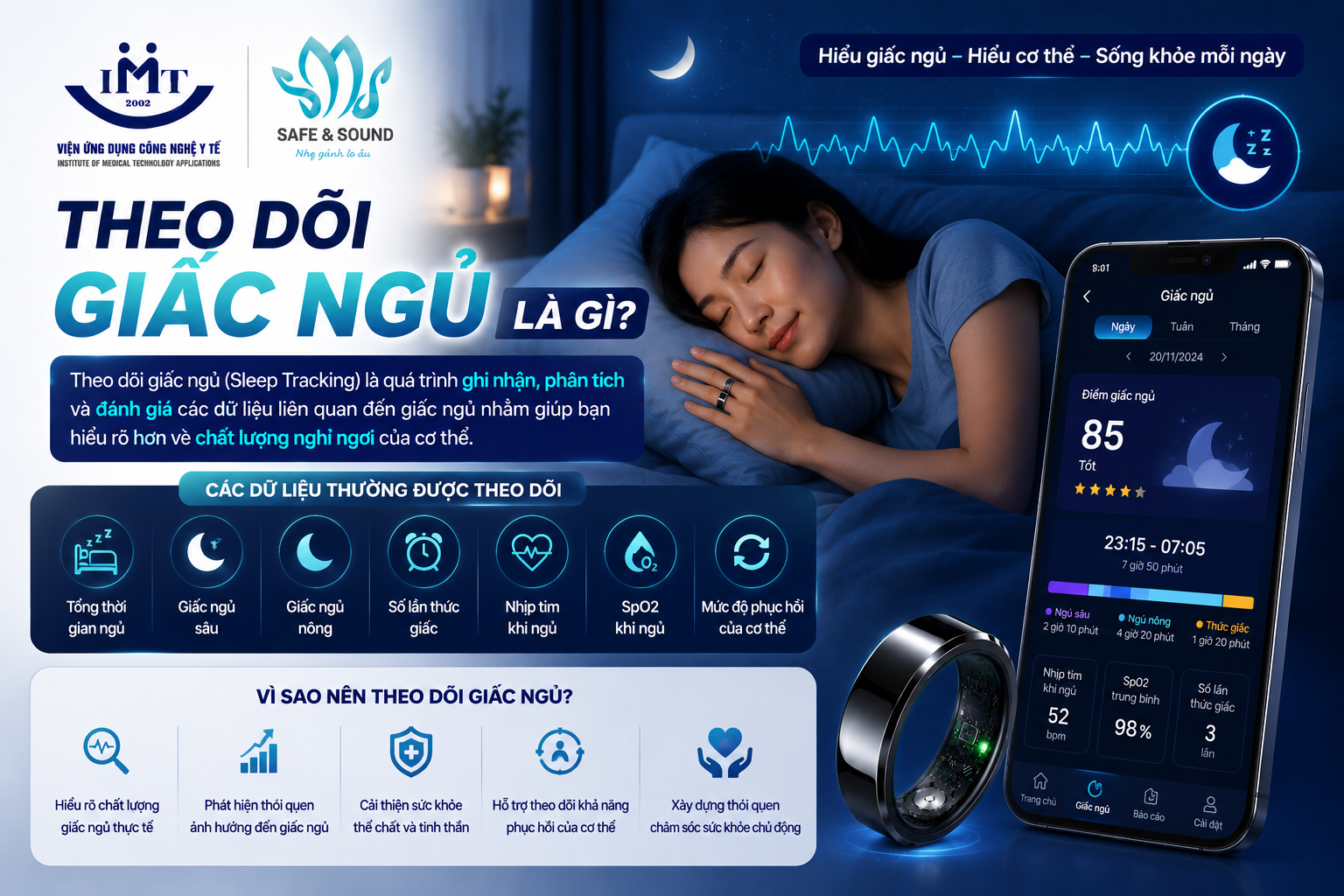
This data is collected through sensors on health tracking devices such as smartwatches or smart rings, and then synchronized with a smartphone app for easy user monitoring.
The goal of sleep tracking is not simply to count the number of hours slept, but to help individuals understand the actual quality of their rest, thereby adjusting their lifestyle habits accordingly.
Key Indicators in Sleep Monitoring
When people first start learning about sleep tracking, many are surprised to find that sleep is analyzed in more detail than they thought. Quality sleep depends not only on the duration of sleep but also on many other factors.
Below are some of the metrics commonly tracked in current sleep quality monitoring systems:
|
Index |
Meaning |
|
Total sleep time |
Total hours of sleep per night |
|
Deep sleep |
The period of most intense body recovery. |
|
Light sleep |
The transitional phase between sleep cycles. |
|
Number of times woke up |
Assess the level of sleep disruption. |
|
Time to fall asleep |
The ability to relax and rest. |
|
Heart rate during sleep |
Reflects the body's state of recovery. |
|
Sleep score |
Overall assessment of sleep quality |
Among these indicators, deep sleep is considered one of the most important factors. This is the stage where the body restores energy, regenerates cells, and supports vital brain functions. Therefore, a person who sleeps enough but has a low percentage of deep sleep may still feel tired after waking up.
>> See also: 5 Important Health Indicators a Smart Ring Can Track Every Day
5 Reasons Why Many People Start Tracking Their Sleep
In recent years, sleep tracking has become one of the most frequently used features on health tracking devices. This shows that users are increasingly aware of the role of sleep in their physical and mental health.
In fact, quality sleep not only helps the body rest but also directly affects concentration, work performance, mood, and long-term health. This is also why more and more people are starting to maintain a habit of tracking their sleep daily instead of just focusing on the number of hours slept.
Understanding Your Actual Sleep Quality
Many people believe they are sleeping well simply because they get 7 or 8 hours of sleep each night. However, sleep duration is only part of the overall picture.
In fact, two people sleeping for eight hours can have completely different rest quality. One person may experience more deep sleep and wake up feeling refreshed, while the other may frequently toss and turn or wake up in the middle of the night without realizing it.
That's why sleep quality monitoring is becoming increasingly important. Through sleep tracking devices, users can find out:
- Total actual sleep time.
- The ratio of deep sleep to light sleep.
- The number of times you wake up during the night.
- Time to fall asleep.
- The level of body recovery.
|
What users usually think |
Sleep tracking data shows |
|
I get a full 8 hours of sleep. |
I only actually slept 6 hours and 45 minutes. |
|
I slept very well. |
Waking up multiple times during the night. |
|
I got enough rest. |
Low rate of deep sleep |
|
I have no problem. |
Sleep quality is gradually declining. |
Thanks to this data, users can better understand their actual rest status instead of relying solely on subjective feelings.
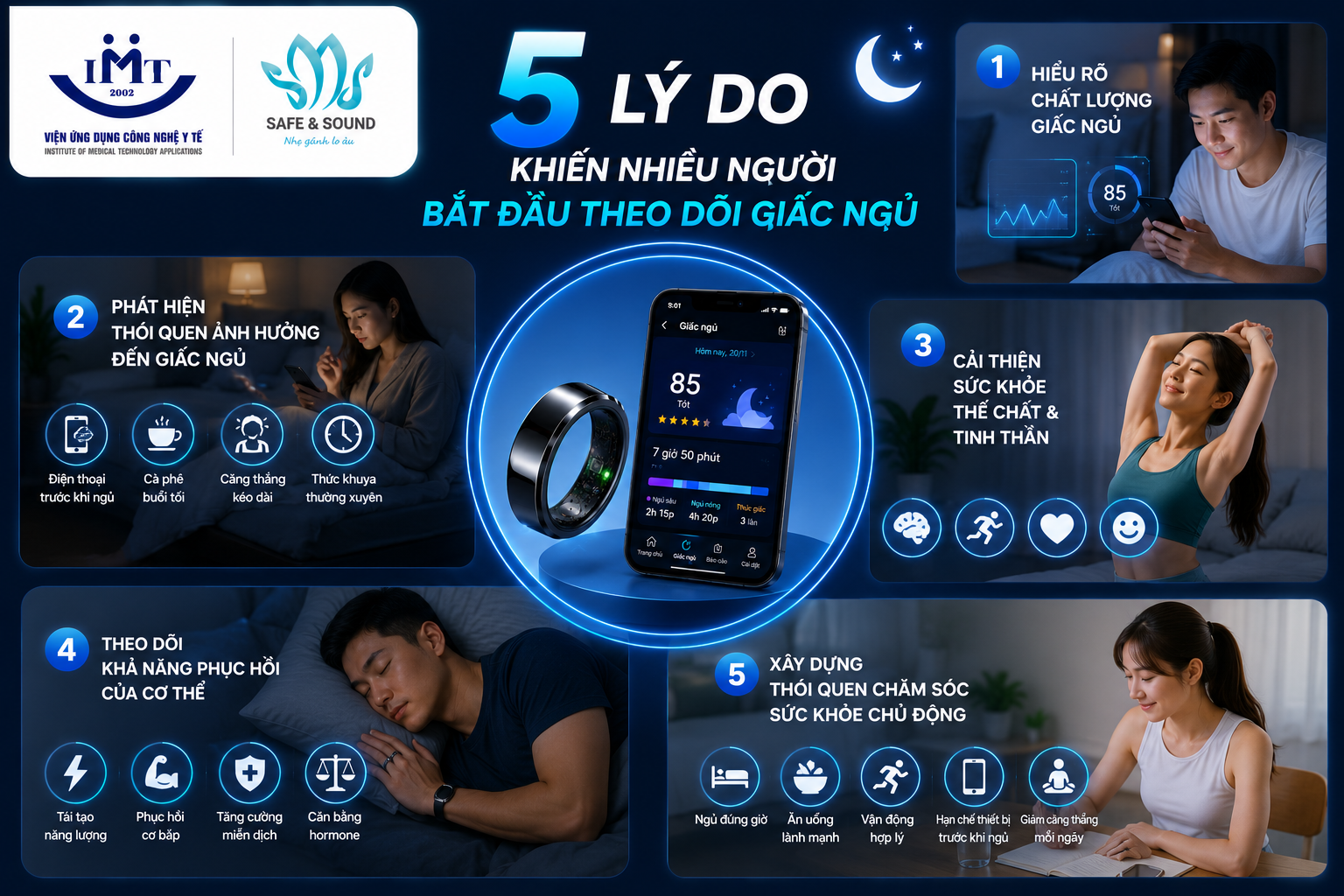
Discover the Habits That Are Affecting Your Sleep
Many people don't realize that sleep quality is affected by numerous small daily habits. For example, browsing on your phone for an extra 30 minutes before bed, drinking a cup of coffee in the evening, or consistently working late can all impact your ability to fall asleep and the duration of deep sleep.
Without tracking the data, these effects are difficult to detect. Some common habits that can reduce sleep quality include:
|
Habit |
Impact |
|
Staying up late regularly |
Reduce the duration of deep sleep. |
|
Using your phone before bed |
Difficulty falling asleep |
|
Drinking coffee in the evening |
Easily wake up in the middle of the night. |
|
Eating too much before bed |
The body has difficulty resting. |
|
Prolonged stress |
Sleep quality deteriorates. |
By tracking sleep patterns over several consecutive weeks, users can easily identify the link between their lifestyle habits and the quality of their rest. This also provides an important foundation for making positive lifestyle changes.
Support for Improving Physical and Mental Health
Sleep is considered one of the three pillars of health, alongside nutrition and exercise. During sleep, the body doesn't simply "shut down to rest." In fact, many important processes are taking place to restore and regenerate energy.
A good night's sleep can offer many benefits, such as:
- Improve memory.
- Improves concentration.
- Improve your learning and work performance.
- Reduce feelings of stress.
- Supports cardiovascular health.
- Boost your immune system.
Conversely, prolonged sleep deprivation can lead to fatigue, difficulty concentrating, reduced productivity, increased stress levels, and negative impacts on overall health. Tracking sleep helps users identify these changes early and proactively adjust their lifestyles before problems become more serious.
Support for Monitoring the Body's Recovery Ability
It's not just athletes who need to pay attention to their body's recovery. After a day of studying, working, or exercising, the body needs time to rest to regenerate energy and prepare for the next day. While sleeping, the body performs many important functions such as:
- Tissue and cell regeneration.
- Muscle recovery.
- Hormone regulation.
- Strengthen the immune system.
- Supports brain function.
If sleep quality is compromised, this recovery process can be significantly affected. This is why many people, even with sufficient sleep, still feel exhausted or lacking energy the next morning.
Through sleep tracking data, users can assess whether their bodies are recovering effectively and adjust their daily routines accordingly.
Helping to Build Proactive Health Care Habits
Perhaps the greatest value of sleep tracking doesn't lie in the charts or numbers displayed on the app. More importantly, it helps change how people perceive their health.
When people start paying attention to sleep quality, they often gradually become more mindful of their overall lifestyle. Common changes include:
- Go to bed on time.
- Limit your phone use in the evening.
- Increase your physical activity throughout the day.
- Adjust your diet to be more balanced.
- Proactively reduce stress and pressure at work.
These small changes can make a huge difference to long-term health. That's why many experts consider daily sleep tracking to be one of the simplest yet most effective first steps in building a healthy lifestyle and proactively taking care of your health.
What's Different About Tracking Sleep with a Smart Ring?
With the development of health tracking devices, users now have more options for sleep tracking. Among them, smartwatches and smart rings are two of the most commonly used devices.
Unlike smartwatches, which are worn on the wrist, smart rings are designed as a small, compact ring on the finger. This allows the device to almost "disappear" during use, creating a more natural and comfortable feeling while sleeping.
For many people, comfort is the deciding factor in whether or not to maintain a daily sleep tracking routine.
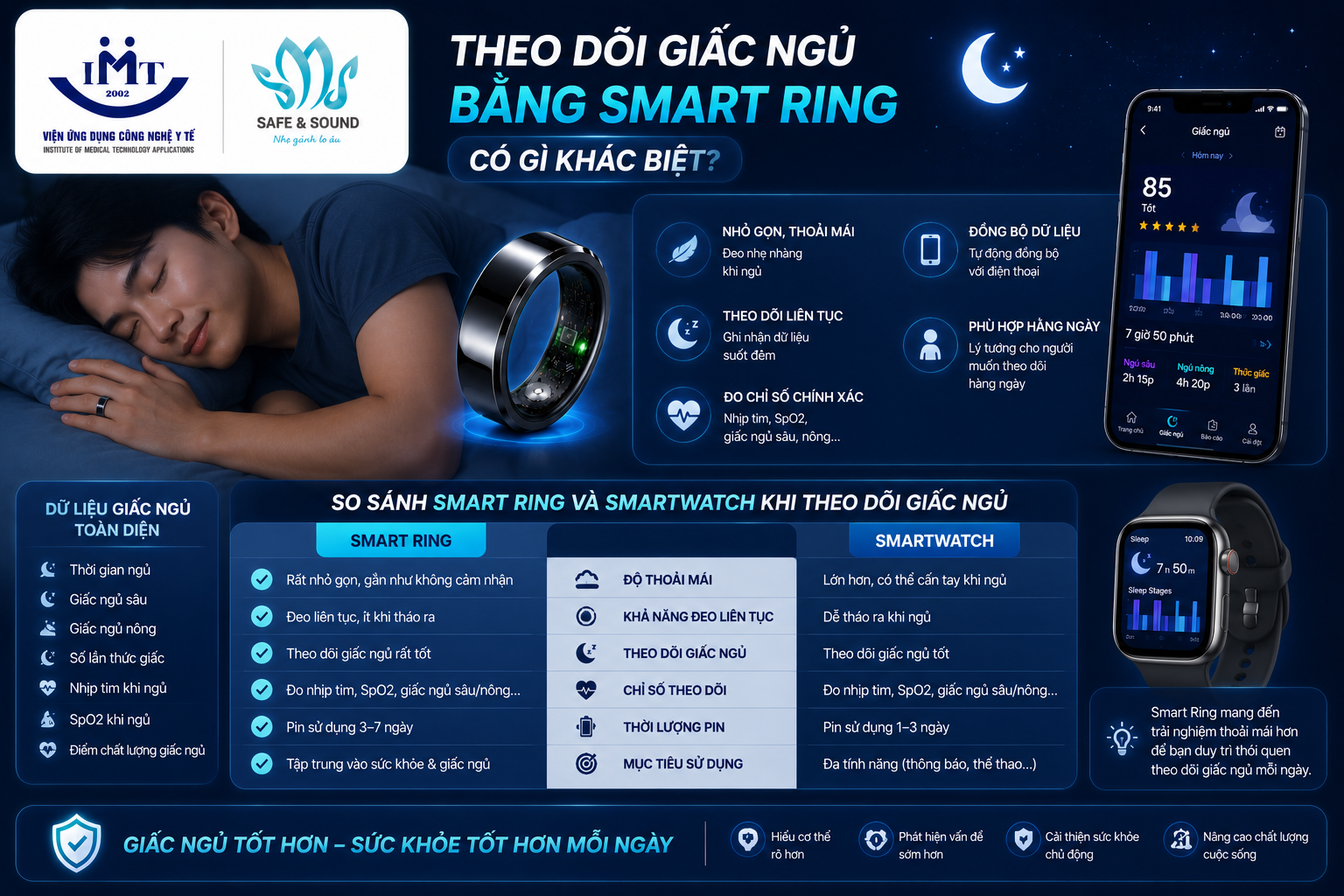
Why is the Smart Ring Suitable for Sleep Tracking?
During sleep, the body needs complete rest. Any discomfort or obstruction can affect the wearable device experience. This is why smart rings are highly valued for their ability to continuously track sleep while ensuring comfort.
Some notable advantages of sleep tracking using a smart ring include:
- Its compact size means it causes minimal discomfort while sleeping.
- It can be worn continuously throughout the night.
- Track sleep data automatically.
- Record heart rate and other sleep-related indicators.
- Synchronize data with the app on your phone.
- Avoid forgetting to put on or take off your device while sleeping.
These are also the factors that help many people maintain daily sleep tracking over the long term.
Comparing Smart Rings and Smartwatches for Sleep Tracking
Although both devices are capable of tracking sleep quality, the user experience differs in certain aspects.
|
Criteria |
Smart Ring |
Smartwatch |
|
Sleep comfort |
Very high |
Medium |
|
Device dimensions |
Compact |
Larger |
|
Ability to wear continuously |
Good |
User dependent |
|
Sleep tracking |
Good |
Good |
|
Monitor heart rate while sleeping. |
Have |
Have |
|
Monitor SpO2 during sleep. |
Available on multiple devices |
Available on multiple devices |
|
Risk of removing the device while sleeping. |
Short |
Higher |
|
Level of focus on health |
High |
Medium |
The table above shows that the sleep tracking capabilities of the two devices are relatively similar. However, the biggest difference lies in the long-term wearing experience.
Many people who use smartwatches tend to take them off before bed because they feel uncomfortable or bulky on their wrists. In contrast, smartwatches, with their compact design, generally have less impact on daily activities and sleep.
Monitor your sleep quality more comprehensively.
Another notable benefit of smart rings is their ability to continuously collect data throughout the rest period. Instead of just recording total sleep duration, many devices can now track:
- Deep sleep time.
- Light sleep duration.
- Number of times waking up in the middle of the night.
- Heart rate during sleep.
- SpO2 level.
- The degree of body recovery after sleep.
This data helps users better understand what happens while they sleep and recognize early changes that could affect their health.
Should You Track Your Sleep Using a Smart Ring?
If your goal is to monitor your sleep quality regularly and over the long term, a smart ring is a worthwhile option to consider.
The device not only helps record sleep-related data but also makes health monitoring more convenient thanks to its compact design, ease of wear, and minimal discomfort during rest.
For many people, the most important factor isn't how many features a device has, but the ability to maintain a daily sleep tracking routine over a long period. And this is precisely the strength that is making smart rings increasingly popular in the sleep tracking field today.
>> See also: Should You Use a Smart Ring? 6 Reasons Why You Should Buy One to Monitor Your Health
Who Should Monitor Their Sleep Regularly?
Sleep tracking isn't just for people experiencing insomnia.
The following groups may benefit greatly from monitoring their sleep quality:
- Office workers are often stressed.
- People who work shifts or stay up late.
- People who practice sports.
- People often feel tired after sleeping.
- People who want to build a healthy lifestyle.
- People who care about long-term health.
Understanding how your body rests each night is always the first step to improving your quality of life.

Conclude
Sleep tracking is the process of recording and analyzing sleep-related data to help users better understand the quality of their rest. It's not just about knowing how many hours you slept; sleep tracking also helps assess deep sleep, recovery ability, and many other important factors.
In the context of increasing awareness of proactive health, daily sleep tracking is becoming a beneficial habit for improving physical and mental health and long-term quality of life.
.png)
Developed with the vision of a "proactive health monitoring device with a doctor's support," the IMT Ring not only supports monitoring metrics such as heart rate, SpO2, blood pressure, and sleep, but also aims to build a comprehensive healthcare ecosystem. Through its integrated AI technology platform and expert connectivity, users can easily monitor, manage, and better understand their health status every day.
If you're looking for a solution that helps you proactively monitor your health in a simpler and more convenient way in modern life, the IMT Ring could be a worthwhile option to start your health journey with even the smallest changes each day.
